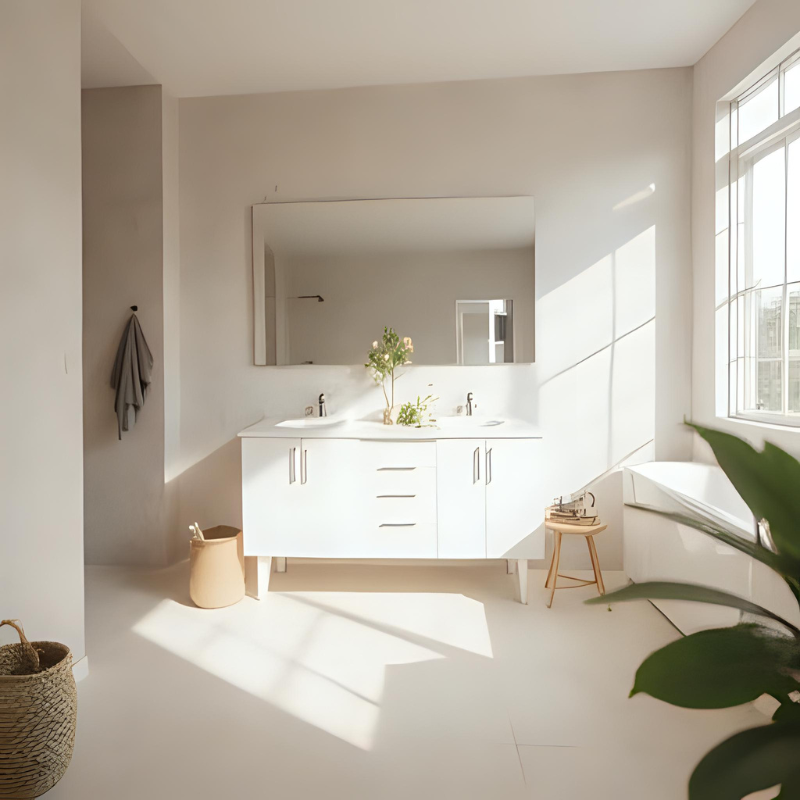
Bathroom Vanity Terminology Handbook: Essential Glossary for Buyers, Importers and Retailers
Published: April 22, 2026
▼ Table of Contents (Click to expand)
‑ Introduction ‑ 1. Core Basic Terms for Bathroom Vanities ‑ 2. Fundamental Composition Knowledge of Bathroom Vanities ‑ 2.1 Cabinet Carcass Structure ‑ 2.2 Countertop Assembly ‑ 2.3 Sink / Basin Assembly ‑ 2.4 Complete Hardware System ‑ 2.5 Storage Layout & Organisation ‑ 2.6 Installation‑Related Components ‑ 3. Main Classification Methods for Bathroom Vanities ‑ 3.1 Classified by Number of Sinks ‑ 3.2 Classified by Installation Style ‑ 3.3 Classified by Primary Storage Format ‑ 3.4 Classified by Interior Design Style ‑ 3.5 Classified by Production & Assembly Form ‑ 4. Different Basin / Sink Types Explained ‑ 5. Cabinet Substrate Materials Comparison ‑ 6. Common Surface Finish Options for Vanity Cabinets ‑ 7. Full Hardware Glossary for Bathroom Vanities ‑ 8. Countertop Material Types, Pros and Cons ‑ 9. Critical Plumbing & Installation‑Related Terms ‑ 10. Frequently Asked Practical Buying Questions ‑ 11. Key Practical Advice From Vanity Manufacturers ‑ 12. Quick Reference Comparison Summary Table ‑ 13. Final Conclusion
Introduction
When sourcing, specifying or purchasing bathroom vanities, you will encounter a large number of industry‑specific terms. Misunderstanding professional vocabulary can lead to wrong product selection, mis‑quotations, unsatisfactory samples, installation errors and costly after‑sales disputes.
This glossary handbook is compiled from the perspective of a professional bathroom vanity manufacturer. It explains core terminology, product composition, classification rules, material features, hardware knowledge, installation‑plumbing points and real‑world buying advice. It is suitable for end‑consumers, retail buyers, importers, wholesalers, contractors and interior designers to communicate clearly with factories and installation teams.
1. Core Basic Terms for Bathroom Vanities
Term | Definition & Practical Explanation |
|---|---|
Bathroom Vanity | General integrated unit including cabinet carcass, countertop, sink, storage space for bathroom washing area, most‑used term in North‑American market |
Vanity Cabinet | Mainly refers to the cabinet box / carcass part, excludes countertop and sink |
Vanity Unit | Widely‑used expression in European, Australian markets, stands for complete vanity set |
Bathroom Cabinet | Broader concept, may include mirror cabinet, tall linen cabinet besides wash‑basin cabinet |
Washstand | More traditional / decorative wording for basin furniture |
Carcass / Cabinet Body | Main load‑bearing cabinet framework: side panels, bottom panel, back panel, cross rails, divider panels, determines strength, moisture‑resistance and service life |
Countertop | Horizontal top surface of vanity, supports sink, faucet and daily toiletries |
Basin / Sink | Washing bowl component; "basin" and "sink" are interchangeable in bathroom industry |
Faucet Hole | Pre‑drilled openings on countertop or sink for faucet mounting: single‑hole, 4‑inch centerset, 8‑inch widespread, wall‑mount faucet (no countertop hole required) |
Overflow Hole | Auxiliary hole on inner sink wall to prevent water overflow; vessel sinks and some sintered‑stone basins have no overflow |
Drain Hole | Bottom opening of sink for installing pop‑up drain assembly |
P‑Trap | U‑shaped drain pipe, North‑American mainstream, blocks sewer odour back‑flow |
Bottle Trap | Compact‑profile trap, widely applied for floating / wall‑hung vanities with wall‑drain layout |
Soft‑Close | Damping buffer mechanism for hinges and drawer slides, achieves quiet slow closing, avoids slamming impact noise |
Wall‑Mounted / Floating Vanity | Cabinet fully hung onto wall, zero floor contact; delivers light visual effect, easy floor cleaning, requires high wall‑load‑bearing capacity |
Freestanding Vanity | Cabinet stands fully on floor surface, low requirement for wall strength, larger total storage volume |
Toe Kick | Recessed bottom section on freestanding vanity; gives foot‑room when standing close to cabinet, conceals base structure |
Filler Strip | Decorative trim piece used for filling narrow gaps between vanity cabinet and uneven walls, common for custom‑fit projects |
Backsplash | Vertical strip fitted behind countertop against wall, stops water splashing onto wall paint / tiles |
Side Splash | Short splash piece on countertop side edge where cabinet meets side wall |
2. Fundamental Composition Knowledge of Bathroom Vanities
A complete bathroom vanity is a system product instead of simple "cabinet plus sink". Every module influences final user experience, durability and installation result.
2.1 Cabinet Carcass Structure
Component | Core Function |
|---|---|
Left & Right Side Panels | Main vertical support of cabinet body, critical for screw‑holding and anti‑swelling performance |
Bottom Panel | Bears internal storage weight, supports cabinet assembly |
Top Cross Rail | Reinforces upper cabinet frame, disperses countertop weight |
Back Panel | Cabinet rear bracing; may reserve pre‑cut holes for plumbing pass‑through |
Middle Divider | Separates internal cabinet space for double‑sink or multi‑compartment layout |
Adjustable Shelf | Adds extra horizontal storage layers |
Door Panel | External opening‑closing panel for cabinet storage compartment |
Drawer Front | Decorative front face of drawer assembly |
Drawer Box | Actual drawer storage box structure (side, back, bottom panels) |
Cabinet Leg / Base | Supporting component for freestanding vanity units |
2.2 Countertop Assembly
Countertop bears sink load, daily splashes, cosmetic spills. Key performance requirements: water‑resistance, stain‑resistance, scratch‑resistance, load‑bearing capacity, precise cut‑outs for sink and faucet hardware.
2.3 Sink / Basin Assembly
Key considerations: basin depth, internal width‑length dimension, overflow hole setting, drain‑hole location, faucet opening layout, sealing joint treatment between sink and countertop.
2.4 Complete Hardware System
Hardware determines long‑term using feeling of vanity, including hinges, drawer slides, handles, wall‑mount brackets, adjustable feet, shelf supports, cam‑lock connectors, drain‑trap assemblies, bumpers. Poor‑grade hardware causes most after‑sales complaints even with good‑looking cabinet appearance.
2.5 Storage Layout & Organisation
Storage forms include double‑door cabinet storage, standard drawers, U‑shaped plumbing‑avoidance drawers, open shelving, internal divider systems, side cabinets and matching tall linen cabinets. Good storage design classifies toiletries, hairdryers, bottles and cosmetics reasonably.
2.6 Installation‑Related Components
Especially critical for floating wall‑hung vanities: heavy‑duty wall brackets, reinforced back mounting board, expansion anchor bolts, levelling feet, anti‑tip fittings, pre‑cut plumbing relief openings.
3. Main Classification Methods for Bathroom Vanities
3.1 Classified by Number of Sinks
Single‑Sink Vanity
Suitable for guest bathrooms, powder rooms, apartments, single‑user households. Common sizes:24",30",36",48". Advantages: compact footprint, cost‑effective, abundant product selections. Disadvantages: cannot support two‑person simultaneous usage, limited counter workspace.
Double‑Sink Vanity
Suitable for master bathrooms, hotel suites, multi‑member families. Common sizes:60",72",84",96". Advantages: supports parallel usage, premium visual effect. Disadvantages: occupies larger bathroom space, higher total cost, more complex plumbing layout.
3.2 Classified by Installation Style
Freestanding VanityPros: high stability, simple installation, low wall‑strength demand, large storage volume. Cons: floor underneath is harder to clean; floor moisture may affect cabinet bottom lifespan.
Floating / Wall‑Mounted VanityPros: modern minimalist aesthetic, easy floor mopping, visually expands small‑size bathrooms, adjustable installation height. Cons: strict requirement for wall structural load‑bearing; pre‑planning plumbing needed; higher manufacturing & installation cost.
Corner VanityInstalled inside bathroom corner position, maximises usage of dead‑space. Fits compact powder‑rooms. Drawback: relatively limited storage capacity and fewer design options.
3.3 Classified by Primary Storage Format
Door‑Based Vanity: Mainly cabinet swing doors. Big inner space for bulky items; disadvantage: small‑article organisation is messy.
Drawer‑Based Vanity: Drawers as primary storage. Convenient item access; higher requirement for slide hardware, need plumbing avoidance design.
Door + Drawer Combined Vanity: Balanced mixed layout, most practical choice for family‑use bathroom.
3.4 Classified by Interior Design Style
‑ Modern Vanity: Clean straight‑line cabinet doors, handle‑less options, matte finish, mainstream colours white / grey / wood‑tone / black. ‑ Traditional Vanity: Shaker‑style doors, rich decorative moulding, classic retro colour palette. ‑ Luxury High‑End Vanity: Premium stone countertops, metal accents, high‑grade hardware, customised details. ‑ Minimalist Vanity: Flat surfaces, concealed handle solution, neutral colours, focus on spatial simplicity.
3.5 Classified by Production & Assembly Form
‑ RTA (Ready‑to‑Assemble) Vanity: Flat‑packed, end‑user assembles on‑site. Lower ocean‑shipping cost, compact carton packaging, popular for e‑commerce. Risk: final quality heavily relies on assembly workmanship. ‑ Pre‑Assembled Vanity: Factory fully assembled before shipment. Better structural integrity, fewer after‑sales problems, but bigger package volume and higher risk of transit damage. ‑ Modular Vanity: Built by combining multiple standard functional modules. Perfect for hotel, real‑estate project and semi‑custom retail product lines.
4. Different Basin / Sink Types Explained
Vessel Sink: Sink sits fully above countertop. Strong decorative visual effect; downside: easy water splashing, requires taller faucet specification.
Undermount Sink: Mounted underneath countertop bottom. Countertop surface can wipe residues straight into sink bowl, outstanding easy‑clean performance; requires precise countertop cutting and solid support structure.
Drop‑in Sink: Sink rim rests upon countertop cut‑out. Simple installation, moderate cost; rim gap can accumulate dirt over time.
Integrated Sink: Sink and countertop are manufactured as one‑piece seamless unit. Excellent waterproof performance, easy maintenance; repair difficulty increases if damaged.
Semi‑Recessed Sink: Sink partially inserts into cabinet front edge. Space‑saving, comfortable user height; demands accurate cabinet dimension design.
Wall‑Mount Sink: Sink fixed directly onto wall surface without cabinet below. Maximises bathroom floor space; almost zero storage capacity underneath.
5. Cabinet Substrate Materials Comparison
Bathroom operates in high‑humidity environment, so substrate moisture‑resistance, dimensional stability and screw‑holding capability are core evaluation indicators.
Material | Advantages | Drawbacks | Best Application Scenarios |
|---|---|---|---|
MDF (Medium‑Density Fiberboard) | Super‑smooth surface, great for painting / PET wrapping, moderate cost | Ordinary MDF swells easily when water invades cut edges; must use moisture‑resistant grade plus complete edge‑banding | Cabinet door / drawer front panels for mid‑range vanities |
Plywood | High structural strength, excellent screw‑holding performance, better moisture‑resistance than MDF / particle‑board | Surface smoothness inferior to MDF, higher unit price | Floating vanities, hotel‑project cabinets, high‑humidity bathroom environments |
Particle Board | Low cost, good dimensional stability under dry condition, compatible with melamine finish | Poor screw retention; edges swell rapidly upon water contact | Budget‑level vanities for well‑ventilated dry bathrooms |
Solid Wood | Natural wood grain texture, premium visual quality | Susceptible to humidity‑caused warping and cracking, high price | Luxury custom high‑end residential projects, needs complete sealing finishing |
PVC Foam Board | Fully waterproof, anti‑mould, light‑weight | Relatively weak screw‑holding strength, less high‑end texture | High‑moisture budget‑oriented bathroom products |
Stainless Steel | Waterproof, corrosion‑resistant, easy‑to‑wipe clean | Cold industrial visual feeling, fingerprint‑prone surface | Commercial, public‑area bathroom projects |
Aluminium Alloy | Rust‑proof, light‑weight, stable dimension | Limited wood‑like decorative effect | Special‑style waterproof cabinet lines |
Manufacturer Tip: Material performance depends not only on board type itself, but also on edge‑banding quality, sealing treatment of drilling and cutting openings.
6. Common Surface Finish Options for Vanity Cabinets
Finish Type | Characteristics | Notes |
|---|---|---|
Painted Finish | Rich colour choices, smooth premium‑looking surface | Vulnerable to hard‑object impact; paint thickness and primer quality decide durability |
Melamine Finish | Cost‑effective, scratch‑resistant, abundant pattern options | Edge‑banding quality is critical for bathroom usage |
Laminate | Good wear‑resistance, stain‑resistant | Limited capability for complex curved door shaping |
PVC Thermofoil | Can wrap contoured shaped doors, seamless wrapping effect | Risk of peeling under sustained high‑temperature environment |
Wood Veneer | Real natural wood grain, high‑grade texture | Must do complete sealing to resist bathroom humidity |
PET Finish | Smooth surface, stable colour performance, anti‑fingerprint | Widely applied in modern‑style mid‑high‑grade cabinets |
Lacquer Finish | Glossy luxurious appearance | Higher production cost, strict workshop environmental requirements |
7. Full Hardware Glossary for Bathroom Vanities
‑ Hinges: Concealed soft‑close clip‑on hinges are mainstream for bathroom cabinets; evaluate corrosion‑resistance, opening angle, smooth movement. ‑ Drawer Slides: Side‑mount slides, undermount concealed slides; parameters: load rating, full‑extension / partial‑extension, soft‑close / push‑open function, anti‑rust treatment. Wide drawers require heavy‑load grade slides. ‑ Handles & Pulls: Bar pull, knob, edge pull, recessed handle, handle‑less magnetic catch; material options zinc alloy, stainless‑steel, aluminium, brass. ‑ Wall‑Mount Brackets: Core hardware for floating vanities; must match cabinet total weight including countertop and sink. ‑ Adjustable Feet: For freestanding vanities, used for levelling on uneven floor surface. ‑ Shelf Supports: Small brackets for holding adjustable internal shelves. ‑ Connectors: Cam‑lock fittings, wooden dowels, screws, corner angle brackets for joining cabinet panels. ‑ Drainage Hardware: Pop‑up drain, grid drain, P‑trap / bottle‑trap, rubber sealing gaskets.
8. Countertop Material Types, Pros and Cons
Countertop Material | Features | Practical Remarks |
|---|---|---|
Quartz (Engineered Stone) | High hardness, stain‑resistant, consistent batch colour | Very heavy; floating vanity needs corresponding wall‑load‑bearing capacity |
Marble | Elegant natural texture | Porous, requires regular sealing maintenance, susceptible to acid staining |
Granite | Hard natural stone, scratch‑resistant | Heavy weight, individual piece colour variation exists |
Solid Surface | Can be seamless joint, repairable after minor damage | Avoid high‑temperature hot‑pot direct contact |
Ceramic Integrated Top | Basin and countertop one‑piece, easy‑clean, cost‑competitive | Relatively limited custom size options |
Sintered Stone | Heat‑resistant, scratch‑proof, modern popular material | High processing requirement for cutting and edging |
Laminate Countertop | Budget‑friendly | Not suitable for long‑term frequent water soaking |
9. Critical Plumbing & Installation‑Related Terms
‑ Water Supply Points: Cold / hot water pipe position, valve height; need to avoid conflict with cabinet drawers and internal structures. ‑ Wall Drain vs Floor Drain: Wall‑drain: pipe comes out from back wall, cleaner visual for floating vanity, usually matches bottle‑trap. Floor‑drain: pipe comes from floor, more conventional for freestanding cabinet, commonly uses P‑trap. ‑ Drawer‑Plumbing Interference: Very common defect risk; U‑shape cut‑out drawers are required to bypass drain‑trap assemblies. ‑ Wall Strength Check: Floating vanity mandatory inspection; pure drywall cannot bear heavy vanity weight, need studs / wood blocking / plywood backing. ‑ Levelling: Cabinet must keep horizontal level; unlevel will cause water pooling, drawer jamming, uneven door gaps. ‑ Silicone Sealing: Waterproof sealant applied between countertop‑wall, sink‑countertop joint to stop water seepage. ‑ Installation Height: Industry general reference 32‑36 inches (813‑914 mm), adjust according to end‑user ergonomics. ‑ Faucet Compatibility: Confirm hole spacing, spout reach to prevent excessive water splashing. ‑ Mirror & Lighting Pre‑Planning: Reserve power supply for LED mirror cabinets before cabinet installation.
10. Frequently Asked Practical Buying Questions
Q1: What vanity width size should I pick?
Answer: Measure actual bathroom wall available space, reserve clearance for bathroom door swinging‑open; take full account of plumbing pipe positions. Common stock sizes: 24 /30 /36 /48 /60 /72 inch.
Q2: Floating wall‑hung or freestanding vanity better?
Answer: If wall has solid studs / blocking, pursue modern look and easy floor cleaning, choose floating. If wall condition is poor, hope for large storage and simple installation, select freestanding.
Q3: Single‑sink or double‑sink vanity?
Answer: Depends on bathroom space and number of regular users. Width 60‑inch and above can consider double‑sink layout.
Q4: Which cabinet material is best for bathroom?
Answer: No absolute "best". Plywood performs excellent for high‑humidity environment; moisture‑resistant MDF suits door panels; key is complete edge‑banding and sealing of all cut openings.
Q5: Why are vanities showing huge price gaps on market?
Answer: Main influencing factors: substrate material grade, surface‑finish craft, hardware brand & load‑rating, countertop / sink material, internal structural reinforcement, packaging quality, whether including spare‑parts and after‑sales support.
Q6: Integrated sink vs separate sink, which one to choose?
Answer: Integrated one‑piece: seamless joint, low water‑leak risk, easy daily cleaning. Separate sink: richer selection of sink styles, higher flexibility for custom‑project.
Q7: More drawers equal better vanity?
Answer: Not necessarily. It depends on drawer internal layout, slide hardware quality, and whether plumbing‑conflict is properly solved. Reasonable mixed door‑and‑drawer layout often works better.
Q8: Will my vanity get mouldy and swollen?
Answer: Mould and swelling seldom come from material alone. Root causes: bad edge‑banding, exposed raw cut‑edges, long‑term water‑soaking, poor bathroom ventilation.
11. Key Practical Advice From Vanity Manufacturers
Evaluate internal cabinet structure instead of only judging exterior appearance and countertop material. Edges, drawer‑box construction and hardware decide long‑term durability.
Avoid cabinet being soaked by standing water for long periods; good bathroom ventilation reduces mould‑swelling risk.
Edge‑banding sealing quality is extremely critical for wooden‑composite bathroom cabinets; all cutting / drilling openings need proper sealing treatment.
For floating vanity orders: always verify wall‑structure condition before purchase, do not rely purely on cabinet product parameters.
Pre‑confirm plumbing layout (wall‑drain / floor‑drain, trap position) to prevent drawer‑plumbing conflict after installation.
Match countertop material weight with cabinet carcass and wall‑mounting capacity, especially heavy‑weight natural‑stone countertops.
Do not compromise hardware specifications; hinges and drawer‑slides failure is one of the most frequent after‑sales issues.
B2B importers & project buyers must pay attention to export‑grade packaging to lower transit‑damage ratio.
Confirm spare‑parts supply channel for hinges, slides, handles for future maintenance.
Treat vanity as a whole system: cabinet, countertop, sink, hardware, installation and plumbing should be considered together, not evaluate individual components separately.
12. Quick Reference Comparison Summary Table
Module | Core Evaluation Focus | Real‑World Impact |
|---|---|---|
Cabinet Substrate | Plywood / MR‑MDF / Particle‑Board / Solid‑Wood | Anti‑swelling, screw‑holding, cabinet service life |
Surface Finish | Paint / PET / Melamine / Veneer | Wear‑resistance, stain‑resistance, aesthetic performance |
Edge‑Banding | Material, adhesive, full‑side sealing | Prevent moisture intrusion, anti‑swelling (high‑priority item) |
Countertop | Quartz / sintered‑stone / ceramic / marble | Scratch‑resistance, stain‑resistance, total assembly weight |
Basin Sink | Vessel / undermount / integrated / drop‑in | Cleaning convenience, plumbing matching requirement |
Hardware | Hinge, drawer‑slide load‑rating, anti‑rust | Operating smoothness, long‑term failure probability |
Installation | Wall‑stud / blocking, levelling, silicone sealing | Safety, cabinet stability, water‑leak risk |
Packaging | Corner protection, inner cushioning | Transportation damage rate for import / project orders |
Maintenance | Cleaning‑method guidance | Affect product actual service‑life |
13. Final Conclusion
Bathroom vanity is not simple furniture assembled from several boards. It is a complete system integrating cabinet substrate, surface finishing, countertop‑sink assembly, precision hardware, installation structure and plumbing adaptation.
For end‑consumers: when purchasing vanity, besides focusing on appearance style, pay close attention to material specification, edge‑sealing quality, hardware grade and installation‑plumbing matching condition.
For B2B retailers, importers and contractors: mastering these industry‑standard terms enables accurate RFQ communication with factories, clear product specification definition, reduction of sample deviation and after‑sales dispute risks.
From manufacturer’s perspective: high‑quality bathroom vanity achieves three goals simultaneously — attractive visual appearance, stable structure against humid bathroom environment, and reliable smooth user experience for many‑year daily usage.
In short: The real value of bathroom vanity lies not only in its outward look, but also in its internal structural performance under real‑world wet‑bathroom conditions.