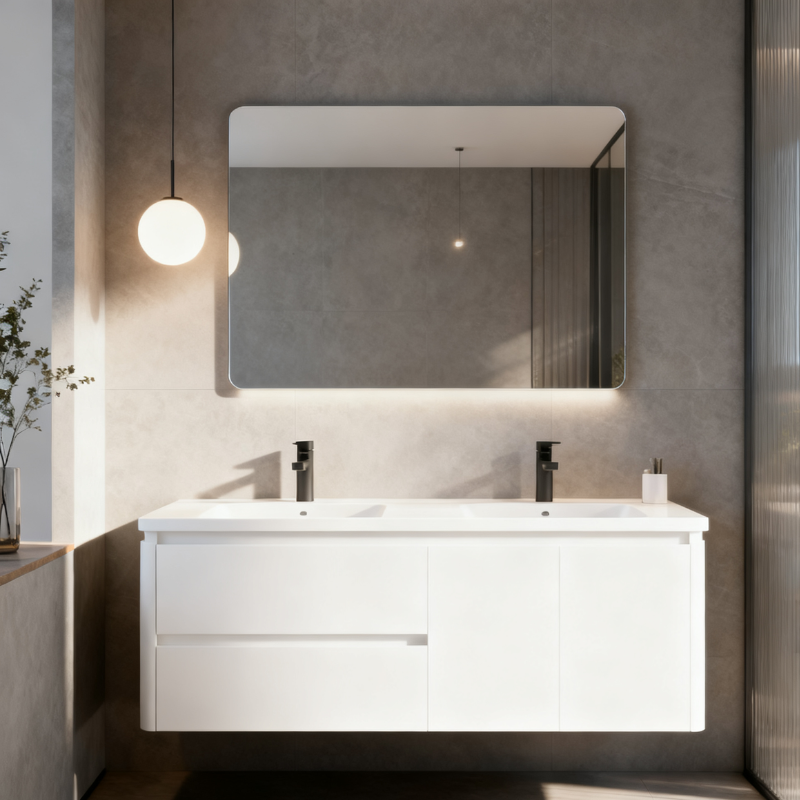
Smart Bathroom Vanities: The Future‑Shifting Trend of Modern Bathroom Furniture
Published: June 10, 2026
▼ Table of Contents (Click to expand)
‑ Article Introduction ‑ 1. Are smart bathroom vanities set for mainstream market adoption? ‑ 2. What exactly constitutes a smart bathroom vanity system? ‑ 3. Core functional modules of smart bathroom vanities ‑ 3.1 Smart adjustable lighting ‑ 3.2 Mirror anti‑fog heating function ‑ 3.3 Concealed power outlets and multi‑port charging interfaces ‑ 3.4 Touch‑based and proximity‑sensor interactive controls ‑ 3.5 Intelligence‑driven optimised storage design ‑ 3.6 Wellness‑oriented advanced personalised features ‑ 4. Driving forces behind rising market demand for smart vanities ‑ 5. Tangible benefits for end‑users and commercial project stakeholders ‑ 5.1 Advantages for residential homeowners ‑ 5.2 Advantages for hotels, serviced apartments and real‑estate developers ‑ 6. Smart vanity versus traditional bathroom vanity: core conceptual differences ‑ 7. Side‑by‑side comparison table: Smart Vanity vs Traditional Vanity ‑ 8. Best‑suited real‑world application scenarios for smart bathroom vanities ‑ 8.1 Master primary residential bathrooms ‑ 8.2 Mid‑to‑high‑end home renovation projects ‑ 8.3 Boutique hotels and serviced apartment developments ‑ 8.4 Compact bathrooms requiring high‑density organisation ‑ 8.5 Multi‑generational and ageing‑in‑place households ‑ 8.6 Beauty‑focused users prioritising grooming ritual experience ‑ 9. Future‑oriented market shifts and product‑level design trends ‑ 9.1 Macro‑level market development trends ‑ 9.2 Practical product‑design evolution directions ‑ 10. Strategic preparations for B2B importers, wholesalers and procurement teams ‑ 10.1 Build tiered “light‑smart‑first” product portfolios ‑ 10.2 Establish stable supply‑chain for mirror‑cabinet electrical sub‑modules ‑ 10.3 Prioritise moisture resistance, electrical safety and field‑maintainability ‑ 10.4 Pre‑validate target‑market certification and regulatory compliance rules ‑ 10.5 Shift business mindset: sell scenario‑based solutions, not discrete SKUs ‑ 10.6 Conduct pre‑sales training and education for sales channels and partners ‑ 10.7 Build data‑driven product‑feedback and performance‑tracking mechanisms ‑ 10.8 Develop replicable, standardised product series instead of one‑off custom units ‑ 10.9 Capture market gap: balance light‑luxury aesthetics, practicality and serviceability ‑ 10.10 Build cross‑functional evaluation capacity covering furniture, electronics and compliance ‑ 11. Concrete actionable steps B2B buyers can implement immediately ‑ 12. Key practical recommendations for B2B procurement stakeholders ‑ 13. Final Conclusion
Article IntroductionThe future of bathroom furniture is not merely “vanities fitted with LED lights”. It lies in complete integrated smart vanity ecosystems that combine cabinet carcass, mirror cabinets, adaptive lighting hardware, built‑in power modules, sensor interaction and organised storage architecture. Fueled by rising home‑renovation spending and expanding smart‑home penetration, today’s consumers purchase bathroom furniture for elevated daily experience rather than purely basic storage functions. Drawing on NKBA and Houzz industry research alongside global smart‑bathroom market statistics, this article unpacks core functions, applicable scenarios, market evolution risks and actionable B2B sourcing guidance for smart bathroom vanities. This resource serves residential shoppers, retail importers, hotel developers and interior‑design industry participants.
1. Are smart bathroom vanities set for mainstream market adoption?
The short answer is yes, but market penetration will follow a gradual phased trajectory, instead of completely displacing conventional bathroom vanities overnight.
Smart vanity solutions will not fully replace traditional cabinet products in the short‑term, yet they will gain consistent market traction within these key segments:
Mid‑to‑high‑end residential renovation markets
Boutique serviced apartments and upgraded real‑estate developments
Hotel and wellness‑focused commercial projects
Young‑family and high‑disposable‑income consumer demographics
End‑users prioritising superior lighting quality, anti‑fog convenience, tidy charging setups and organised storage experience
Modern homeowners no longer only shop for cabinets to store toiletries. They invest in better morning grooming workflows, high‑quality task lighting, clutter‑free countertop surfaces and an upgraded spatial atmosphere.
According to NKBA 2026 bathroom‑industry trend research, smart‑home integration, wellness‑centred design, ageing‑in‑place adaptation and personalised storage are fast‑growing bathroom priorities. Houzz 2025 renovation surveys also confirm upgraded medicine mirror cabinets are evolving past basic storage toward integrated outlets, anti‑fog systems and multi‑mode illumination functions.
To define the true growth vector clearly:
Smart Bathroom Vanity System = Base vanity cabinet + smart mirror / mirror cabinet + multi‑scene lighting + power & charging modules + sensor interaction + organised custom storage
2. What exactly constitutes a smart bathroom vanity system?
A smart bathroom vanity builds upon the foundation of a conventional vanity unit, adding integrated electronic assemblies plus human‑centred interaction logic.
It is not simply a wooden cabinet paired with an illuminated mirror. A complete functional system typically includes these components: ‑ Main vanity cabinet / drawer base unit and sink‑basin assembly ‑ Smart mirror or functional mirror cabinet enclosure ‑ Integrated adjustable LED lighting array ‑ Anti‑fog heating‑film module ‑ Concealed outlets, USB‑A / Type‑C charging interfaces ‑ Touch‑control or proximity‑sensor interactive user‑input ‑ Optimised configurable smart‑storage partitions ‑ Soft night‑time ambient guide lighting ‑ Optional time / temperature / humidity digital‑display panel ‑ Higher‑end configurations may add Bluetooth audio playback, voice‑control or wellness‑related monitoring modules
In short: smart bathroom vanities merge furniture aesthetics, physical storage capacity, electrical convenience and digital interaction into a unified bathroom scenario‑based solution.
3. Core functional modules of smart bathroom vanities
3.1 Smart adjustable lighting
Smart lighting ranks among the most practical and widely‑accepted smart‑vanity features. Common implementations include perimeter mirror lighting, back‑lit indirect lighting, stepless brightness adjustment, colour‑temperature switching (warm‑neutral‑cool white), scene presets and low‑brightness night‑guide‑lights.
Bathrooms impose strict requirements on task lighting for makeup application, shaving and skincare routines. NKBA industry statistics note more than 91 % of bathroom‑design professionals identify high‑quality vanity lighting as a core priority for primary master bathrooms.
3.2 Mirror anti‑fog heating function
Mirror anti‑fog delivers highly perceptible improvements to daily‑use experience. After hot‑shower steam accumulates inside bathrooms, anti‑fog heating films prevent mirror‑surface condensation, so users can utilise mirrors immediately without waiting for natural defogging. According to Houzz market observations, anti‑fog capability has already become a standard upgrade feature for many premium mirror‑cabinet product lines.
3.3 Concealed power outlets and multi‑port charging interfaces
Embedded inside mirror cabinets or vanity drawer interiors: shaver dedicated sockets, hair‑dryer power outlets, USB‑C charging ports. These modules resolve messy countertop wiring created by beauty devices, electric toothbrushes and personal electronics, maintaining neat counter‑surface conditions. Hidden power interfaces represent one of consumers’ most‑requested upgrade functions.
3.4 Touch‑based and proximity‑sensor interactive controls
Common real‑world implementations: touch‑buttons for light / anti‑fog switching, wave‑activated proximity‑sensors, cabinet‑door‑triggered interior lighting which activates upon opening, drawer‑linked illumination. These functions do not rely on complex advanced chips, yet greatly elevate product premium‑grade tactile‑experience.
3.5 Intelligence‑driven optimised storage design
“Smart” is not limited to electronic hardware alone. Contemporary smart‑vanity design also emphasises human‑centric storage architecture: dedicated hair‑tool compartments, cosmetic divider trays, medicine‑storage zones, appliance‑charging‑purpose cavities and adjustable movable drawer partitions. NKBA trend reports indicate custom configurable storage modules are accelerating in real‑world market adoption.
3.6 Wellness‑oriented advanced personalised features
Higher‑end product lines may integrate time‑temperature‑humidity readouts, Bluetooth audio playback, voice‑control modules, senior‑friendly accessible operating‑logic and mood‑based ambient‑lighting presets. These features are not yet mass‑market mainstream, but mark long‑term product‑evolution directions toward wellness‑centred bathroom‑space design.
4. Driving forces behind rising market demand for smart vanities
Fully‑loaded flagship‑grade smart vanities remain niche‑volume goods, yet supporting modules (smart mirror cabinets, anti‑fog films, integrated lighting, hidden power sockets and refined storage organisation) achieve rapid market penetration. Four major driving forces:
Consumer‑grade home‑renovation upgrading: Home‑buyers shift their requirements from “merely functional fixtures” toward easy‑to‑maintain, convenient and aesthetic‑premium living environments.
Smart‑home ecosystem popularisation: End‑users already utilise smart lighting, smart locks and smart speakers; bathrooms naturally follow this home‑upgrade wave.
Growing wellness‑consciousness: Bathrooms transform from simple washing‑spaces to self‑care, relaxation and grooming‑ritual zones.
Maturing component‑supply‑chain: LED strips, anti‑fog heating films, touch‑sensor controllers and modular mirror‑cabinet assemblies continuously decrease in unit‑cost, lowering overall market‑access thresholds.
Typically, hotel and high‑end residential projects first demonstrate product‑value, then these features gradually filter down into mid‑market retail sales‑channels.
5. Tangible benefits for end‑users and commercial project stakeholders
5.1 Advantages for residential homeowners
‑ Improved daily‑use convenience: integrated lighting, anti‑fog and charging remove many small‑scale bathroom frustrations ‑ More organised storage: purpose‑built dividers reduce internal cabinet clutter ‑ Cleaner countertop visual‑effect: concealed wiring and hidden power‑modules eliminate messy adapters ‑ Elevated interior aesthetic: integrated mirror‑lighting enhances modern‑style‑bathroom ambiance ‑ Superior human‑centred experience: night‑lights, high‑CRI grooming‑lighting improve comfort for multi‑age household‑members ‑ Forward‑compatible with modern smart‑home renovation‑trends
5.2 Advantages for hotels, serviced apartments and real‑estate developers
‑ Creates project‑level selling‑point premium: smart‑feature sets serve as differentiating marketing‑content for apartments and hospitality‑properties ‑ Stronger product differentiation within highly‑homogenised bathroom‑fixture markets ‑ Improves end‑user satisfaction: anti‑fog mirrors, good‑quality lighting and convenient charging deliver immediately‑perceptible guest‑benefits ‑ Supports high‑end project positioning: well‑suited for boutique hotels, serviced apartments and luxury‑residential‑developments
6. Smart vanity versus traditional bathroom vanity: core conceptual differences
Traditional bathroom vanities focus on three core deliverables: basic storage capacity, sink‑bearing structural‑performance and decorative appearance under controlled acquisition‑cost.
Smart bathroom vanity systems expand their value proposition to: storage capacity + lighting‑performance + anti‑fog capability + charging convenience + sensor‑interaction + scenario‑oriented user‑experience.
They are not direct substitute‑versus‑substitute rivalry. Instead they target distinct consumer tiers and requirement‑sets.
Traditional vanities sell you the furniture cabinet itself. Smart bathroom vanities sell you the complete bathroom‑usage experience.
7. Side‑by‑side comparison table: Smart Vanity vs Traditional Vanity
Evaluation Dimension | Smart Bathroom Vanity System | Conventional Traditional Vanity |
|---|---|---|
Core positioning | Complete bathroom scenario‑experience system | Basic functional bathroom furniture |
Primary functions | Storage + lighting + anti‑fog + charging + sensor interaction + organised storage | Storage + sink‑support + decoration |
Mirror performance | Built‑in lighting, anti‑fog, touch‑interaction | Plain ordinary mirror or no matching mirror |
Power integration | Concealed outlets / USB‑C charging ports | No built‑in power‑related components |
Storage architecture | Customisable dividers and classified compartments | Basic drawers and swing‑door cabinets |
Visual neatness | High; hides wires and adapters | Countertop easily becomes cluttered with adapters |
Perceived premium texture | Strong | Determined purely by material and finish |
Initial procurement expense | Higher | Lower |
Installation complexity | Higher: requires pre‑planning wiring, moisture‑proofing and electrical safety | Simple, minimal pre‑requisites |
Maintenance burden | Moderate; contains replaceable electronic modules | Low, furniture‑only maintenance |
Target‑customer groups | Mid‑high‑end renovation, hotel‑apartment projects, experience‑oriented consumers | Budget‑focused buyers, basic residential projects |
Product differentiation potential | Very strong | Limited, subject to commodity‑style price competition |
Profit‑margin potential for channels | Higher | Price transparency compresses profit space |
Future‑trend adaptability | High | Medium‑to‑low |
8. Best‑suited real‑world application scenarios for smart bathroom vanities
Smart vanities are not universally mandatory for every bathroom environment. These scenarios realise maximum product‑value:
8.1 Master primary residential bathrooms
Homeowners spend substantial daily time inside master bathrooms; they hold higher expectations for mirror lighting, storage organisation and comfort. This represents the largest‑volume applicable residential‑scenario.
8.2 Mid‑to‑high‑end home renovation projects
These customers are not satisfied with merely replacing old cabinets; they pursue holistic bathroom‑experience‑upgrades.
8.3 Boutique hotels and serviced apartment developments
Hospitality‑projects prioritise guest‑experience highlights. Smart‑vanity‑functions deliver memorable premium‑perception without large‑scale construction‑modification.
8.4 Compact bathrooms requiring high‑density organisation
Small‑sized‑bathrooms benefit greatly from integrated mirror‑cabinet storage, hidden charging‑ports and multi‑functional‑lighting to maximise utilisation of limited‑spatial‑resources.
8.5 Multi‑generational and ageing‑in‑place households
Night‑time sensor‑activated‑guide‑lights, high‑quality‑task‑lighting and simple‑to‑operate‑touch‑interfaces improve safety and usability for elderly household‑members, matching rising ageing‑in‑place‑design‑trends.
8.6 Beauty‑focused users prioritising grooming ritual experience
Consumers engaged in skincare and makeup attach great importance to accurate mirror‑lighting, tidy‑storage and convenient‑device‑charging.
9. Future‑oriented market shifts and product‑level design trends
9.1 Macro‑level market development trends
Progressive modular adoption: Consumers rarely purchase fully‑featured flagship‑units in a single‑step. Market‑evolution proceeds light‑smart → mid‑smart → full‑smart. LED‑lighting, anti‑fog and concealed‑charging will become mainstream optional‑modules first.
Wellness‑oriented function iteration: Technology exists to serve comfort and daily self‑care rather than pursue meaningless tech‑gimmicks.
Mid‑to‑high‑end‑markets lead adoption: Upgrading‑residential‑renovation, boutique‑hospitality and real‑estate‑projects constitute primary early‑adopter‑segments.
Maintainability becomes critical buying‑criterion: Market demands products easy‑to‑clean, easy‑install, low‑failure‑rate and equipped with accessible spare‑parts.
Invisible‑intelligence‑trend: Premium‑smart‑vanity‑design conceals electronic‑hardware. Overall‑appearance leans toward minimalist, wood‑tone and natural‑texture‑aesthetics instead of obvious “tech‑looking”‑styling.
9.2 Practical product‑design evolution directions
Prioritise light‑smart practical‑functions: Stepless dimming, adjustable colour‑temperature, anti‑fog‑film, night‑guide‑lights, cabinet‑door‑triggered‑interior‑lighting; over‑complex voice‑control and display‑screen‑features remain niche‑use‑cases.
Mirror‑cabinet‑centric integration: Majority‑of‑smart‑functions will‑be‑integrated‑within‑mirror‑cabinets‑instead‑of‑main‑cabinet‑bodies.‑Mirrors‑naturally‑host‑lighting,‑anti‑fog,‑touch‑controls‑and‑power‑modules.
Modular‑storage‑architecture:‑Move‑past‑large‑empty‑drawers‑toward‑purpose‑specific‑compartments‑for‑beauty‑tools,‑appliances‑and‑medications.
Enhanced‑moisture‑proofing‑and‑electrical‑safety:‑Humid‑bathroom‑setting‑imposes‑strict‑requirements‑for‑IP‑rated‑sealing,‑isolated‑power‑drivers,‑wiring‑protection‑and‑replaceable‑modular‑electronics.
Seamless‑low‑friction‑interaction:‑Proximity‑sensing,‑memory‑scene‑presets;‑operations‑remain‑intuitive‑without‑complicated‑learning‑curves.
Age‑friendly‑inclusive‑design:‑Accessible‑illumination‑and‑simple‑controls‑serve‑multi‑generational‑households.
Aesthetic‑return‑to‑natural‑minimalism:‑Wood‑grain‑finishes,‑matte‑surfaces,‑handle‑less‑concealed‑hardware‑dominate‑visual‑design‑directions.
10. Strategic preparations for B2B importers, wholesalers and procurement teams
Smart‑bathroom‑vanities‑should‑be‑treated‑as‑a‑multi‑year‑product‑upgrade‑track,‑not‑one‑off‑individual‑SKU‑procurement.‑Competitive‑players‑build‑product‑portfolios,‑supply‑chain‑resources,‑certification‑compliance,‑after‑sales‑service‑capacity‑and‑scenario‑solution‑capabilities‑in‑advance.
10.1 Build tiered “light‑smart‑first” product portfolios
Construct‑three‑tier‑product‑matrix‑to‑balance‑volume,‑profit‑and‑market‑testing‑risks: ‑ Entry‑level Light‑Smart:‑LED‑lighting,‑anti‑fog‑film,‑touch‑switch,‑basic‑mirror‑cabinet‑storage. ‑ Mid‑range Core‑selling:‑Adjustable‑colour‑temperature‑&‑dimming,‑hidden‑charging‑ports,‑door‑activated‑inner‑lighting,‑night‑light,‑configurable‑drawer‑dividers. ‑ High‑end Flagship:‑Bluetooth‑audio,‑time‑temperature‑display,‑advanced‑sensor‑interaction,‑complete‑system‑package‑combinations.
Benefits:‑possess‑volume‑driving‑SKUs,‑high‑margin‑flagship‑display‑models,‑room‑for‑market‑trial‑and‑error‑without‑excessive‑upfront‑cost‑and‑after‑sales‑pressure‑from‑over‑complicated‑functions.
10.2 Establish stable supply‑chain for mirror‑cabinet electrical sub‑modules
Core‑competitiveness‑no‑longer‑depends‑purely‑upon‑wooden‑cabinet‑manufacturing.‑It‑lies‑in‑reliable‑integration‑of‑LED‑drivers,‑anti‑fog‑films,‑touch‑sensor‑assemblies,‑power‑outlet‑modules,‑USB‑C‑interfaces,‑wiring‑harnesses‑and‑waterproof‑connectors.‑Prioritise‑suppliers‑who‑can‑deliver‑stable,‑maintainable,‑certified‑electronic‑sub‑assemblies.
10.3 Prioritise moisture resistance, electrical safety and field‑maintainability
Many‑smart‑product‑failures‑do‑not‑stem‑from‑poor‑looking‑design,‑but‑humid‑environment‑induced‑electronic‑faults,‑wiring‑damage‑and‑difficult‑repairs.‑When‑sourcing,‑strictly‑audit:‑electronic‑component‑lifespan,‑moisture‑isolated‑structural‑design,‑electrical‑safety‑certification‑standards,‑driver‑stability,‑modular‑replaceability‑and‑completeness‑of‑installation‑manuals.
10.4 Pre‑validate target‑market certification and regulatory compliance
Different‑territories‑impose‑distinct‑requirements‑for‑electrical‑components‑integrated‑into‑bathroom‑furniture: ‑ North‑America‑market:‑UL‑/‑ETL‑certification‑for‑lighting‑and‑power‑modules,‑CARB‑Phase 2‑for‑wood‑based‑substrates. ‑ European‑market:‑CE‑marking‑complying‑with‑LVD‑and‑EMC‑directives,‑IP‑protection‑ratings‑for‑bathroom‑zone‑electronics.
Certification‑compliance‑must‑be‑considered‑during‑early‑sample‑development‑instead‑of‑after‑mass‑production‑finishes.
10.5 Shift business mindset: sell scenario‑based solutions, not discrete SKUs
Future‑winning‑wholesalers‑and‑retailers‑sell‑solution‑bundles‑instead‑of‑isolated‑single‑cabinets: ‑ 36‑inch‑floating‑vanity‑+‑smart‑mirror‑cabinet‑+‑side‑storage‑cabinet‑home‑renovation‑set ‑ Compact‑apartment‑smart‑vanity‑package ‑ Master‑bathroom‑wellness‑oriented‑combination ‑ Age‑friendly‑multi‑generational‑bathroom‑solution
Upgrade‑business‑mindset‑from‑“selling‑cabinets”‑to‑“delivering‑bathroom‑space‑solutions”.
10.6 Conduct pre‑sales training and education for sales channels and partners
Smart‑vanities‑require‑market‑education.‑Prepare‑showroom‑demo‑samples,‑function‑comparison‑videos,‑installation‑guidance‑materials,‑FAQ‑documents,‑training‑kits‑for‑retail‑staff‑and‑specification‑reference‑files‑for‑interior‑designers‑and‑contractors.‑Most‑customers‑form‑purchase‑intent‑after‑seeing‑real‑function‑demonstrations.
10.7 Build data‑driven product‑feedback and performance‑tracking mechanisms
Track‑actionable‑market‑feedback:‑inquiry‑rates‑for‑each‑function,‑return‑rate‑statistics,‑suitable‑size‑ranges‑for‑smart‑configurations,‑channel‑level‑acceptance‑for‑premium‑priced‑features,‑functions‑that‑look‑impressive‑yet‑generate‑few‑real‑orders.‑More‑functions‑do‑not‑automatically‑equal‑better‑sales;‑correct‑function‑mix‑matters‑more.
10.8 Develop replicable, standardised product series instead of one‑off custom units
Full‑custom‑built‑smart‑products‑create‑exploding‑lead‑time,‑cost‑and‑after‑sales‑risks.‑Define‑fixed‑standard‑sizes,‑limited‑function‑option‑packages,‑unified‑styling‑families,‑consistent‑electrical‑interfaces‑and‑validated‑export‑grade‑packaging,‑enabling‑scalable‑volume‑business.
10.9 Capture market gap: balance light‑luxury aesthetics, practicality and serviceability
Largest‑market‑opportunity‑lies‑in‑products‑balancing‑premium‑appearance,‑moderate‑practical‑feature‑sets,‑easy‑installation,‑low‑failure‑rate‑and‑acceptable‑price‑points.‑These‑perform‑best‑for‑both‑retail‑channels‑and‑wholesale‑project‑business.
10.10 Build cross‑functional evaluation capacity covering furniture, electronics and compliance
Sourcing‑smart‑vanities‑demands‑combined‑competence‑covering‑furniture‑manufacturing,‑electronic‑modules,‑packaging‑engineering,‑compliance‑certification‑and‑after‑sales‑support.‑Build‑evaluation‑checklists‑for‑cabinet‑quality,‑electronic‑integration,‑QC‑process,‑installation‑documentation,‑drop‑tested‑packaging‑and‑after‑sales‑response‑workflows.
11. Concrete actionable steps B2B buyers can implement immediately
‑ Segment‑your‑product‑lineup:‑basic‑traditional‑models,‑light‑smart‑mainstream,‑high‑end‑smart‑flagship ‑ Rank‑order‑feature‑priority:‑Priority‑list:‑anti‑fog,‑adjustable‑lighting,‑charging‑ports,‑organised‑storage;‑Secondary:‑Bluetooth,‑screen‑displays,‑voice‑control ‑ Build‑competitor‑reference‑library:‑collect‑specs‑and‑samples‑from‑mainstream‑e‑commerce‑and‑bathroom‑specialty‑brands ‑ Execute‑sample‑validation:‑high‑humidity‑endurance‑testing,‑LED‑lifespan,‑anti‑fog‑effect,‑switch‑reliability,‑transport‑shock‑test‑packaging‑assessment ‑ Grade‑your‑supplier‑base:‑separate‑suppliers‑strong‑at‑cabinet‑making,‑mirror‑cabinet‑assembly,‑electronic‑modules‑and‑full‑system‑integration;‑avoid‑expecting‑one‑supplier‑to‑excel‑at‑everything ‑ Pilot‑launch‑through‑limited‑scale‑channels‑and‑model‑room‑projects‑before‑full‑roll‑out‑across‑all‑sales‑networks ‑ Design‑after‑sales‑framework‑in‑advance:‑define‑spare‑parts‑inventory‑list,‑common‑failure‑components,‑remote‑troubleshooting‑guides‑and‑installation‑training‑material.
12. Key practical recommendations for B2B procurement stakeholders
Suggestion 1:‑Do‑not‑confuse‑smart‑upgrade‑with‑“adding‑as‑many‑complex‑features‑as‑possible”.Products‑with‑intuitive‑to‑understand,‑stable‑and‑install‑friendly‑functions‑consistently‑outperform‑gimmick‑heavy‑flagship‑units.
Suggestion 2:‑Prioritise‑functions‑delivering‑instantly‑perceivable‑end‑user‑value.Top‑value‑features:‑adjustable‑vanity‑lighting,‑anti‑fog‑mirror,‑built‑in‑charging‑interfaces,‑organised‑storage‑compartments‑and‑night‑guide‑lights.
Suggestion 3:‑Start‑product‑development‑work‑from‑mirror‑cabinet‑systems.Mirror‑cabinets‑naturally‑accommodate‑lighting,‑anti‑fog,‑touch‑controls‑and‑power‑modules,‑making‑them‑better‑smart‑feature‑carriers‑than‑base‑vanity‑cabinet‑carcasses.
Suggestion 4:‑Pay‑extra‑attention‑to‑packaging‑quality.Smart‑vanities‑integrate‑glass‑mirrors,‑delicate‑LED‑components‑and‑wiring‑harnesses.‑Upgrade‑foam,‑corner‑protection‑and‑outer‑carton‑construction‑to‑mitigate‑ocean‑shipping‑transit‑damage.
Suggestion 5:‑After‑sales‑support‑capability‑equals‑core‑competitiveness.In‑smart‑product‑competition,‑product‑design‑is‑only‑half‑the‑battle;‑long‑term‑reliability‑and‑accessible‑spare‑part‑support‑determine‑brand‑reputation.
Suggestion 6:‑Establish‑early‑stage‑communication‑with‑developers,‑hotel‑operators‑and‑interior‑design‑partners.Many‑smart‑vanity‑specification‑decisions‑are‑made‑in‑early‑design‑phases‑of‑renovation‑projects,‑not‑at‑final‑procurement‑time.
13. Final Conclusion
Smart‑bathroom‑vanities‑will‑gain‑expanding‑market‑share,‑but‑mass‑market‑success‑belongs‑to‑practical‑light‑smart‑integrated‑solutions‑instead‑of‑over‑engineered‑tech‑gimmick‑oriented‑goods.
The‑clearest‑future‑market‑directions‑are:‑high‑quality‑adjustable‑vanity‑lighting,‑reliable‑anti‑fog‑mirror‑performance,‑concealed‑charging‑convenience,‑classified‑organised‑storage,‑minimalist‑natural‑looking‑styling,‑age‑friendly‑usability,‑plus‑strict‑attention‑to‑installation‑simplicity‑and‑long‑term‑product‑reliability.
For‑B2B‑importers,‑wholesalers‑and‑purchasers:‑instead‑of‑passively‑waiting‑for‑market‑maturity,‑take‑three‑proactive‑steps‑right‑now: 1.‑Develop‑tiered‑light‑smart‑product‑portfolios‑ahead‑of‑curve. 2.‑Build‑mirror‑cabinet‑electronic‑module‑supply‑chains‑and‑market‑specific‑compliance‑certification‑readiness. 3.‑Evolve‑business‑thinking:‑shift‑from‑“selling‑cabinets”‑toward‑“delivering‑complete‑bathroom‑scenario‑solutions”.
Players‑accomplishing‑these‑three‑steps‑will‑capture‑the‑biggest‑market‑opportunities‑within‑the‑next‑several‑years‑of‑bathroom‑furniture‑industry‑evolution,‑as‑indicated‑by‑NKBA,‑Houzz‑and‑global‑bathroom‑industry‑market‑research‑data.