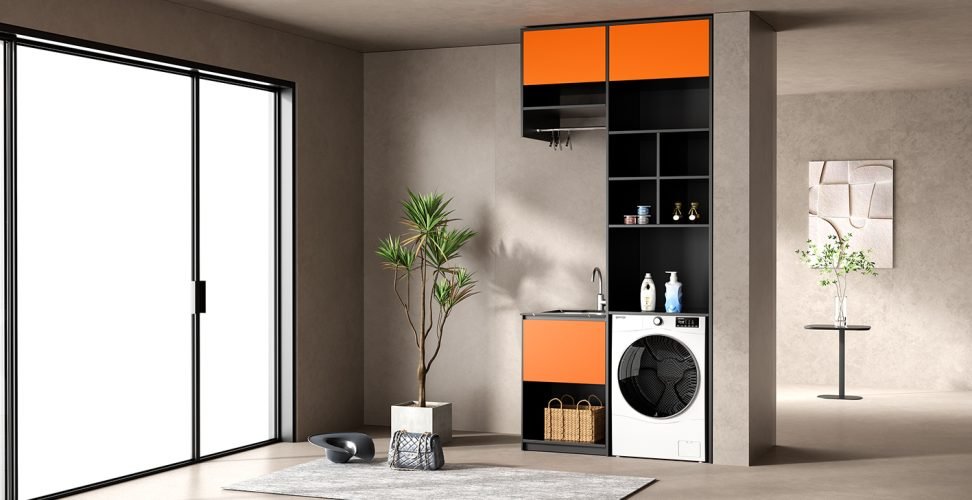
Have you noticed that your balcony laundry cabinet brings different troubles in different seasons? In summer, freshly washed clothes hung next to the cabinet get musty and smelly; in winter, clothes won’t dry even after a week, piling up on top of the cabinet and taking up space; in plum rain season, you open the cabinet door only to find mold spots on detergent bottles; in spring and autumn, strong winds blow dust into every crevice of the washing machine…
In fact, a laundry cabinet isn’t a “set-it-and-forget-it” item. Adjusting its design or usage with the seasons is the key to solving these seasonal pain points. Today, I’ll share “four seasonal adaptation plans for balcony laundry cabinets”—from material choices to detailed modifications—to make doing laundry easier every season.
I. Summer: Focus on Preventing “Musty Odors & Moisture”—Keep the Laundry Area Ventilated & Fresh
Balconies get hot in summer (especially south-facing ones, which can reach over 35℃ in the afternoon). Wet clothes and damp rags inside the laundry cabinet easily develop musty odors, and the cabinet itself may age faster due to moisture and high temperatures. The core is to prioritize “ventilation and moisture control.”
✅ 3 Summer Laundry Cabinet Modifications
- Choose “Ventilated Cabinets” Instead of Fully Enclosed Designs
- Replace cabinet doors with louvered doors (wooden or PVC, e.g., IKEA’s Föliage louvered doors, $30-50 per door). The gaps allow air circulation, preventing stuffiness and moisture inside the cabinet. If you already have a fully enclosed cabinet, drill 3-5 small holes (1cm in diameter) at the bottom of the door (attach a dust screen to keep insects out) to speed up air flow.
- Opt for a rattan laundry hamper ($20-30) instead of a plastic one—it’s more breathable, so wet clothes won’t develop a sour smell. Just move it to a ventilated spot on the balcony every evening.
- Add “Temporary Moisture Control” to Reduce Cabinet Humidity
- Place 2 boxes of moisture-absorbing boxes ($5 each, available at supermarkets) in the corners of the cabinet. Replace them weekly—they absorb moisture inside the cabinet, preventing condensation on detergent bottle exteriors.
- Put a small USB-powered exhaust fan ($15-20) on top of the washing machine. Run it for 1 hour after doing laundry to blow away hot, humid air around the machine and reduce odors.
- Pair with “Sun Shade & Water-Repellent” Accessories to Lower Ambient Temperature
- Install a linen sunshade roller blind ($40-60) on the balcony. Pull it down in the afternoon to block direct sunlight—this can lower the cabinet’s surface temperature by 5-8℃.
- Lay a silicone water-repellent mat ($10-15) on the floor. Water drips from wet clothes won’t pool on the ground, and the mat feels non-sticky underfoot. Just rinse it with water daily for cleaning.
Case Study: My Bestie’s Summer Laundry Area Makeover
She used to have a fully enclosed plastic cabinet that always smelled moldy in summer. After modifications:
- Replaced cabinet doors with louvered ones and added moisture-absorbing boxes inside.
- Placed a rattan hamper next to the washing machine and a USB exhaust fan on top.
- Installed a sunshade blind and a water-repellent mat on the balcony floor.
Now, her laundry area stays fresh all summer—even wet clothes left overnight don’t smell bad.
II. Winter: Focus on Solving “Slow Drying & Pipe Freezing”—Let the Cabinet Help “Dry Clothes”
Balconies get cold in winter (temperatures can drop below 0℃ in northern regions). Clothes take a week to dry, and pipes may freeze and crack or the cabinet may get damp and icy, affecting use. The core is to prioritize “auxiliary drying and anti-freezing.”
✅ 4 Winter Laundry Cabinet Upgrades
- Add a “Heated Drying Rack” Inside the Cabinet Instead of Hanging Clothes Outdoors
- Install a wall-mounted heated drying rack (2-tier, $60-80, e.g., Bear’s mini model) on the upper part of the laundry cabinet. It’s plug-in, with a temperature controlled around 40℃—underwear and socks dry in 4 hours. For thick clothes like coats, first hang them on the rack to remove moisture, then move them indoors to finish drying.
- Leave a power outlet next to the drying rack for easy access. Choose an anti-scald model to avoid accidental burns.
- Insulate the Cabinet to Prevent Pipe Freezing
- If the balcony isn’t enclosed, stick aluminum foil insulation foam ($10 per roll) on the outside of the cabinet—focus on areas near pipes to reduce heat loss and prevent freezing.
- Wrap the washing machine’s water inlet pipe with sponge insulation sleeves ($5 per meter). After doing laundry each day, open the faucet for 30 seconds to drain residual water in the pipe and avoid freezing.
- Store “Clothes-Warming Tools” for Easy Access
- Keep wool dryer balls ($8 for 2) in a cabinet drawer. Add 2 to thick clothes when washing—they reduce tangling and speed up drying.
- Stick hooks inside the cabinet door to hang a hair dryer. Use its low-heat setting for 1 minute to dry 局部 damp spots on clothes in winter. Store it inside the cabinet when not in use to save space.
- Add a “Wind Shield” to the Balcony to Boost Local Temperature
- Install a transparent PC wind shield ($30-40) inside the balcony railing. It blocks cold winds, raising the balcony’s local temperature by 3-5℃—clothes dry twice as fast.
Pitfall Alert: Avoid These!
- Don’t pile wet clothes on top of the cabinet: The cabinet top is cold in winter—wet clothes left there will mold and may seep moisture into the cabinet.
- Don’t use “high-power heaters”: Placing a high-power heater near the cabinet can damage the cabinet and pose safety risks (e.g., clothes catching fire if they touch the heater).
III. Plum Rain Season: Focus on Preventing “Mold & Moisture Regain”—Keep the Cabinet Dry
During southern China’s plum rain season (March-May), balcony humidity often exceeds 90%. Laundry cabinets easily grow mold, detergent clumps, and even the washing machine interior may breed bacteria. The core is to prioritize “full waterproofing and active dehumidification.”
✅ 5-Step Plum Rain Season Laundry Cabinet Protection
- Choose “Mold-Resistant Materials” to Prevent Mold from the Start
- If you haven’t bought a laundry cabinet yet, prioritize stainless steel cabinets + sintered stone countertops (stainless steel doesn’t absorb moisture, and sintered stone is dense—neither grows mold easily).
- If you have a wooden cabinet, apply transparent waterproof and mold-resistant paint ($15 per can) to its surface. Reapply every 2 years to effectively prevent mold growth.
- Seal All Gaps with Caulk to Block Moisture Infiltration
- Reapply waterproof and mold-resistant caulk (neutral silicone, $8 per tube) to the joints between the countertop and cabinet, and around cabinet door seams. Scrape off old caulk first to avoid trapping moisture in gaps.
- Place a rubber waterproof pad ($12 per piece) under the cabinet base to block ground moisture from seeping into the cabinet.
- Use “Active Dehumidification” Inside the Cabinet to Reduce Moisture Retention
- Hang hanging moisture-absorbing bags ($6 for 3) from the top of the cabinet. Replace them weekly and empty collected water promptly.
- Install a USB-powered mini dehumidifier ($30-40). Run it for 4 hours daily to expel moisture from the cabinet. Remember to empty the water tank regularly.
- Clean the Washing Machine Regularly to Avoid Bacteria Growth
- Clean the washing machine weekly with washing machine cleaner ($10 per box). Pour the cleaner in, then run the “tub self-clean” cycle to remove mold from the inner drum.
- Leave the washing machine door open for 30 minutes after use to dry the inner drum—this prevents moisture from getting trapped and breeding bacteria.
- Store “Moisture-Proof Supplies” to Keep Items Dry
- Store detergent in glass airtight jars ($12 each). Seal the jar tightly after use to prevent clumping from moisture.
- Hang laundry bags and gloves on a “hanging rod” inside the cabinet. Place a packet of desiccant ($3 for 10 packets) nearby to speed up drying.
IV. Spring & Autumn: Focus on Preventing “Dust & Clutter”—Keep the Cabinet Tidy
Spring and autumn are dry with strong winds—balconies easily collect dust, which settles in laundry cabinet crevices and on the washing machine surface. These seasons are also “seasonal transition periods” when you need to store off-season clothes and bedding, making the cabinet prone to clutter. The core is to prioritize “dust prevention and flexible storage.”
✅ 4 Spring & Autumn Laundry Cabinet Organization Tips
- Use “Fully Enclosed Cabinets” to Block Dust
- Choose magnetic cabinet doors (they seal tightly when closed, keeping dust out). If there are gaps around the door, attach felt dust strips ($5 per roll) to block most dust.
- Cover the washing machine top with a cotton-linen dust cover ($15). Choose an elasticated style to keep it in place (won’t blow off in wind). Remove and wash it weekly.
- Add “Temporary Storage” for Off-Season Items
- Place a metal multi-tier storage rack (25−30)nexttothecabinet.Storeoff−seasonclothesandbeddingthatneedwashingonit.Lineeachtierwith∗∗transparentdustbags∗∗(8 for 5)—you can see inside and keep items dust-free.
- Add plastic drawer dividers ($10 for 3) inside cabinet drawers. Separate off-season supplies (e.g., silk/wool detergent, cashmere care products) from daily detergent for easy access.
- Clean “Dust Dead Spots” to Keep the Cabinet Interior Clean
- Use a long-handled duster ($8) to clean dust from the cabinet top and crevices once a week—no need to move the cabinet to reach hard-to-access spots.
- Line drawer bottoms with silicone dust mats ($6 each). Dust collects on the mat; just remove and shake it out monthly instead of wiping the drawer repeatedly.
- Add “Dust Screens” to the Balcony to Reduce Dust Sources
- Install invisible window screens ($40-50) on balcony windows. Keep windows open for ventilation while blocking dust.
- Place a plant stand with a dust shield ($20-30) on the balcony railing. Put potted plants on it to prevent dust from plant leaves falling onto the laundry cabinet.
Conclusion: The Core of Seasonal Adaptation—“Adjust to Climate, Don’t Follow Trends Blindly”
In fact, laundry cabinet needs vary by season: “ventilation” in summer, “insulation and drying” in winter, “waterproofing and dehumidification” in plum rain season, and “dust prevention” in spring and autumn. You don’t need a “one-time luxury setup”—small modifications based on your local climate and usage habits will solve most problems.
For example, if you live in the south, focus on waterproofing and mold prevention for plum rain season; if you’re in the north, prioritize insulation and drying in winter; if you’re in an area with strong winds in spring and autumn, dust prevention is key.
If you’re not sure what to prioritize for your area, tell me your city and balcony conditions (e.g., enclosed or not, facing direction)—I’ll help you create a custom seasonal adaptation plan!