FSC-Certified vs. Engineered Metal: The B2B Guide to Sustainable Bathroom Vanities
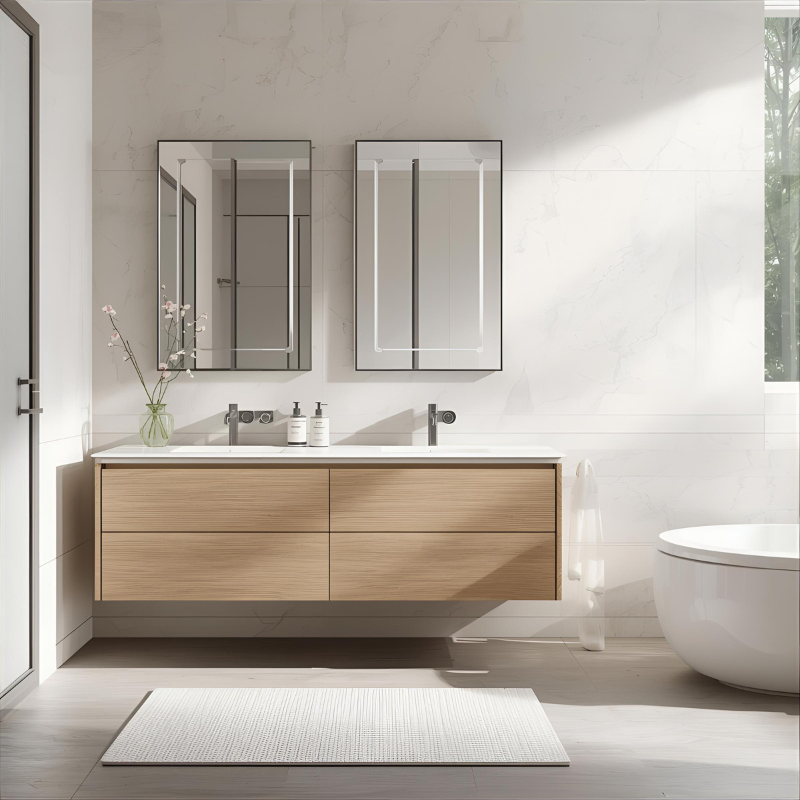
As global environmental regulations tighten and commercial developers strive for green building standards (such as LEED certification), sustainable sourcing in procurement is no longer optional—it is a requirement.
When sourcing bathroom vanities for multi-family developments or hospitality projects, many B2B buyers automatically look for FSC-certified wood. But what does an FSC label actually guarantee? More importantly, is wood truly the most sustainable choice for a high-humidity commercial bathroom environment?
Here is the definitive guide to understanding FSC certification, the common misconceptions surrounding it, and why forward-thinking developers are looking beyond the forest toward advanced engineered metals.
1. What Does FSC Certification Really Mean?
FSC stands for the Forest Stewardship Council. Its primary goal is to promote responsible forest management and create a traceable supply chain for wood products.
When a bathroom vanity manufacturer holds an FSC Chain of Custody (CoC) certification, it simply means that the wood-based materials (like plywood or MDF) used in the cabinet can be tracked back to responsibly managed forests. It ensures that the timber was not illegally logged and that biodiversity was considered during harvesting.
What FSC covers: Solid wood cabinet bases, MDF doors, plywood side panels, and wood veneers.What FSC does NOT cover: Ceramic basins, quartz countertops, metal hardware, mirrors, or adhesives.
2. The Big Misconceptions About FSC Vanities
Many wholesale buyers and project managers fall into the trap of assuming an FSC label solves all their commercial procurement problems. Let's debunk the most common myths:
Misconception 1: "FSC means the vanity is 100% waterproof." FSC certification has absolutely nothing to do with physical performance. FSC-certified plywood absorbs moisture, warps, and swells in a humid hotel bathroom exactly the same way uncertified plywood does.
Misconception 2: "FSC means zero formaldehyde." FSC is a forestry standard, not an emissions standard. A manufacturer can use FSC-certified wood fibers but still bind them together with cheap, high-formaldehyde glues. (To verify low emissions, buyers must look for EPA TSCA Title VI or CARB Phase 2 certifications, not just FSC).
Misconception 3: "FSC guarantees a long product lifecycle." Sustainability is not just about how a material is sourced; it is about how long it lasts. If an FSC-certified wooden vanity rots from steam exposure in a commercial locker room and must be dumped in a landfill after 3 years, the carbon footprint of replacing it completely negates the initial "green" sourcing.
3. The Commercial Dilemma: Sourcing vs. Durability
For commercial real estate developers, hotel brands, and B2B wholesalers, the ultimate goal of sustainable design is longevity and circularity.
Wood, by its very nature, is organic and vulnerable to water. In high-traffic, high-humidity environments, even the most responsibly sourced FSC wood will eventually degrade. This reality is forcing the architectural and design industries to ask a critical question: Is there a vanity material that offers premium aesthetics without cutting down trees at all?
4. The Ultimate Sustainable Alternative: Engineered Metal
Instead of trying to mitigate the natural flaws of wood, leading commercial developers are pivoting to Stainless Steel and Aluminum Honeycomb bathroom vanities.
At JATAII, we engineer commercial bathroom vanities that bypass the forestry debate entirely, offering a level of sustainability and durability that wood simply cannot match.
Zero Deforestation: Producing our aluminum honeycomb and stainless steel vanities requires zero timber harvesting. We preserve forests by completely eliminating wood from the cabinet core.
100% Recyclability (True Circular Economy): When a wooden vanity reaches the end of its life, it is usually sent to a landfill because the paints, veneers, and toxic glues make it unrecyclable. In contrast, aluminum and stainless steel are 100% recyclable indefinitely without losing their physical properties.
Absolute Moisture Resistance: Engineered metals have zero porosity. They will never warp, swell, or harbor mold in a steamy hotel bathroom. This means a JATAII vanity will look flawless for decades, drastically reducing the environmental impact of manufacturing replacement furniture.
Zero Formaldehyde: Because our aluminum honeycomb panels do not rely on the toxic industrial glues used in MDF and particleboard, they are inherently zero-formaldehyde, ensuring pristine indoor air quality for your guests or tenants.
Redefining Green Building Sourcing
FSC certification is an excellent initiative for the traditional lumber industry. However, for B2B buyers outfitting rigorous commercial environments, true sustainability requires thinking beyond the forest.
By specifying Aluminum Honeycomb and Stainless Steel vanities, you are not just checking an eco-friendly box—you are investing in a 100% recyclable, zero-formaldehyde product that will outlast the building itself.
Ready to upgrade your project specifications to true commercial sustainability? [Contact the JATAII B2B export team today] to request a wholesale catalog and discuss how our customizable engineered metal vanities can support your next green building project.
Ready to upgrade your next commercial project?
Contact JATAII today for our 2026 wholesale catalog and a free quote.
Get a Factory Quote