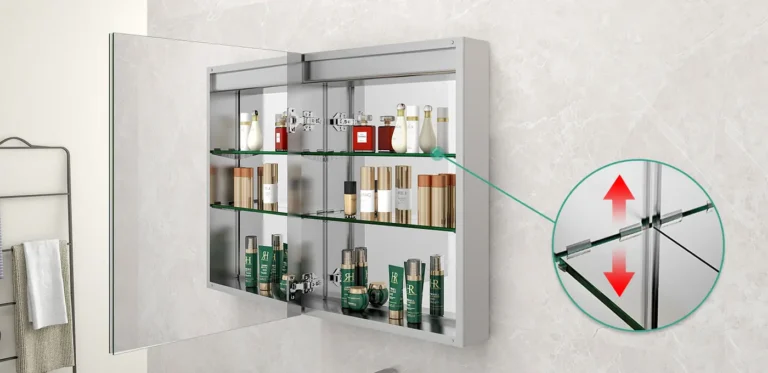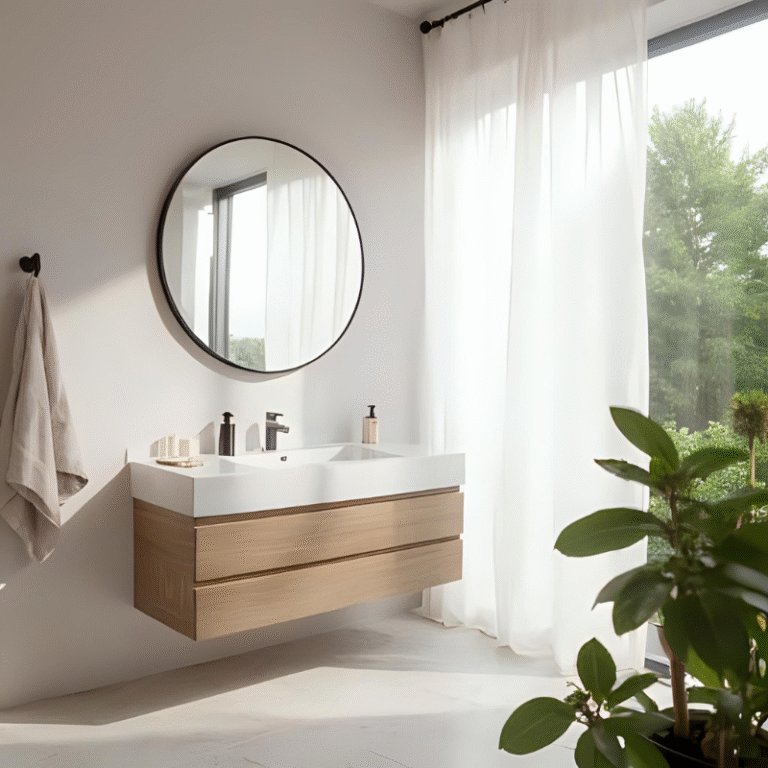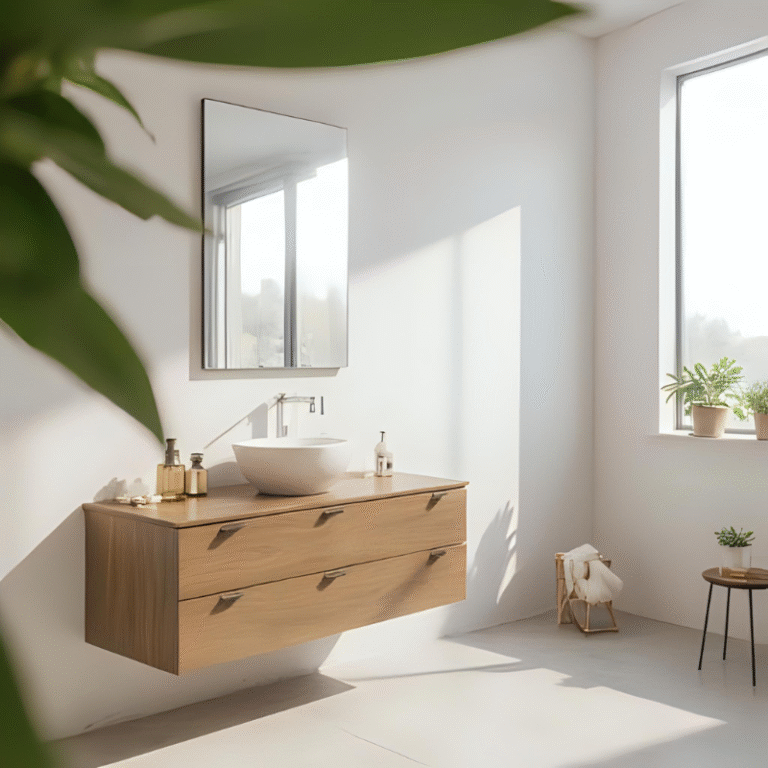
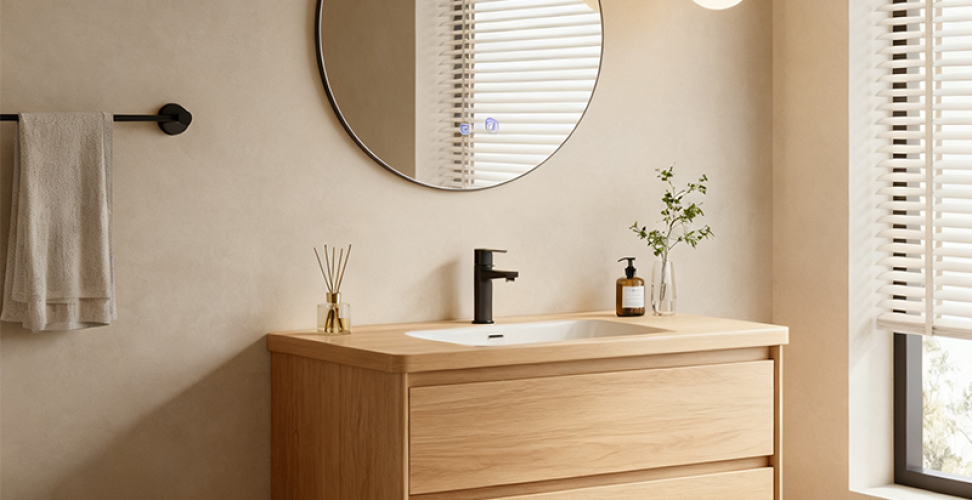
As the bathroom cabinet market enters a “red ocean” of competition, B-end clients face new growth dilemmas that traditional OEM services can’t solve: Small and medium-sized home brands want to launch innovative products but lack R&D and design resources, leading to homogenized competition and low profit margins; cross-border sellers and regional distributors rely solely on product transactions, with weak customer loyalty (easily poached by competitors offering lower prices); multi-channel operators (covering e-commerce, offline stores, and engineering projects) struggle with “one-product-fits-all” mismatches—e-commerce needs fast-turnover 爆款,stores need display-oriented products, and engineering requires standardized solutions, but OEM factories only provide a single product model.
With 20 years of bathroom cabinet OEM experience and resource integration capabilities across the industrial chain, we’ve built a “strategic growth service system” focused on “innovation ecosystem co-construction + deep customer relationship binding + omnichannel product adaptation”. Today, we’ll share how our factory helps you achieve “low-threshold innovation, long-term strategic binding, and multi-channel profit growth” to turn “simple product cooperation” into “inseparable strategic partnerships.”
I. Innovation Ecosystem Co-Construction: Low-Threshold Innovation—Break Homogenization Competition
Small and medium-sized B-end clients often fall into “innovation helplessness”: Independent R&D costs are high (a single new product R&D costs $50k+), design resources are scarce, and market feedback cycles are long. Our “open innovation ecosystem” integrates designers, material suppliers, and end-user resources to help clients launch innovative products with MOQ 20 units and 30-day lead time, reducing innovation costs by 70%.
✅ 1. Co-Design Resource Pool: Access Top Innovation Talents for Free
We build a “co-design resource pool” to share high-end design resources with clients, avoiding “design bottlenecks”:
- Global Designer Network: Partner with 100+ international interior designers (specializing in minimalist luxury, maternal-child, senior wellness, etc.) —clients can select designers based on target market positioning (e.g., Italian designers for EU luxury markets, Japanese designers for minimalist segments). We cover 50% of design fees for small-batch orders (≤100 units), with a one-time design fee of 800−1,500(vs.5k+ for independent cooperation).
- End-User Innovation Workshop: Organize quarterly online workshops (free for cooperative clients) —invite end-users (e.g., luxury villa owners, hotel managers, maternal-child families) to share pain points and demand insights. Our design team converts top user ideas into product prototypes, and clients get priority to launch these “user-centric innovative products.”
- Industry Trend Research Support: Cooperate with global home furnishing trend institutions (e.g., Maison&Objet Trend Lab) to provide quarterly innovation trend reports (e.g., “2025 bathroom cabinet innovation trends: modular smart integration, plant-based material applications”) —guiding clients to innovate in the right direction.
Case Study: A European small home brand wanted to launch innovative maternal-child bathroom cabinets. They selected a French designer from our resource pool, participated in our end-user workshop (collected needs like “detachable baby skincare storage” and “anti-collision soft edges”), and launched 30 units of prototype products in 35 days. The product sold out in 2 weeks on Etsy, with a 40% higher profit margin than regular models—later scaled up to 500 units/quarter.
✅ 2. Modular Innovation Toolkit: Fast Iteration Without Full R&D
We pre-develop 20+ innovative modular components, allowing clients to “assemble innovations” without full R&D:
- Functional Innovation Modules: Pre-develop niche innovative functions (e.g., plant-based antibacterial coating, solar-powered LED lighting, detachable pet grooming storage) —clients can add these modules to existing cabinet models, with MOQ 20 units and unit cost increased by 10−25(vs.5k+ for independent R&D).
- Material Innovation Options: Cooperate with top material suppliers to launch low-cost innovative materials (e.g., bamboo fiber-PVC composite material: 30% more eco-friendly than regular PVC, cost only $2/㎡ higher; recycled ocean plastic-aluminum alloy: meets EU marine environmental standards) —no need for clients to develop materials independently.
- Rapid Prototyping Support: Use 3D printing and rapid mold making (cost $300/set for small batches) to produce prototypes in 3 days—clients can test market response with minimal investment, and iterate quickly based on feedback.
Case Study: A US cross-border seller wanted to launch “eco-friendly bathroom cabinets for millennial consumers.” They selected our “recycled ocean plastic-aluminum module” + “solar-powered LED module” and assembled them on a standard aluminum cabinet frame. The prototype was completed in 3 days, tested with 20 units (MOQ), and achieved a 35% conversion rate on Amazon—later added to their core product line, with annual sales of 3,000+ units.
✅ 3. Innovation Risk Sharing: Reduce Trial-and-Error Costs
We share innovation risks with clients to encourage bold attempts:
- Innovation Trial Program: For first-time innovative products, offer “10-unit trial batches” with a 20% discount (trial fee deductible for bulk orders) —clients test market response without overinvestment.
- Unsold Inventory Support: For innovative products with poor sales (sales volume <30% of the order within 3 months), we help clients modify the product (e.g., replace innovative modules with popular ones) or repurpose the inventory (e.g., sell to complementary channels) —reducing unsold losses by 50%.
- Patent Co-Application: For highly innovative products (with market uniqueness), we co-apply for utility model patents with clients (we cover 60% of patent fees) —protecting innovation results and preventing copycats.
Case Study: A Southeast Asian regional distributor launched 50 units of “plant-based antibacterial PVC cabinets” (innovative material module). Due to low local awareness of plant-based materials, only 12 units were sold in 3 months. We helped them replace the material with popular wood grain PVC (retaining the antibacterial function) and repackaged the product—remaining 38 units sold out in 1 month, avoiding $2,000 in inventory losses.
II. Deep Customer Relationship Binding: From “Product Supplier” to “Strategic Partner”
Most OEM cooperation is based on “transactional relationships”—clients switch suppliers easily for lower prices or better delivery. Our “strategic partnership system” binds clients through brand co-construction, resource sharing, and long-term interests, increasing annual client retention rate to 85% (vs. industry average 20%).
✅ 1. Brand Co-Construction: Build Inseparable Brand Assets
We help clients build unique brand assets through co-construction, making cooperation “irreplaceable”:
- Co-Branded Product Lines: Launch “factory-client co-branded products” (e.g., “XX Factory x [Client Brand] Smart Bathroom Cabinet Series”) —we provide factory’s technical certification and production process endorsement (e.g., “20-year OEM experience, 1,000+ global client verification”), and clients contribute brand channel resources. The co-branded line enjoys exclusive sales rights in the client’s target region for 3 years.
- Brand Story Co-Creation: Integrate the client’s brand story with our factory’s craftsmanship advantages (e.g., “XX Brand’s minimalist design + our seamless welding technology”) —produce co-branded story videos, product manuals, and retail display materials. Help clients enhance brand credibility and premium perception.
- Joint Brand Promotion: Cooperate in marketing activities (e.g., joint participation in overseas exhibitions, co-sponsored home design competitions) —we share 40% of the promotion costs and provide booth design, product samples, and technical support. Help clients expand brand influence with low investment.
Case Study: A Chinese home brand launched a co-branded line with us (“Our Factory x [Brand] Eco-Luxury Aluminum Cabinet Series”). We provided FSC certification and seamless welding process videos, and the brand contributed 200+ offline store channels. The co-branded line’s sales accounted for 30% of the brand’s total bathroom cabinet sales, and the brand has never considered switching suppliers (co-branded assets are difficult to replicate).
✅ 2. Resource Sharing: Mutual Benefit & Win-Win
We open our industrial chain resources to clients, helping them solve business pain points beyond product production:
- Channel Resource Sharing: Share our global channel resources (500+ overseas retailers, 200+ hotel procurement platforms, 100+ cross-border e-commerce aggregators) with core clients—introduce clients to suitable channels based on their product positioning. For example, recommend a Southeast Asian distributor to EU’s Eco-Living Premium retail chain.
- Supplier Resource Sharing: Share our top material supplier resources (FSC wood mills, aluminum profile factories, hardware suppliers) with clients—help clients obtain 10-15% lower material costs for their own non-OEM products (e.g., client’s self-produced bathroom accessories).
- User Data Sharing: For long-term cooperative clients, share anonymized end-user data (e.g., “EU market’s top 3 hot functions: anti-fog mirror, soft-close drawers, smart sensing”) —help clients optimize product selection and marketing strategies.
Case Study: A US cross-border seller (core client) wanted to expand into offline retail channels. We introduced them to US’s Williams Sonoma Home (a partner retail chain) and provided co-branded certification and product compliance documents. The client’s products entered 15 Williams Sonoma Home stores, and offline sales accounted for 25% of their total revenue—annual sales increased by $300,000.
✅ 3. Long-Term Interest Binding: Shared Growth & Benefits
We link our interests with clients’ long-term growth, ensuring “win-win development”:
- Volume-Based Profit Sharing: For clients with annual order volume ≥1,000 units, we share 5-8% of the factory’s gross profit from their orders (paid in the form of order discounts or free value-added services). The higher the client’s sales volume, the higher the profit sharing ratio—encouraging clients to grow with us.
- Exclusive Cooperation Rights: Grant core clients (annual order ≥2,000 units) exclusive cooperation rights in their target region (e.g., exclusive OEM supplier for bathroom cabinets in Southern Europe) —we will not cooperate with other clients in the same region and product category.
- Growth Support Fund: Set up a “client growth support fund” (1% of the client’s annual order volume) —clients can use the fund for innovation R&D, channel expansion, or brand promotion (e.g., using the fund to participate in a trade show, develop a new product prototype).
Case Study: A European hotel group (core client) had an annual order volume of 3,000 units. We granted them exclusive cooperation rights in Western Europe, shared 8% of gross profit (equivalent to
18,000inorderdiscounts),andprovideda30,000 growth support fund. The hotel group used the fund to launch a “smart bathroom renovation program” for their existing branches—our order volume increased to 5,000 units the next year, achieving mutual growth.
III. Omnichannel Product Adaptation: One Client, Multiple Solutions—Maximize Channel Profit
B-end clients increasingly operate multiple channels (e-commerce, offline stores, engineering projects), but different channels have distinct product requirements. Our “omnichannel product adaptation system” provides channel-specific solutions, helping clients increase total revenue by 40% through full-channel coverage.
✅ 1. E-Commerce Channel: Fast-Turnover + Low-Cost + High-Conversion
Core Requirements: Small MOQ, fast delivery, competitive price, and e-commerce-friendly functions (e.g., easy installation, compact packaging).
Adaptation Solutions:
- Boutique Explosive Product Package: Launch e-commerce-exclusive small-batch explosive models (MOQ 15 units, 7-day delivery) —focus on high-conversion functions (e.g., anti-fog mirror, soft-close drawers) and cost-effective materials (PVC, ordinary aluminum). Unit cost 15% lower than offline models, suitable for price-sensitive e-commerce consumers.
- E-Commerce-Friendly Design: Adopt flat-pack structure (reduces shipping volume by 35% and shipping costs by 20%), simple installation (no professional tools needed, 10-minute assembly), and detailed installation videos/QR codes (reduces return rate by 30%).
- Data-Driven Explosive Incubation: Provide e-commerce sales data analysis (e.g., “Amazon’s top 5 search keywords for bathroom cabinets: ‘moisture-proof’, ‘smart’, ‘small bathroom'”) —help clients select explosive product directions and optimize product titles, pictures, and descriptions for SEO.
Case Study: A US Amazon seller used our e-commerce explosive product package to launch 20 units of “small-size moisture-proof PVC cabinets” (60cm width, flat-pack design). The product ranked Top 20 in “Small Bathroom Storage” category within 1 month, with a conversion rate of 3.8% (vs. industry average 1.2%). The client scaled up to 300 units/quarter, and e-commerce revenue increased by $150,000 annually.
✅ 2. Offline Store Channel: Display-Oriented + Premium + Experience-Driven
Core Requirements: Strong visual appeal, premium texture, and in-store experience support (e.g., display props, function demonstrations).
Adaptation Solutions:
- Store-Exclusive Premium Models: Launch store-exclusive models with high-end materials (FSC solid wood, brushed aluminum) and unique designs (e.g., curved cabinet doors, integrated LED light strips) —unit price 30% higher than e-commerce models, with strong display effect. Provide free display props (customized display stands, lighting fixtures, function demonstration posters) to enhance in-store visual appeal.
- In-Store Experience Support: Train store staff on product selling points (e.g., “seamless welding technology, 20-year durability”) and function demonstrations (e.g., smart sensing, anti-fog mirror). Provide “experience kits” (e.g., anti-fog test spray, scratch-resistant test tools) to let customers perceive product advantages intuitively.
- Customized Store Packaging: Provide store-exclusive luxury packaging (rigid gift boxes, velvet lining, brand embossed logos) —enhance unboxing experience and gift-giving value. Support “in-store customization” (e.g., on-site color selection, logo engraving) with MOQ 1 unit and 7-day delivery.
Case Study: A European boutique home store launched our store-exclusive premium model (solid wood + integrated LED light strips). We provided customized display stands and staff training—product became the store’s best-selling bathroom cabinet, with a unit price of €399 (30% higher than e-commerce models) and a monthly sales volume of 50+ units. The store’s bathroom cabinet category revenue increased by 60% after cooperation.
✅ 3. Engineering Project Channel: Standardized + Efficient + Cost-Effective
Core Requirements: Batch uniformity, easy installation, short delivery cycle, and project-specific customization (e.g., brand matching, size standardization).
Adaptation Solutions:
- Project-Specific Standardized Packages: Provide engineering-exclusive standardized models (fixed sizes: 80/100/120cm width, standard functions: soft-close hinges, waterproof coating) —batch consistency error ≤0.5mm, MOQ 50 units, 10-day delivery. Support project-specific customization (e.g., matching hotel brand color, engraving project logo) with no extra fees.
- Efficient Installation Support: Design modular assembly structure (reduces installation time by 40%), provide detailed installation manuals with 3D diagrams, and send technical teams to supervise large projects (≥200 units) for free. Provide “project installation toolkits” (specialized wrenches, levelers, waterproof sealants) to reduce installation errors.
- Project Cost Optimization: Offer engineering bulk discounts (10-15% off for orders ≥100 units) and split shipment support (e.g., 30% initial delivery, 70% final delivery) —help clients reduce upfront capital pressure and on-site storage costs.
Case Study: A Middle Eastern construction firm ordered 300 units of engineering-standard aluminum cabinets for a luxury apartment project. We provided standardized packages with brand color matching, split shipments into 2 phases, and sent 2 technical supervisors to guide installation—total project cost reduced by 12%, and installation time shortened from 15 days to 8 days. The firm has designated us as their exclusive bathroom cabinet OEM supplier for all future projects.
IV. Our OEM Cooperation Advantages: Three Core Drivers of Strategic Win-Win
- Low-Threshold Innovation: Open design resources + modular innovation tools + risk sharing—help clients launch innovative products with 70% lower costs and MOQ 20 units.
- Strategic Partnership Binding: Brand co-construction + resource sharing + interest binding—client retention rate up to 85%, far exceeding industry average.
- Omnichannel Adaptation: Channel-specific product packages + data support + operational tools—help clients maximize revenue across e-commerce, stores, and engineering channels.
V. Simple Cooperation Process: Start Your Strategic Partnership
- Demand & Positioning Confirmation: Share your business model (e-commerce/store/engineering), target market, innovation needs, and growth goals—we provide a customized strategic cooperation plan within 24 hours.
- Prototype & Plan Validation: For innovative/co-branded products, produce 1-2 samples (3-5 days) for verification; for omnichannel adaptation, confirm channel-specific product packages and support plans.
- Full-Scale Cooperation & Growth: Start formal cooperation → launch co-branded/innovative/omnichannel products → share resources and participate in joint promotion → enjoy profit sharing and exclusive rights → achieve mutual growth.
Conclusion: Your Inseparable Strategic Partner for Long-Term Growth
In the fiercely competitive bathroom cabinet market, “low prices and fast delivery” can no longer retain clients—successful cooperation requires “innovation empowerment, brand co-construction, and omnichannel support.” Our innovation ecosystem co-construction helps you break homogenization, deep partnership binding makes cooperation irreplaceable, and omnichannel adaptation maximizes your revenue potential—all designed to turn you from a “product reseller” into a “market leader.”