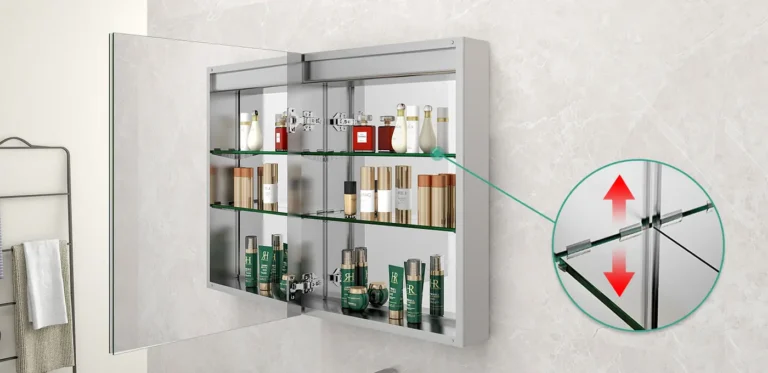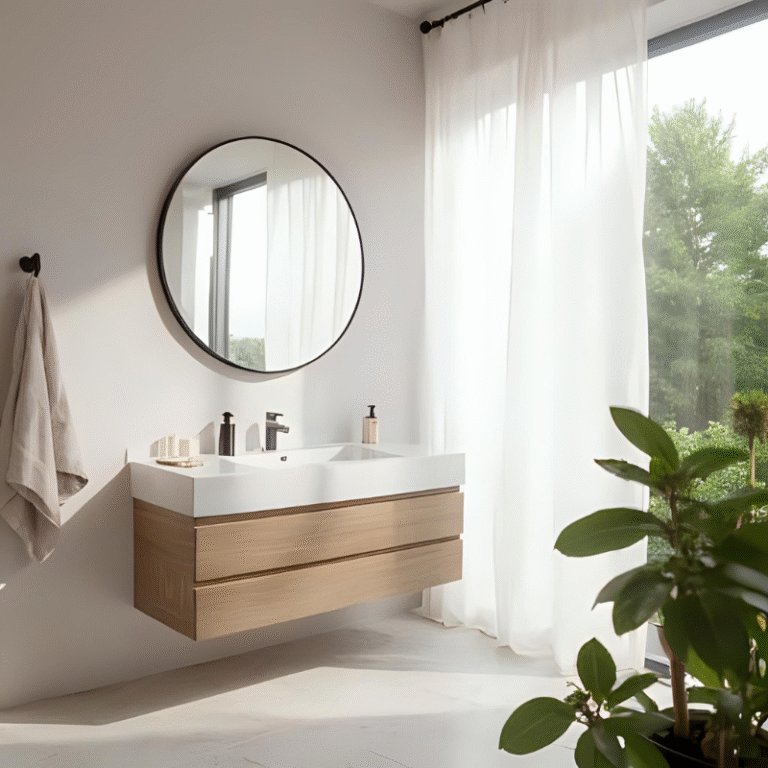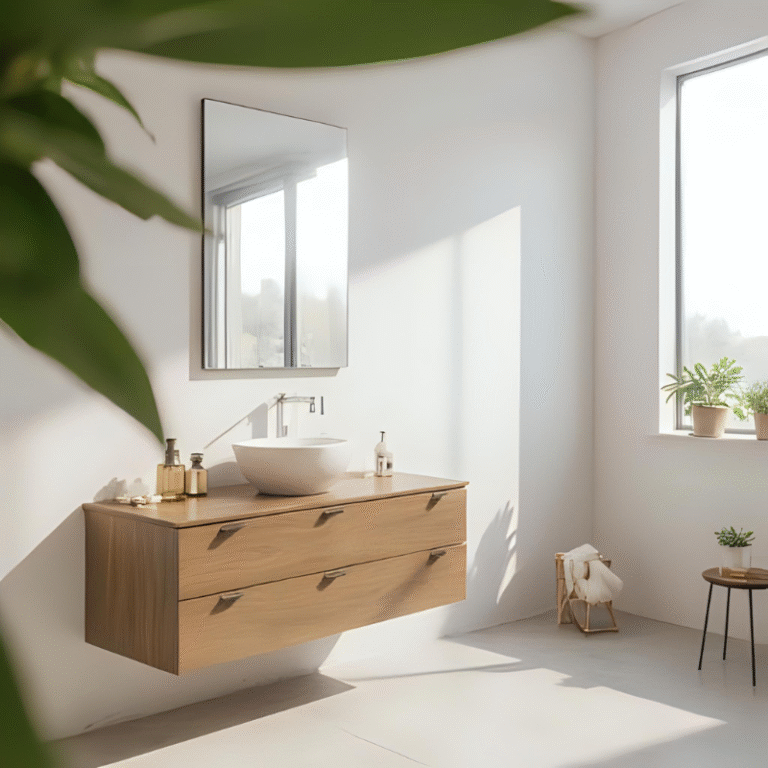
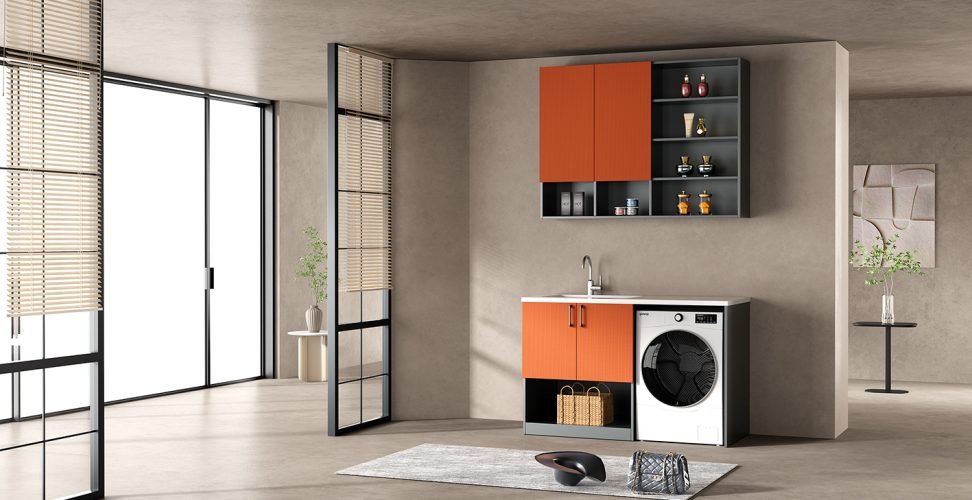
Many B-end clients still face unaddressed pain points in mirror cabinet OEM cooperation: When expanding into Southeast Asia, their cabinets warp due to high humidity, but factories can’t provide anti-mold solutions; start-up brands with limited budgets can’t meet the minimum order quantity (MOQ) of 500 units, leaving their niche market plans on hold; clients want to add AI skin analysis to smart cabinets, but factories lack technical docking capabilities—these “new scenario pain points” make traditional OEM models unable to keep up with diverse client needs.
As a mirror cabinet OEM factory that has expanded into 18 overseas markets, we’ve found that the key to winning in 2025 lies in customized solutions for niche scenarios rather than one-size-fits-all services. Today, we’ll share targeted solutions for three core scenarios: emerging market localization, lightweight cooperation for small clients, and smart tech implementation—helping you turn “cooperation obstacles” into “market opportunities.”
I. Emerging Market Localization: Solve “Climate, Culture, Compliance” Pain Points, Win Overseas Niche Markets
Emerging markets (e.g., Southeast Asia, the Middle East, Latin America) have unique demands—high humidity in Southeast Asia, luxury preferences in the Middle East, strict import regulations in Latin America—but most factories only offer “standard products,” leading to high after-sales rates and failed market expansion. Our “three-dimensional localization system” adapts to market characteristics from product design to delivery.
✅ 1. Climate-Adaptive Design: Targeted Solutions for Humidity, Heat & Sand
Different climates pose distinct risks to mirror cabinets (e.g., mold in humidity, deformation in heat, sand accumulation in dust). We customize materials and structures based on local conditions:
- Southeast Asia (High Humidity: 70%-90%):
- Cabinet body: Use “anti-mold PVC panels” (infused with anti-fungal agents, passing 1,000-hour mold resistance testing per ASTM D3273) instead of solid wood (prone to mold).
- Mirror: Add “double-layer anti-fog film” (works at 30℃-50℃, 90% humidity) to avoid fogging from frequent showers.
- Bottom ventilation: Drill 4mm drainage holes at the cabinet base (covered with anti-insect mesh) to drain accumulated moisture, reducing mold risk by 80%.
- Middle East (High Heat: 40℃-50℃):
- Frame: Use “heat-resistant 304 stainless steel” (thickness 1.5mm, no deformation at 80℃) instead of aluminum (softens in high heat).
- Countertop: Adopt “sintered stone” (heat resistance up to 200℃, no cracking from direct sunlight) instead of laminate (peels in heat).
- Cabinet interior: Line with “heat-insulating foam” (thickness 5mm) to keep skincare products cool, avoiding ingredient degradation.
- North Africa (High Sand: Frequent Sandstorms):
- Door seals: Use “silicone gaskets” (3mm thick, tight fit) to prevent sand from entering the cabinet.
- Hinges: Add “dust covers” to avoid sand jamming, ensuring smooth opening/closing even after sandstorms.
Case Study: A Singapore client wanted to launch mirror cabinets in Malaysia (high humidity). We customized anti-mold PVC cabinets with bottom ventilation—after 6 months of sales, the after-sales rate was only 0.8%, far below the local average of 5%, and the client expanded to Thailand within a year.
✅ 2. Cultural Preference Adaptation: Align with Local Aesthetics & Usage Habits
Emerging markets have unique cultural preferences—ignoring them leads to poor sales. We adjust designs based on local lifestyles:
- Middle East (Luxury Preference):
- Add “gold-plated hardware” (24K gold plating, scratch-resistant) and “mirror backlighting with Arabic calligraphy patterns” (customizable verses, meeting local cultural tastes).
- Increase cabinet depth to 40cm (local clients store more skincare products and perfumes, requiring extra space).
- Southeast Asia (Compact Living):
- Design “wall-mounted foldable cabinets” (folds to 10cm thick when closed, saving space in small bathrooms common in Indonesia and Vietnam).
- Add “built-in laundry detergent holders” (integrated into cabinet sides, adapting to local habits of placing laundry supplies in bathrooms).
- Latin America (Family-Centric):
- Create “double-mirror cabinets” (two side-by-side mirrors, fitting couples or parents and children using the bathroom together).
- Add “child-safe locks” (press-to-open, preventing kids from accessing adult skincare products—aligned with local family values).
✅ 3. Local Compliance & Logistics: Avoid “Customs Detention & High Costs”
Emerging markets often have strict import regulations and complex logistics—we handle the entire process to ensure smooth market entry:
- Compliance Certification:
- Southeast Asia: Obtain “SIRIM certification” (Malaysia) and “SNI certification” (Indonesia) for electrical components (e.g., smart mirrors), avoiding customs detention.
- Middle East: Pass “SASO certification” (Saudi Arabia) and “ESMA certification” (UAE) for materials, ensuring no banned substances.
- Latin America: Provide “INMETRO certification” (Brazil) for safety, meeting local electrical standards (127V voltage).
- Logistics Optimization:
- Partner with local clearing agents (e.g., in Jakarta, Dubai, Mexico City) to reduce customs clearance time from 15 days to 5 days.
- Use “local warehousing” (e.g., in Singapore for Southeast Asia, Dubai for the Middle East) to cut last-mile delivery costs by 30% and shorten lead times to 2-3 days.
II. Lightweight Cooperation for Small Clients: Break “High MOQ & Budget Barriers” for Start-Ups & Niche Brands
Start-up DTC brands, designer studios, and small retailers often struggle with “MOQ requirements of 300+ units” and “high upfront costs”—we’ve launched a “lightweight cooperation system” to lower the entry threshold, making OEM accessible to small clients.
✅ 1. Micro-MOQ & Flexible Pricing: 50 Units Minimum, No More “Forced Bulk Orders”
We’ve optimized production lines to support micro-batch orders, with three tiered MOQ options:
- Micro Batch (50-100 units): Suitable for niche market testing (e.g., a start-up testing “retro mirror cabinets” for Gen Z). Use existing modules (e.g., standard cabinet body + custom decorative panels) to avoid high mold costs. Unit price is 15% higher than bulk orders, but no additional mold fees (saves $500-$1,000).
- Small Batch (101-300 units): Suitable for initial market launch. Offer “module discount” (e.g., 5% off if using 2+ existing modules) and waive sample fees (saves $200-$300).
- Trial Batch (20-49 units): For designer brands testing concepts. Charge a $100 “trial fee” (deducted from future bulk orders) and use leftover materials from large batches to keep costs low.
Case Study: A US start-up wanted to test 30 units of “minimalist mirror cabinets with plant holders” for Instagram. We used leftover PVC panels and existing plant holder modules—total cost was $1,800 (vs. $3,000 at other factories). The trial sold out in 2 weeks, and the client placed a 200-unit bulk order 1 month later.
✅ 2. Budget-Friendly Solutions: Installment Payments & Shared R&D
Small clients often have limited budgets—we offer flexible financial solutions to reduce cash flow pressure:
- Installment Payments: Split the order cost into 3 phases: 30% upfront (to start production), 50% after sample confirmation, 20% before shipment. No interest or fees, suitable for clients with tight cash flow.
- Shared R&D Costs: For clients wanting custom functions (e.g., a small brand adding “USB charging ports”), we split R&D costs 50/50 if the client commits to a 500-unit bulk order within 6 months.
- Cost-Saving Alternatives: Proactively recommend cheaper but high-quality alternatives (e.g., replacing brass hardware with “brass-plated zinc alloy”—saves 30% cost, no visible difference).
✅ 3. Fast Turnaround: 10 Days for Micro Batches, Catch Market Opportunities
Small clients need to test markets quickly—we’ve optimized the production process for speed:
- Sample Delivery: 3 days for existing modules (vs. 7 days industry average), 5 days for 1 custom module.
- Micro Batch Production: 10 days for 50-100 units (uses dedicated small-batch production lines, no waiting for large orders to finish).
- Express Logistics: Partner with DHL and FedEx for door-to-door delivery, cutting shipping time to 3-5 days for most regions.
Case Study: A UK designer brand needed 80 units of “art deco mirror cabinets” for a pop-up store in 2 weeks. We used existing cabinet bodies + custom art deco panels, completed production in 8 days, and shipped via DHL—arrived 1 day early, and the pop-up sold 90% of the cabinets in 3 days.
III. Smart Mirror Cabinet Tech Empowerment: Solve “Tech Docking & Cost” Pain Points, Avoid “Smart Gimmicks”
Many clients want to launch smart mirror cabinets but face “high R&D costs” and “technical docking barriers”—we provide “modular smart solutions” that let clients add smart functions without building a tech team.
✅ 1. Modular Smart Modules: Plug-and-Play, No Tech Expertise Needed
We’ve developed 8 ready-to-use smart modules, all with standardized interfaces—clients only need to choose modules, no custom coding required:
- Basic Smart Modules:
- Wireless Charging Module (Qi-compliant, 15W fast charge, fits most phones).
- Motion-Sensor Lighting (turns on when approaching, off after 5 minutes of inactivity).
- Auto Defogging (detects humidity, turns on automatically, energy-saving).
- Advanced Smart Modules:
- AI Skin Analysis (built-in camera, analyzes skin moisture/oil/acne, generates skincare recommendations—supports 12 languages).
- Voice Control (works with Alexa/Google Home, controls lights/defogging, supports custom commands).
- App Connectivity (syncs with client’s brand app, allows remote control and usage data tracking).
Example: A Chinese home brand wanted to add AI skin analysis to their mirror cabinets. We provided the pre-built AI module—they only needed to add their brand logo to the app interface. The entire process took 2 weeks, vs. 3 months of in-house R&D, and the module cost was $35 per unit (50% lower than custom development).
✅ 2. Technical Docking Support: End-to-End Assistance for Non-Tech Clients
Clients without tech teams often struggle with “module integration”—we offer full support:
- Pre-Integration Testing: We test the smart modules with the cabinet (e.g., ensuring voice control doesn’t interfere with lighting) before shipment, providing a “test report” to confirm functionality.
- On-Site Tech Training: For bulk orders (≥500 units), we send a technician to the client’s warehouse to train their team on “module maintenance” (e.g., how to reset the AI module if it malfunctions).
- Remote Tech Support: Provide a 24/7 tech hotline and video call support—clients can resolve issues (e.g., app connection errors) within 1 hour, no need to hire in-house engineers.
✅ 3. Data Security & Privacy Compliance: Meet Global Regulations
Smart mirror cabinets involve user data (e.g., skin analysis results)—we ensure compliance with global privacy laws:
- Data Encryption: All user data is encrypted (AES-256 standard) and stored locally on the cabinet (no cloud storage, avoiding cross-border data transfer issues).
- Privacy Certifications: Modules pass “GDPR compliance” (EU) and “CCPA compliance” (US), ensuring no unauthorized data collection.
- Custom Privacy Settings: Allow clients to add “privacy prompts” (e.g., a pop-up asking for consent before skin analysis) aligned with local laws.
Case Study: A European client wanted to launch AI mirror cabinets in Germany (strict GDPR). We provided locally stored AI modules with GDPR-compliant privacy prompts—after launch, there were no data privacy complaints, and the product was listed on Amazon Germany’s “Top Smart Home” category.
IV. Long-Term Cooperation: Grow with Clients from “Niche to Scale”
Our goal isn’t just to fulfill orders, but to help clients grow from small players to market leaders. We offer two key growth support services:
- Market Feedback Loop: Share sales data and user reviews from similar markets (e.g., “Southeast Asian users prefer anti-mold cabinets over smart ones”) to help clients adjust products.
- Scale-Up Discounts: As clients’ order volume grows, we offer tiered discounts (e.g., 5% off when annual procurement reaches 1,000 units, 10% off at 5,000 units) to reduce costs as they scale.
Conclusion: The Next Chapter of Mirror Cabinet OEM—Scenario-Specific Solutions Win
In 2025, mirror cabinet OEM cooperation is no longer about “who can produce faster or cheaper,” but “who can solve clients’ unique scenario pain points.” Whether you’re expanding into emerging markets, a start-up with limited budget, or a brand wanting to add smart tech—our targeted solutions help you break through barriers.
If you’re facing these cooperation challenges, we offer a “free scenario assessment”—share your market, budget, and goals, and we’ll tailor a solution that fits your needs. Let’s turn niche opportunities into long-term success.