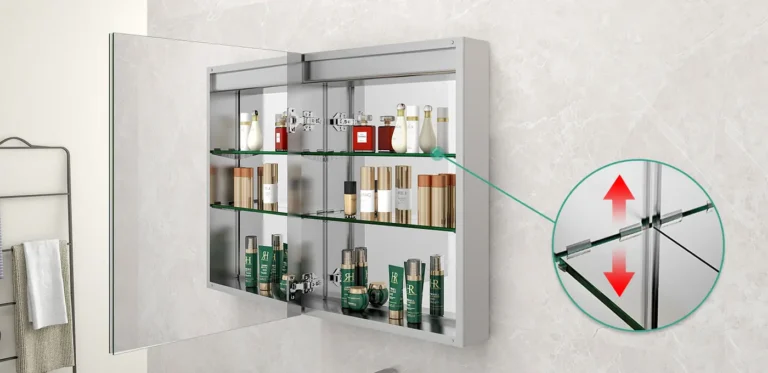
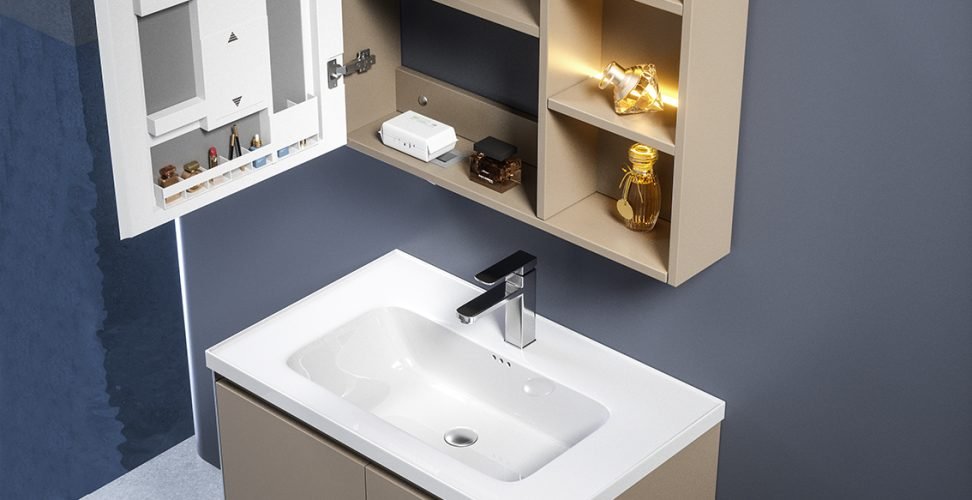
Many B-end clients have had “nightmare experiences” in mirror cabinet OEM cooperation: the sample quality is flawless, but mass-produced units are full of defects; the delivery date is agreed in the contract, yet production delays by a month due to the factory’s insufficient capacity, causing missed market windows; some even face intellectual property (IP) disputes where “factories steal designs and sell them to competitors at low prices”—these issues not only cause financial losses but also disrupt clients’ business plans.
As an OEM factory with 15 years of experience in mirror cabinet production, we have served over 300 clients and witnessed numerous failed cooperations due to “inadequate risk control, weak technical capabilities, and misaligned cooperation positioning.” Today, from three dimensions—risk mitigation, tech empowerment, and long-term win-win—we will share a “pitfall avoidance guide” and “value-added solutions” for mirror cabinet OEM cooperation, helping you not only purchase with confidence but also achieve business growth through collaboration.
I. 3 Core Risks Before Cooperation: Prevent in Advance to Avoid “Post-Cooperation Disputes”
The core demand of B-end clients is “stability and controllability,” yet many factories only focus on “securing orders” and neglect risk prevention, leading to frequent problems during cooperation. Through “preliminary agreements + process control,” we eliminate these three core risks at the initial stage of cooperation.
✅ Risk 1: Quality Discrepancy—”Sample ≠ Mass-Produced Units”? Establish a “Dual Inspection + Sample Sealing” Mechanism
The most frustrating scenario for clients: samples pass strict testing, but mass-produced units suffer from issues like “insufficient panel thickness, failed mirror defogging, and rusty hardware,” while the factory evades responsibility by claiming “batch differences.”
Mitigation Plan:
- Sign a “Quantified Quality Agreement”: Clearly define measurable and traceable testing standards for every quality indicator in the contract, e.g.:
- Panel thickness: 18mm ± 0.2mm (measured with calipers, 30% random inspection per batch);
- Defogging performance: Mirror clarity ≥ 95% within 3 minutes of heating (tested with a haze meter, defect rate ≤ 0.3%);
- Hardware durability: Hinges remain stable after 50,000 opening/closing cycles (third-party test report provided);
All indicators must specify “handling methods for non-compliance” (e.g., rework, replacement, compensation) to avoid ambiguous wording.
- Implement a “Three-Level Sample Sealing” Process:
- Initial Sample Sealing: The factory provides a first-off sample; both parties sign for confirmation after client testing (the sample is retained as the benchmark for mass production);
- Small-Batch Sample Sealing: Before mass production, 50-100 “small-batch trial units” are produced for on-site or video inspection by the client; mass production starts only after confirmation;
- In-Mass-Production Sample Sealing: 10 units are randomly selected per 1,000 units as “batch-sealed samples” with attached test reports; clients can request re-inspection at any time to ensure consistency across batches.
Case Study: A cross-border e-commerce client previously changed 3 factories due to “sample-mass production quality discrepancies.” When cooperating with us, through the “quantified quality agreement + small-batch sample sealing,” the defect rate of 5,000 mass-produced mirror cabinets was only 0.2%—far below the client’s 1% requirement.
✅ Risk 2: Delivery Delay—”Promise ≠ Fulfillment”? Secure Capacity + Breach Compensation to Ensure Timeliness
Delivery delays are a “fatal blow” to B-end clients: hotel projects face penalty fees for missing renovation deadlines, and cross-border e-commerce sellers suffer inventory backlogs when missing promotion windows. However, many factories lose control of delivery dates due to “capacity competition across orders and raw material shortages,” with no clear compensation mechanism.
Mitigation Plan:
- Sign a “Capacity Locking Agreement”:
- After cooperation confirmation, the factory “locks exclusive capacity” for the client in its MES system (e.g., if the client’s order requires 3 production lines, the factory reserves corresponding equipment and labor, and no other orders are allowed to occupy this capacity);
- Define “delivery breakdown milestones,” splitting the total lead time into “raw material arrival (T+3), production (T+10), inspection (T+2), and logistics (T+3)”; progress is updated to the client at each milestone, and reasons + remediation plans are provided within 24 hours of any delay.
- Set Up “Tiered Breach of Contract Compensation”:
- 1-3 days delay: 1% of the order value per day;
- 4-7 days delay: 2% of the order value per day;
- Over 7 days delay: The client has the right to cancel the order; the factory compensates 30% of the paid deposit + the client’s third-party losses (e.g., hotel penalties, cross-border storage fees). This clause is clearly written in the contract with legal validity.
Case Study: A hotel client ordered 2,000 mirror cabinets with a 45-day delivery requirement (to meet the opening deadline). Through “capacity locking + milestone updates,” we completed delivery 2 days in advance. The client later added orders for 3 more branches and became a long-term partner.
✅ Risk 3: IP Theft + Leakage? Sign NDAs + Source Control
Design-focused clients (e.g., premium home brands, designer studios) are most concerned about “factories stealing their carefully developed mirror cabinet designs and selling them to competitors at low prices,” which erodes market competitiveness.
Mitigation Plan:
- Sign a “Full-Cycle Non-Disclosure Agreement (NDA)”:
- Define the scope of confidentiality: Including design drawings, BOM lists, functional parameters provided by the client, as well as trial samples and test data during cooperation;
- Restrict factory responsibilities: The factory shall not disclose any information to third parties or produce products based on the client’s designs without authorization (the restriction remains valid for 2 years even after cooperation ends);
- Set “leakage compensation”: In case of leakage, the factory shall compensate the client’s R&D costs + market losses (minimum RMB 500,000) and assist the client in pursuing third-party liabilities.
- Source Control for Designs:
- Design drawings provided by the client are transmitted in encrypted format (with validity period + watermark); only authorized personnel in the factory’s R&D and production departments have access;
- Trial samples are labeled “Non-Saleable + Client-Specific Mark”; the factory is prohibited from using them for display, sale, or gifting;
- After cooperation ends, the factory must return all design materials (paper versions destroyed, electronic versions deleted) and provide a “destruction/deletion certificate.”
Case Study: A designer brand developed a custom mirror cabinet with “sintered stone + solid wood splicing” to enter the high-end market. By signing an NDA and implementing design control with us, no leakage occurred in 2 years of cooperation. This product became its core profit driver with a 50% market premium.
II. Tech Empowerment: 3 Innovative Technologies to Help Clients Reduce Costs, Accelerate Speed, and Expand Markets
Ordinary OEM factories can only “produce according to drawings,” while professional factories create additional value for clients through technological innovation—shortening prototyping time, reducing eco-compliance costs, and enhancing product competitiveness to help clients gain a market edge.
✅ 1. Digital Prototyping Technology: From 7 Days to 3 Days, 40% Reduction in Trial Production Costs
Traditional prototyping requires manual cutting and assembly, which is time-consuming (7-10 days) and costly (RMB 300-500 per sample). If the client needs design adjustments, a new prototype is required, wasting time and money repeatedly.
Our Solution: Introduce “3D Digital Prototyping System” + “CNC Precision Cutting”:
- After receiving the client’s design drawings, the factory generates a 1:1 3D model within 3 hours (360° view of appearance and structure to identify dimensional conflicts and assembly issues in advance);
- After model confirmation, CNC machines cut panels automatically (tolerance ±0.1mm); combined with modular assembly, samples are produced within 3 days—57% faster than traditional prototyping;
- For design adjustments, only the 3D model needs modification (no new molds required); the cost per adjustment is reduced from RMB 300 to RMB 180, cutting total trial production costs by 40%.
Result: A smart home client needed to test a “smart mirror cabinet with touchscreen.” Through digital prototyping, 3 design adjustments were completed in 1 month with a total sample cost of only RMB 1,200—compared to at least RMB 2,000 and over 2 months with traditional methods.
✅ 2. Eco-Friendly Material R&D: Meet Global Eco-Standards to Unlock High-End Markets
With increasingly strict global eco-regulations (e.g., EU ECOCERT, US GREENGUARD), mirror cabinets made of ordinary materials can no longer enter high-end markets. However, independent R&D of eco-friendly materials by clients is costly and time-consuming.
Our Solution: Establish an “Eco-Friendly Material Laboratory” to advance R&D of compliant materials:
- Cabinet materials: Develop “bamboo fiber composite panels” (70% bamboo fiber, biodegradable, formaldehyde emission ≤ 0.02mg/m³—far below EU E0 standards). 25% cheaper than solid wood, and certified by FSC Forest Stewardship Council and EU REACH 211-substance testing;
- Coating process: Adopt “water-based UV paint” (benzene-free, heavy metal-free, VOC emission ≤ 10g/L), compliant with US CARB Phase 2 standards—suitable for children’s rooms and high-end hotels;
- Packaging materials: Replace traditional PE film with “degradable corn starch film”; use 100% recycled paper for cartons—helping clients meet EU/US “eco-packaging” requirements and avoid customs detention risks.
Case Study: A cross-border client planned to enter the European high-end home market but was repeatedly rejected due to non-compliant materials. After cooperating with us, their mirror cabinets (made of bamboo fiber composite panels + water-based UV paint) passed GREENGUARD certification, entered European home improvement chains, achieved a 40% price increase, and doubled sales in 6 months.
✅ 3. Intelligent Production Tracing System: Clients Can “Monitor Production in Real Time” to Double Trust
Many clients feel “uncertain” during mass production: They cannot verify raw material compliance, production progress, or inspection status, and can only rely on the factory’s “verbal reports”—leading to information asymmetry.
Our Solution: Launch a “full-process intelligent tracing system” with exclusive access for clients:
- Raw material tracing: Clients enter the order number to view supplier information and test reports (e.g., FSC, RoHS) for each batch of panels and hardware—ensuring compliance from the source;
- Production progress tracing: The system displays real-time completion rates of processes like “cutting, sanding, assembly, and inspection” (e.g., “60% completion of assembly, expected to enter inspection in 2 days”); clients can check anytime without repeated communication;
- Finished product inspection tracing: Each mirror cabinet has a unique “tracing code”; clients scan the code to view test data (e.g., light color temperature, defogging performance, hardware testing) for that unit. Defective units can be traced to specific processes and responsible personnel.
Result: A hotel group client monitored the production of 2,000 mirror cabinets in real time via the system. When they identified “low efficiency in the sanding process,” they coordinated with us to adjust capacity, avoiding delivery delays. Later, they designated us as a “core supplier” with an annual procurement volume of RMB 8 million.
III. Long-Term Cooperation Value: Beyond “Supply”—Be a “Business Growth Partner” for Clients
Excellent OEM factories are not just “on-time suppliers” but long-term partners that help clients solve problems in “product iteration, cost optimization, and market expansion.” We achieve “win-win growth” with clients through three key initiatives.
✅ 1. Product Iteration Planning: Layout New Products 6 Months in Advance to Seize Market Opportunities
Market trends evolve rapidly (e.g., “minimalist frameless mirror cabinets” in 2024, “smart health-monitoring mirror cabinets” emerging in 2025). Clients often struggle to keep up with independent R&D. Through “market research + tech reserves,” we help clients plan new products in advance:
- Provide long-term clients with a quarterly Mirror Cabinet Market Trend Report (covering popular materials, functions, and designs—e.g., “Demand for eco-friendly bamboo fiber materials will grow by 35% in 2025”);
- Develop prototype products 6 months in advance (e.g., smart mirror cabinets with “skin moisture detection” for the “health monitoring” trend). Long-term clients enjoy priority free trials and adjustments, launching 3 months earlier than competitors;
- Assist clients in “product lifecycle management”: When a product enters the decline phase, proactively recommend upgrade solutions (e.g., upgrading ordinary defogging mirrors to “auto-defog + UV disinfection” to extend market lifespan).
Case Study: A home improvement chain client launched “bamboo fiber frameless mirror cabinets” 6 months in advance based on our trend report—catching the EU/US “eco-home” boom. Monthly sales exceeded 5,000 units in the first month of launch, becoming a seasonal bestseller with a 15% higher gross profit margin.
✅ 2. Sustained Cost Optimization: Reduce Client Costs by 3%-5% Annually to Boost Profit Margins
Long-term cooperation does not mean “fixed prices”; instead, we help clients reduce costs continuously through supply chain upgrades and production efficiency improvements. Our “Annual Cost Optimization Plan” includes:
- Supply chain integration: As the client’s procurement volume grows, we renegotiate with upstream material suppliers for lower prices (e.g., when a client’s annual procurement increased from 10,000 to 30,000 units, panel unit prices dropped by 8%), and pass on part of the savings to the client;
- Production process upgrades: Introduce automated equipment (e.g., auto edge banding machines, intelligent inspection robots) to increase production efficiency by 20% and reduce unit labor costs by 5%, saving clients 3%-5% of total costs annually;
- Packaging and logistics optimization: Customize “reusable packaging” (e.g., iron turnover boxes, reusable 50 times) based on the client’s long-term order volume—reducing logistics costs by 10%; coordinate “LCL (Less than Container Load) consolidation” for cross-border clients to save 8%-12% on freight.
Case Study: A long-term rental apartment client cooperated with us for 3 years. Through the cost optimization plan, the unit cost of mirror cabinets decreased from RMB 280 to RMB 252. With an annual procurement of 100,000 units, the client saved RMB 2.8 million annually—investing the savings in renovation upgrades to improve tenant satisfaction.
✅ 3. Market Resource Connection: Help Clients Solve “Certification, Channel, and After-Sales” Challenges
Many clients (especially small-medium brands and new cross-border sellers) lack market resources—e.g., “unfamiliar with overseas certification processes” or “unable to find local after-sales teams.” We leverage our resources to help clients overcome these hurdles:
- Certification connection: Recommend cooperating third-party certification bodies (e.g., SGS, Intertek) to cross-border clients, assist in document preparation, shorten certification cycles by 30%, and reduce fees by 20%;
- Channel recommendation: Connect high-quality clients with our other cooperative resources (e.g., referring hotel mirror cabinet clients to renovation engineering companies, and cross-border clients to top Amazon service providers);
- After-sales network: Connect overseas clients with local after-sales teams (e.g., cooperative installation and maintenance service providers in North America and Europe). Clients avoid building in-house teams, and after-sales response time is reduced from 72 hours to 24 hours—boosting client satisfaction by 25%.
Case Study: A new cross-border seller struggled to list products on the US market due to unfamiliarity with UL certification. We connected them with a certification body and assisted in document preparation, completing certification in 15 days (10 days faster than expected). The product successfully launched on Amazon US and ranked among the top 100 in its niche category within 6 months.
Conclusion: The Essence of Mirror Cabinet OEM Cooperation—”Joint Risk Prevention, Joint Tech R&D, and Win-Win Benefits”
For B-end clients, choosing a mirror cabinet OEM factory is not a “one-time purchase” but selecting a partner that helps mitigate risks, provides tech support, and accompanies business growth. Ordinary factories only focus on “order closure,” while professional factories think about “how to help clients earn more and develop more steadily.”
Our factory adheres to the philosophy of “Client Success = Our Success.” Every step—from risk mitigation to tech empowerment, and from cost optimization to resource connection—centers on the client’s long-term development. If you are looking for a “reliable, professional, and growth-oriented” mirror cabinet OEM partner, feel free to share your needs and concerns with us—we not only provide high-quality mirror cabinets but also act as a “catalyst” for your business growth.