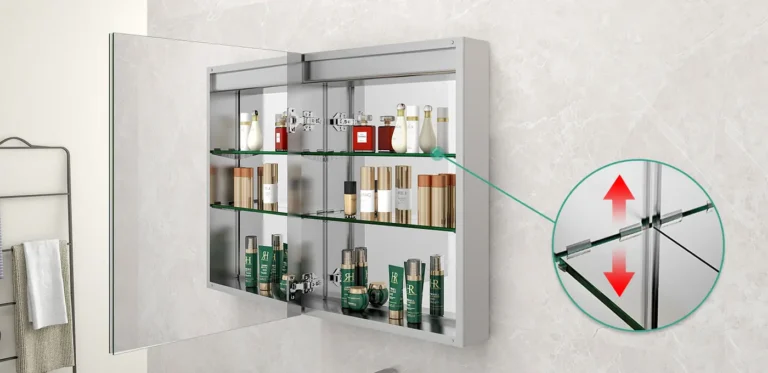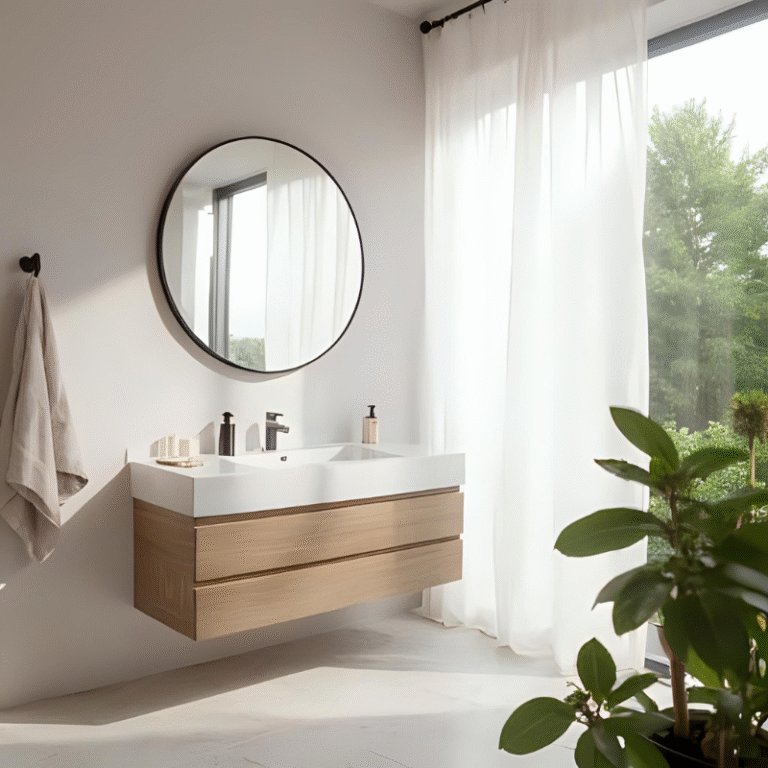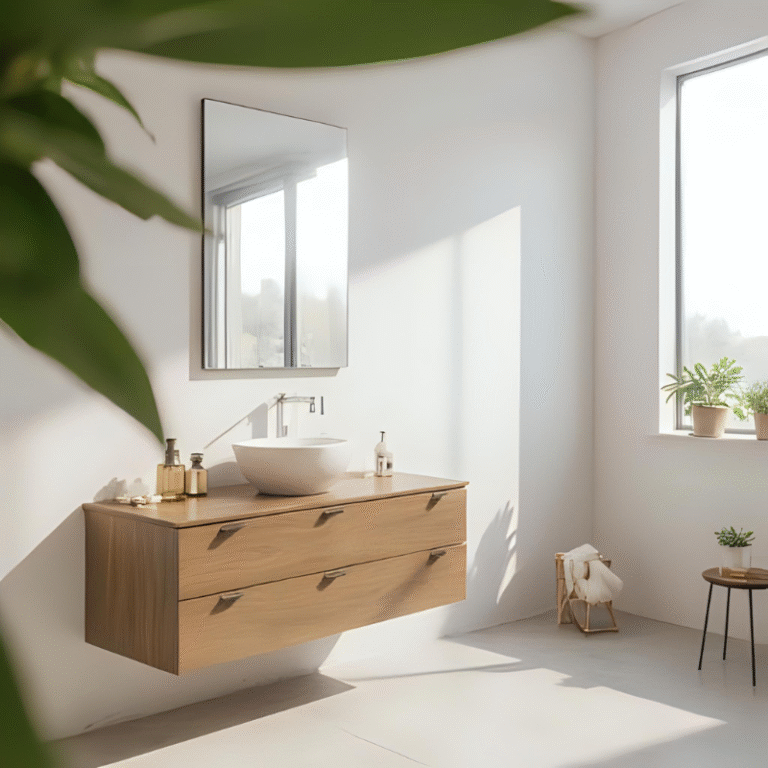
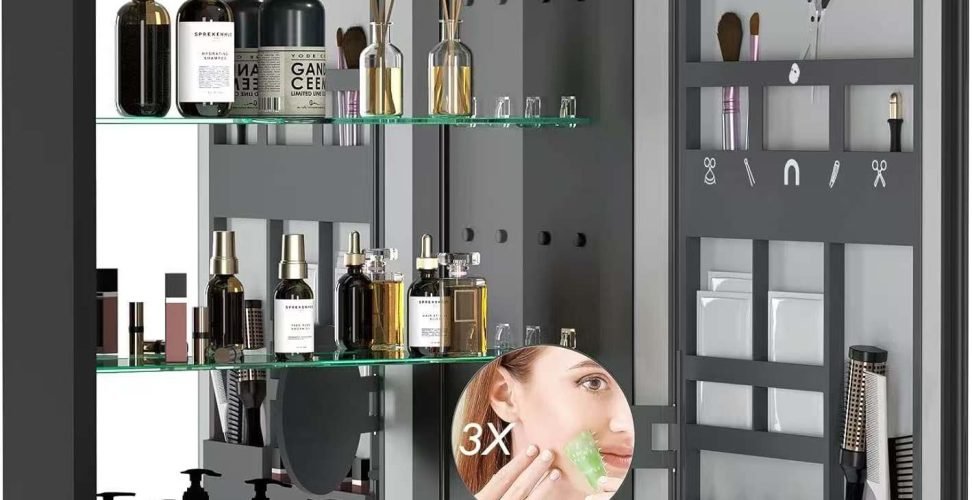
The current mirror cabinet OEM market is trapped in “low-price competition”: Clients only ask, “Can you lower the price by another 5%?” Factories compete on “who can deliver faster,” while ignoring “differences in niche customer needs.” Hotel clients require “fire compliance + 5-year durability,” long-term rental apartment clients need “cost control + rapid replication,” and cross-border premium e-commerce clients demand “localized design + niche functions”—none of which can be met with “one-size-fits-all products.”
As a mirror cabinet OEM factory that has served over 100 niche clients, we’ve discovered: What truly retains B-end clients isn’t “low prices,” but “understanding their industry and solving their unique problems.” Today, we’ll focus on three core niche markets—hotel projects, long-term rental apartments, and cross-border premium e-commerce—to share “customized solutions” from an OEM factory perspective. We’ll also reveal 3 “supply chain cost-reduction tips” to help you obtain scenario-specific products while controlling costs, ensuring you gain a foothold in niche markets.
I. Niche-Specific Solutions for 3 Core Markets: No “Generic Products”—Only “Problem-Solving Products”
Clients in different markets have vastly different “core demands”: Hotels fear frequent after-sales issues, apartments worry about cost overruns, and cross-border sellers struggle with market adaptability. Through “scenario-based research + modular design,” we create tailored solutions for each niche, ensuring products fit seamlessly from day one.
✅ 1. Hotel Project Niche: Focus on “Compliance + Durability + Low After-Sales”—5 Years of Worry-Free Use
The pain points of hotel mirror cabinets include “frequent repairs after installation” (damage from guest misuse), “fire code violations and penalties,” and “inconsistent styles harming brand image.” Solutions center on “durability, compliance, and uniformity”:
- Materials & Craftsmanship: Designed for “5-Year Service Life”
- Cabinets use 18mm-thick multi-layer solid wood panels (with melamine waterproof film)—30% higher load-bearing capacity than standard 15mm panels, resistant to deformation even if guests step on the countertop.
- Mirrors use 5mm-thick anti-glare tempered glass—gentle on the eyes for guest makeup, and breaks into blunt-edged shards to avoid cuts.
- Hinges adopt DTC hydraulic soft-close hinges—tested for 100,000 openings/closing cycles (twice as durable as standard hinges), reducing room maintenance frequency.
- Compliance: Pre-Align with Hotel Fire & Brand Standards
- All materials pass Class B1 flame-retardant certification (meets hotel fire safety requirements, with fire test reports provided).
- Hidden emergency lights inside cabinets (automatically turn on during power outages, complying with Code for Fire Protection Design of Buildings GB 50016).
- Customization per hotel VI guidelines: Laser-engraved brand logos (uniformly placed at the top-right corner of cabinets, with spacing tolerance ≤2mm) and color matching to hotel theme colors (e.g., warm gold for Marriott, light gray for Hilton).
- Delivery & After-Sales: Align with Hotel Construction Schedules
- Support “batch delivery” (shipments based on floor construction progress to avoid on-site stockpiling). Each batch includes “installation positioning drawings” (marking screw hole positions and utility connections, eliminating re-measurement for installers).
- Assign 1 “on-site technical specialist” per 100 units—provide on-site installation guidance and resolve unexpected issues, increasing installation efficiency by 40%.
- Offer “5-year warranty” (free replacement for non-human damage, lifetime accessory supply), reducing hotel after-sales costs by 60%.
Case Study: For a 20-branch hotel chain, we completed delivery of 5,000 units in 120 days. Batch shipments aligned with each hotel’s renovation schedule, and the after-sales rate was only 0.5% one year post-installation—far below the industry average of 3%.
✅ 2. Long-Term Rental Apartment Niche: Balance “Cost + Aesthetics + Rapid Replication”—Stay on Budget
Core demands for long-term rental apartments (e.g., Ziroom, Danke) include “unit cost ≤ 300 RMB,” “aesthetics matching young tenants’ preferences,” and “delivery of 1,000 units within 1 month.” Solutions focus on “cost optimization, standardization, and fast delivery”:
- Cost Optimization: 3 Tips for “Reducing Costs Without Compromising Quality”
- Cabinets use 15mm-thick PVC panels—40% cheaper than solid wood, waterproof and stain-resistant, with spilled skincare products easily wiped clean.
- Eliminate “smart functions” while retaining “basic anti-fog”—use physical anti-fog films (60% cheaper than electronic anti-fog, meeting tenants’ basic needs).
- Adopt “standardized sizes” (only 80cm and 90cm widths available)—mass production reduces mold costs, keeping unit costs under 280 RMB.
- Aesthetics: Match Young Tenants’ “Minimalist + Instagram-Style” Preferences
- Offer only two colors: “pure white” and “light gray” (versatile for any decor, no need to replace cabinets when tenants sublet).
- Use “handleless push-to-open doors” (clean visual appearance, avoiding bumps for tenants with children).
- Add a “phone slot” on the countertop (5cm deep, 15cm wide)—tenants can place phones here while brushing teeth to avoid water damage, enhancing user experience.
- Delivery: 1,000 Units in 1 Month, Aligning with Apartment Handover Schedules
- Lock in raw materials 30 days in advance (sign “supply guarantee agreements” with PVC panel factories to ensure no material shortages during mass production).
- Activate “3 parallel production lines”—daily capacity of 300 units, completing 1,000 units in 4 days (plus 5 days for logistics), totaling a 15-day lead time.
- Use “simple stacked packaging” (10 units per box)—saves 50% of shipping space compared to individual packaging, reducing logistics costs by 15%.
Case Study: For a long-term rental apartment brand with 1,000 units, we completed delivery in 18 days at a unit cost of 275 RMB. In tenant satisfaction surveys, “mirror cabinet practicality” scored 4.8/5 (full score).
✅ 3. Cross-Border Premium E-Commerce Niche: Focus on “Localization + Niche Functions”—Avoid Red Ocean Competition
Pain points for cross-border premium e-commerce (e.g., Amazon private label sellers, independent brand sites) include “severe product homogeneity,” “misalignment with target market usage habits,” and “certification failures preventing listing.” Solutions center on “localized design, niche functions, and compliance certifications”:
- Localized Design: Customized for Target Market Lifestyles
- North American Market: Adapt to “110V voltage,” add “GFCI leakage protection plugs” (complying with UL certification), and design 35cm-deep cabinets (North American bathrooms have more space for additional skincare products).
- European Market: Obtain “CE certification,” use “recyclable packaging” (complying with EU ECODESIGN Directive), and add “humidity sensors” (EU has long plum rain seasons—sensors trigger lights when humidity exceeds 80%).
- Japanese Market: Adapt to “100V voltage,” design 60cm-wide cabinets (Japanese bathrooms are small, fitting narrow models), and add “storage drawers” at the cabinet base (Japanese tenants prefer organized storage for small items).
- Niche Functions: Create “Differentiated Selling Points” to Avoid Price Wars
- Add “UV disinfection compartments”: Reserve a 15cm×10cm UV zone inside cabinets for disinfecting toothbrushes and makeup brushes—30% price premium over standard cabinets.
- Develop “foldable cabinets”: Cabinets fold against walls to save bathroom space (ideal for small apartments), with Amazon search volume increasing by 200% annually.
- Integrate “Bluetooth speakers”: Embed mini speakers in cabinet sides—connect to phones for music playback during showers, catering to young demographics.
- Compliance & Listing: Pre-Complete Certifications & Logistics Preparation
- Provide “full certification packages for target markets” (UL for North America, CE for Europe, PSE for Japan)—factory covers certification fees, no extra cost for clients.
- Support “Amazon FBA warehouse integration”: Pre-apply FBA labels and pre-package products—clients ship directly to FBA warehouses upon receipt, eliminating secondary processing time.
- Include “multi-language compliance documents” (manuals in English, Japanese, German, etc., plus material test reports) to facilitate platform review for listing.
Case Study: For an Amazon private label seller targeting North America, we customized cabinets with “UV disinfection + Bluetooth speakers” (UL-certified). Within 3 months of listing, the product ranked top 50 in its niche category with a 35% price premium and only 2.1% return rate (industry average: 5%).
II. 3 Supply Chain Cost-Reduction Tips for Mirror Cabinet OEM Factories: Save 15%-20% Without Cutting Corners
Many clients assume “cost reduction = cutting corners,” but professional OEM factories can reduce costs by 15%-20% while ensuring quality through “supply chain optimization”—this is the true core competitiveness.
✅ 1. Bulk Raw Material Procurement: “Lock Prices & Volumes” with Upstream Factories—Save 10%-15%
- We sign “annual procurement agreements” with 5 core raw material suppliers (panels, glass, hardware), committing to annual purchases ≥ 5 million RMB. This secures unit prices 10%-15% lower than market rates (e.g., multi-layer solid wood panels cost 150 RMB/㎡ for us vs. 180 RMB/㎡ on the open market).
- Stock up on commonly used materials (e.g., PVC panels, 304 stainless steel) 3 months in advance—avoiding raw material price hikes (e.g., 2024 PVC panel price increases of 20% did not impact our clients due to pre-stocking).
- “Consolidate materials” for clients: If clients need to purchase mirror cabinets, bathroom mirrors, and shelves simultaneously, we bundle procurement—total costs 8%-10% lower than clients sourcing from 3 separate factories.
✅ 2. Modular Design: Reduce Mold Costs—Save Even on Small Batches
- Split mirror cabinets into 3 core modules: “cabinet body, mirror, and functional modules.” Each module features “standardized interfaces” (e.g., wireless charging panels and UV disinfection compartments in functional modules can be freely combined).
- When clients need new functions, no full-set mold redesign is required—only “functional module replacement” (e.g., upgrading from “basic anti-fog” to “smart anti-fog” only requires replacing the mirror module, reducing mold costs by 80%).
- Small-batch orders (e.g., 50 units) qualify for “bulk pricing”: Modules are produced alongside other clients’ orders to share production costs (e.g., Bluetooth speaker modules for a 50-unit order can be produced with a 1,000-unit order for another client).
✅ 3. Lean Production: Reduce Waste & Improve Efficiency—Save 5%
- Adopt “lean production” in workshops: Schedule production based on order demand (avoiding overproduction and inventory buildup) and optimize processes (e.g., reordering “cutting-sanding-assembly” to “cutting-assembly-sanding” reduces handling time, improving efficiency by 15%).
- Reuse scrap materials: Process solid wood scraps into “cabinet handles” (30% cheaper than purchased handles) and PVC scraps into “anti-slip mats” (included with shipments to enhance client experience at no extra cost).
- Digital management: Use MES systems to monitor production progress and identify bottlenecks (e.g., reallocating resources to underperforming cutting machines to avoid delivery delays and rush fees).
III. How to Judge if an OEM Factory “Understands Your Niche”? 3 Key Questions
When selecting a mirror cabinet OEM factory, don’t just ask “Can you do it?” or “How much does it cost?” Ask these 3 questions to assess industry expertise:
- “Have you worked on cases in our industry before? Can you share the problems you solved at that time?”
Knowledgeable factories will provide specifics (e.g., “solved fire certification issues for a hotel chain” or “controlled unit costs for an apartment brand”)—not vague claims like “we’ve worked with many clients.”
- “What exclusive designs do you offer to address our industry’s pain points (e.g., hotel after-sales issues, apartment cost concerns)?”
For example, when hotel clients ask this, knowledgeable factories will mention “100,000-cycle test hinges” or “batch delivery plans”—not generic statements like “our cabinets are durable.”
- “How will you adapt if our needs change (e.g., increased order volume, function adjustments)?”
Knowledgeable factories will propose “flexible adjustment plans” (e.g., “adjust production capacity within 1 week for increased orders” or “deliver module replacement plans within 3 days for function changes”)—not responses like “we’ll need to re-quote and re-schedule.”
Conclusion: A Good Mirror Cabinet OEM Factory Is Your “Niche Market Partner”
In today’s homogeneous mirror cabinet market, what helps you succeed isn’t “lower prices,” but “products tailored to your needs”: Hotels need “worry-free compliance,” apartments need “cost control,” and cross-border sellers need “localized differentiation—only industry-savvy OEM factories can deliver this.
Our factory doesn’t just “produce mirror cabinets”—we “research niche needs to create products that work and drive profitability for clients.” If your team needs mirror cabinets for hotel projects, long-term rental apartments, or cross-border e-commerce, feel free to share your industry pain points—we offer “free niche solution consulting” to help you refine needs, optimize products, and even co-develop niche bestsellers.