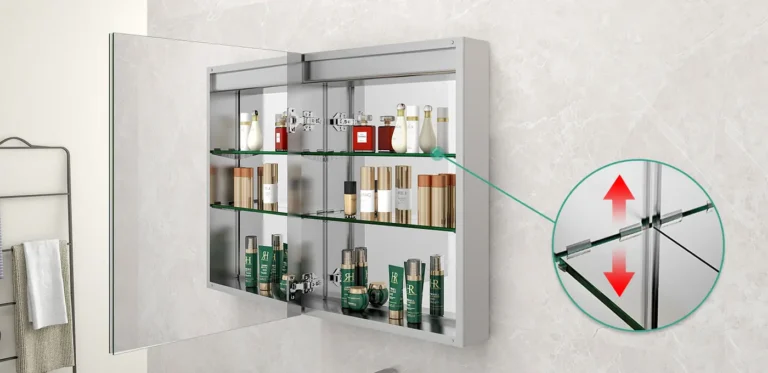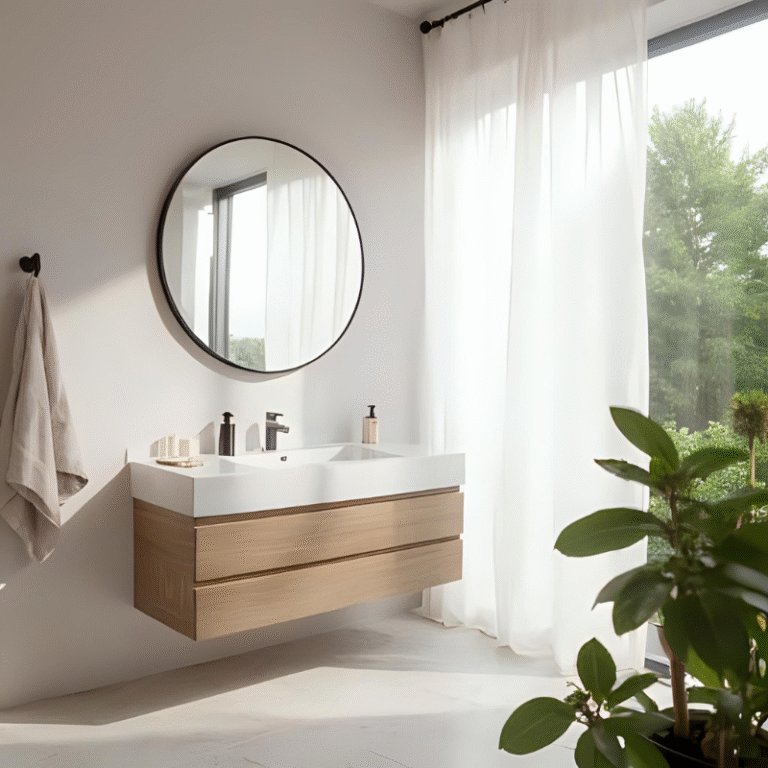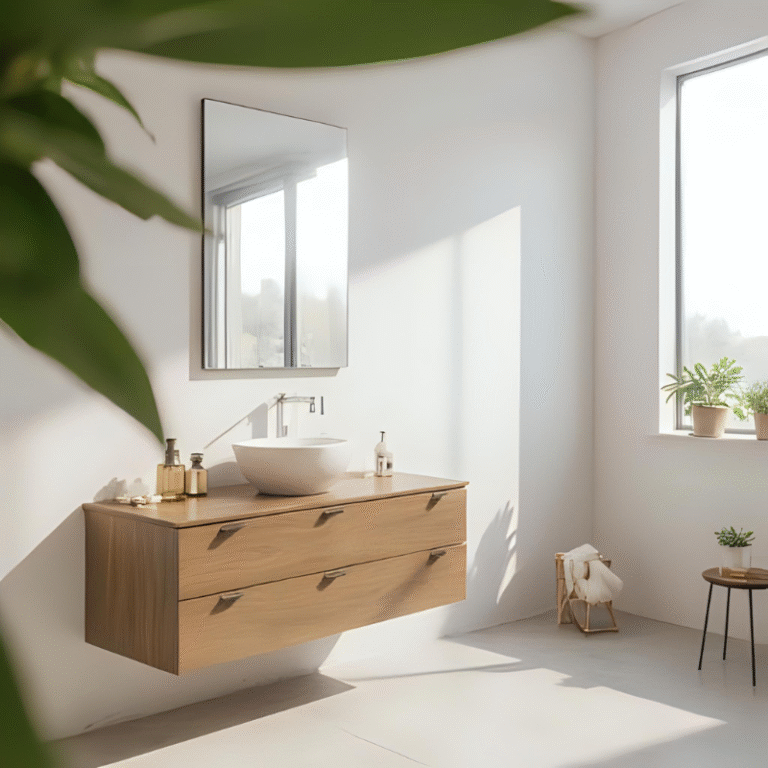
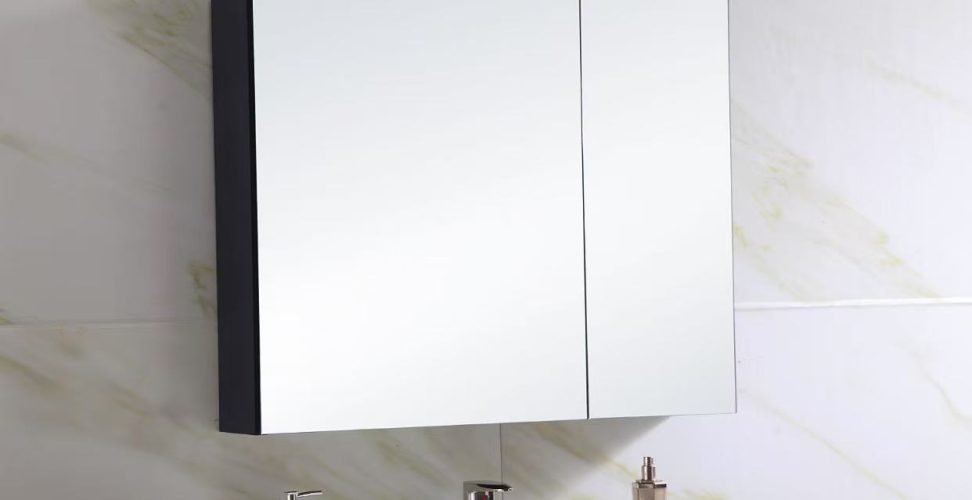
In an increasingly competitive mirror cabinet market, brands and cross-border buyers often face frustrating challenges: struggling to find factories that can quickly respond to customization needs, dealing with high after-sales rates due to unstable product quality, and missing market launch deadlines because of delayed deliveries. A professional mirror cabinet OEM factory is the key partner to solve these pain points.
With 12 years of experience in mirror cabinet production, we have served over 200 domestic and overseas brands (covering home furnishing chains, cross-border e-commerce, and project channels). We deeply understand B-end clients’ needs for “customization flexibility, quality controllability, and on-time delivery.” Today, from an OEM factory’s perspective, we will break down the entire process of mirror cabinets—from “requirement communication” to “bulk delivery”—to help you identify a reliable cooperation partner and efficiently launch your mirror cabinet products.
I. Core Customization Capabilities of Mirror Cabinet OEM Factories: Meeting Diverse B-End Needs
Unlike “standardized products” for retail, B-end clients (especially brands and cross-border buyers) often have personalized demands: adapting to different national voltage standards, integrating brand-specific design elements, or adding unique functions (e.g., multilingual voice control). This requires OEM factories to have “full-dimensional customization capabilities.”
✅ 1. Material & Process Customization: Adapting to Quality Requirements Across Markets
Client demands for mirror cabinet materials vary significantly (e.g., European clients prefer solid wood, Southeast Asian clients favor waterproof PVC, and North American clients prioritize environmental certifications). Our factory offers multi-material customization solutions, with each material complying with the corresponding market’s compliance standards:
- Solid Wood: Uses FSC-certified white oak and walnut. Supports processes like “open-pore natural wood grain finish” and “matte closed-pore finish.” Wood moisture content can be adjusted per client requirements (controlled between 8%-12% to adapt to different climates and prevent cracking/warping).
- PVC/ABS: Adopts food-grade eco-friendly PVC panels (RoHS-certified). Supports surface treatments such as “wood grain imitation” and “solid-color matte.” Ideal for humid regions (e.g., Southeast Asia, South America) with a waterproof rating of IPX4.
- Metal: Frames use 304 stainless steel (1.2mm thick, rust-proof). Supports “brushed” and “electroplated” finishes (e.g., matte black, champagne gold) to meet the needs of light luxury and industrial-style products.
- Special Materials: Customizes trending processes like “microcement cabinets” and “integrated sintered stone countertops” to satisfy differentiated demands of designer brands. Minimum custom batch size is only 50 units (reducing clients’ trial production costs).
✅ 2. Function Integration Customization: Aligning with Usage Needs in Different Scenarios
B-end clients often need to integrate mirror cabinets with their product ecosystems (e.g., cross-border e-commerce clients require Alexa voice control integration, while project clients need compatibility with hotel smart systems). We provide “modular function integration” services, eliminating the need for clients to invest in additional R&D:
- Smart Function Customization:
- Voltage Adaptation: Supports multi-voltage standards (110V for North America, 220V for Asia/Europe, 100V for Japan) with built-in automatic voltage conversion modules.
- Smart Modules: Integrates “wireless charging (Qi-compliant),” “multilingual voice control (English, Spanish, Arabic, etc.),” and “human motion sensing + automatic defogging.” Also supports integration with clients’ brand apps (via open API interfaces).
- Scenario-Specific Function Customization:
- Hotel Projects: Customizes “anti-fog + anti-glare mirrors” (to avoid makeup color distortion for guests), “low-noise hinges” (for undisturbed nighttime use), and “hidden emergency lighting” (meeting hotel fire safety standards).
- Cross-Border Outdoor Scenarios: Customizes “UV-resistant cabinets” (no fading after 600 hours of exposure) and “waterproof touch panels” (IPX5-rated, suitable for open-air bathrooms).
✅ 3. Appearance & Size Customization: Aligning with Brand Identity & Market Needs
Brands often require mirror cabinets to align with their visual identity systems (e.g., logos, color schemes, sizes). We provide end-to-end support from “design sampling” to “bulk production”:
- Appearance Customization: Supports laser-engraved brand logos on cabinet doors/countertops (minimum font size 2mm), custom exclusive color schemes (matching Pantone color codes), and adjustable door styles (frameless, narrow-frame, curved-frame).
- Size Customization: Creates non-standard sizes (e.g., ultra-narrow 60cm width, ultra-deep 35cm depth) based on clients’ bathroom space data, with a tolerance of ±1mm (ensuring installation compatibility).
- Packaging Customization: Offers two options—”neutral packaging” and “brand-exclusive packaging.” Multi-language manuals (supporting 16 languages) and brand stickers can be included in packaging. All packaging passes ISTA 3A transportation testing (reducing cross-border shipping damage rates to below 0.3%).
II. Standardized Production Process of Mirror Cabinet OEM Factories: Ensuring Quality & On-Time Delivery
B-end clients’ biggest concerns are “customization = unstable quality” and “small batches = long lead times.” Through “standardized processes + digital management,” we control quality fluctuations of customized products within ±2% and maintain a stable lead time of 15-20 days for regular orders (5 days faster than the industry average).
✅ 1. Requirement Communication Phase: Proposal & Quotation Within 3 Days
- Step 1: Requirement Breakdown: A dedicated account manager conducts in-depth communication with clients to clarify “product parameters (material, function, size), order quantity (trial production/mass production), delivery requirements (logistics method, packaging standards), and compliance certifications (e.g., CE, FCC, CQC).” A Requirement Confirmation Form is issued to avoid communication discrepancies later.
- Step 2: Proposal Delivery: Within 3 days, we provide a “3D rendering + BOM list + quotation.” If requested, we can also provide samples of the same material (sample fees can be deducted during mass production).
- Step 3: Sample Approval: After clients confirm the proposal, samples are completed within 7 days (10 days for special materials). Samples undergo three rounds of testing—”appearance, function, and durability” (e.g., 50,000-cycle hinge opening/closing test, 24-hour mirror defogging test). Mass production begins only after clients sign off on the sample (preventing inconsistencies between samples and mass-produced units).
✅ 2. Mass Production Phase: Full-Process Digital Control & Quality Traceability
- Raw Material Control: All raw materials undergo “batch testing” before entering the factory (e.g., wood moisture content testing, PVC environmental testing). Each batch of raw materials has a unique traceability code, allowing tracking back to the supplier.
- Production Process Control: The workshop uses an MES production management system, with “quality inspection checkpoints” for each process (cutting, sanding, assembly, function testing). Production automatically pauses if the defective rate exceeds 0.5%, and the quality control team analyzes and resolves issues (ensuring stable bulk quality).
- Finished Product Testing: After mass production, 5% of products are sampled for “full-performance testing” (including waterproof testing, smart function testing, and load-bearing testing). Test reports are shipped with the goods, and clients can access test data for each batch at any time.
✅ 3. Delivery Phase: Multi-Logistics Solutions to Reduce Client Costs
- Logistics Methods: Supports three options—”factory pickup, domestic delivery, and cross-border logistics.” Cross-border clients can choose “full container load (FCL)/less than container load (LCL) sea freight,” “air freight,” or “courier.” We have long-term partnerships with COSCO Shipping and DHL, offering logistics costs 12%-15% lower than clients’ independent procurement.
- Delivery Guarantee: Lead time for regular orders (≤1,000 units) is 15-20 days. For urgent orders (e.g., clients rushing for promotion deadlines), an “express production line” can be activated to shorten lead time to 10 days (with a rush fee of approximately 8% of the order value).
- After-Sales Support: Each shipment includes an “after-sales accessory kit” (containing hinges, screws, defogging films, etc.—3% of the order quantity). If quality issues arise, we provide a solution within 48 hours (including accessory replacement or return/refund, with shipping costs covered by the factory).
III. Quality Control System of Mirror Cabinet OEM Factories: A Core Guarantee for B-End Clients
For brands and project clients, “product quality” directly impacts brand reputation and after-sales costs. Through “full-process quality inspection + third-party certification,” we control the mirror cabinet after-sales rate to below 1.5% (industry average is 3%-5%).
✅ 1. Incoming Quality Control (IQC): Controlling Quality at the Source
All raw materials (panels, mirrors, hardware, smart modules) undergo three rounds of inspection by the quality control department before entering the factory:
- Appearance Inspection: Checks for scratches on panels, bubbles in mirrors, and burrs on hardware.
- Performance Inspection: Tests panel waterproofness (no swelling after 24-hour immersion), mirror defogging effectiveness (no fog after 30-minute heating), and hardware load-bearing capacity (hinges support 8kg and withstand 50,000 openings/closing cycles without damage).
- Compliance Inspection: Verifies raw material certification documents (e.g., FSC, RoHS, CE) to ensure compliance with the client’s target market requirements (e.g., European clients require REACH reports).
✅ 2. In-Process Quality Control (IPQC): “Quality Red Lines” for Each Process
Five key quality inspection checkpoints are set up in the workshop, each with clear “pass standards.” Defective products are never allowed to move to the next process:
- Cutting Process: Size tolerance ≤ ±0.5mm, no burrs on cuts.
- Sanding Process: Surface roughness of solid wood cabinets ≤ Ra 6.3μm (smooth to the touch, no particles).
- Assembly Process: Cabinet door gap ≤ 1mm, no jamming when opening/closing drawers (resistance ≤ 5N).
- Function Testing: For smart mirror cabinets, tests include “light color temperature deviation ≤ ±200K,” “wireless charging efficiency ≥ 70%,” and “defogging time ≤ 3 minutes (from fully fogged to clear).”
- Cleaning & Packaging: Finished products are free of fingerprints and dust. They are wiped with lint-free cloths before packaging and covered with PE protective film (to prevent shipping scratches).
✅ 3. Outgoing Quality Control (OQC): Full-Performance Testing Simulating Real-World Use
After mass production, the quality control team samples 5% of finished products for “real-world use simulation” testing to ensure optimal user experience:
- Environmental Testing: Mirror cabinets are placed in a “temperature and humidity chamber” (-20℃ to 60℃) for 48-hour cycle testing to check for material deformation and smart function stability.
- Durability Testing: Cabinet doors are opened/closed 500 times and drawers 300 times consecutively to test hardware durability.
- Load-Bearing Testing: A 10kg weight is placed on shelves (simulating a shelf full of skincare products) to check for deformation after 24 hours.
IV. 4 Key Indicators for Choosing a Mirror Cabinet OEM Factory: A Guide for B-End Clients to Avoid Pitfalls
Many clients are tempted by “low prices” and “fast lead times” when choosing an OEM factory, only to face cooperation failures due to quality issues and poor communication. Based on our service experience, we recommend evaluating factories from the following four dimensions:
✅ 1. Customization Response Speed: Evaluate the “Requirement-to-Sample” Cycle
A reliable OEM factory can deliver a proposal within 3 days and complete sampling within 7 days (10 days for special materials). If a factory takes more than 10 days to provide a proposal, its R&D team has weak responsiveness, and more communication delays are likely during mass production.
✅ 2. Quality Certifications: Check Compliance with Target Market Standards
Different markets have varying certification requirements for mirror cabinets (e.g., CE for Europe, FCC for North America, CQC for China). Factories must provide test reports from third-party authoritative institutions (e.g., SGS, Intertek) to prevent clients from having products seized by customs due to non-compliance.
✅ 3. Production Scale: Verify Capacity for “Small-Batch Trial + Large-Batch Mass Production”
Start-up brands often need 50-100 units for market testing, while mature brands may require a single mass production run of 5,000+ units. A reliable OEM factory must have “flexible production capacity” (willing to take small batches and capable of meeting large-batch lead times) and at least 3 production lines (to handle orders from multiple clients simultaneously).
✅ 4. After-Sales Support: Check for Clear After-Sales Policies
Factories must provide clear terms for “after-sales response time (e.g., within 48 hours),” “accessory replacement ratio (e.g., 3%),” and “return/refund policies.” This prevents factories from evading responsibility for quality issues. (We recommend specifying these terms in contracts to reduce cooperation risks.)
V. Cooperation Case: How to Quickly Launch Cross-Border Mirror Cabinet Products via an OEM Factory
A cross-border e-commerce client (focusing on the North American market) faced the following challenges: needing to customize 110V smart mirror cabinets with Alexa voice control, obtain FCC certification, and deliver 500 units within 30 days (for Black Friday promotion).
Our cooperation process was as follows:
- Requirement Communication (3 Days): Confirmed product parameters (material: 304 stainless steel + anti-fog mirror; functions: Alexa voice control + wireless charging; size: 80cm wide × 70cm tall; certification: FCC) and delivered 3D renderings + quotations.
- Sampling & Approval (7 Days): Completed 2 samples within 7 days. After testing, the client requested “optimization of voice control response speed.” We adjusted the software algorithm within 2 days and re-sampled for confirmation.
- Mass Production & Testing (18 Days): Activated 2 production lines for mass production, updating the client on daily progress (accessible via the MES system). After production, 5% of products underwent re-inspection for FCC certification.
- Delivery (2 Days): Shipped via DHL, with FCC reports, multi-language manuals, and after-sales accessory kits included. The client successfully launched the product before Black Friday, with an after-sales rate of only 0.8%.
Conclusion: A Professional Mirror Cabinet OEM Factory Is a “Product Partner” for B-End Clients
For brands, cross-border buyers, and project clients, choosing a reliable mirror cabinet OEM factory not only solves issues related to “customization, quality, and delivery” but also reduces product costs and enhances market competitiveness through the factory’s supply chain advantages (e.g., low bulk raw material procurement costs, mature processes).
If your team is seeking a mirror cabinet OEM cooperation partner, evaluate factories based on “customization capabilities, quality control, and delivery guarantees.” Our factory offers free sampling (sample fees deductible during mass production) and free proposal design services. Feel free to contact our account managers to schedule factory audits (supporting video factory audits and on-site factory audits) and efficiently launch your mirror cabinet products.