
Bathroom Cabinet OEM Manufacturer 11.0: Gen-Z Adaptation + Flexible Supply Chain 4.0 + Tangible ESG Value
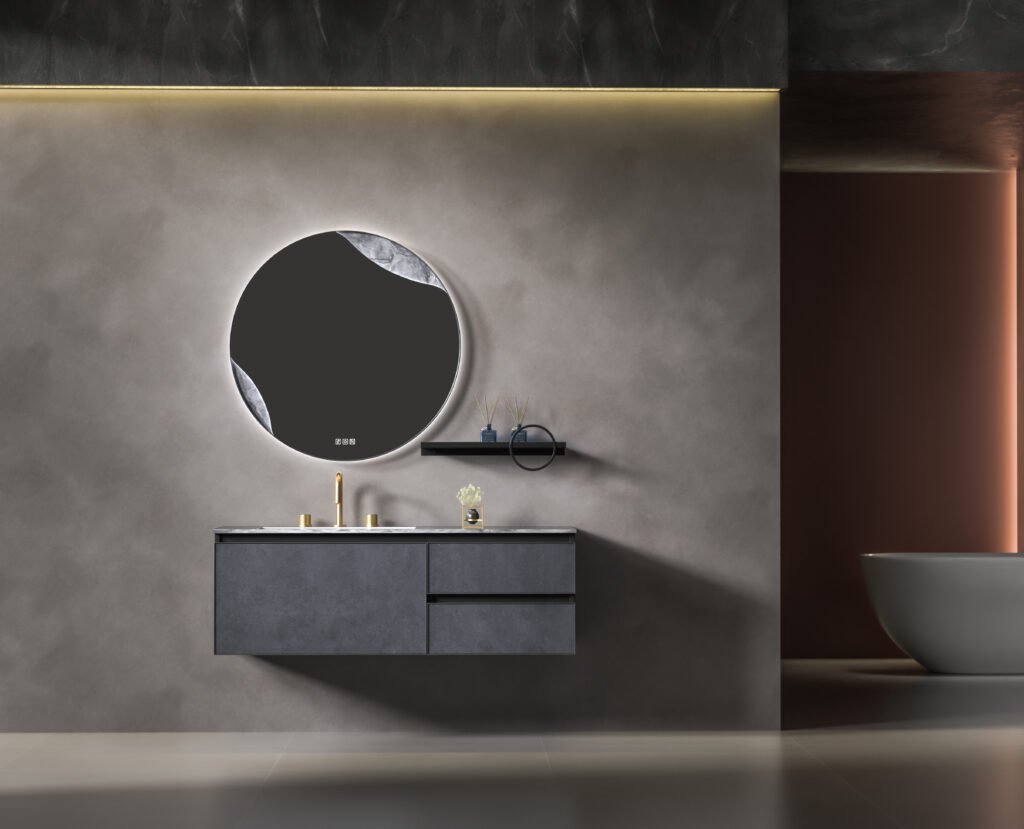
As Gen-Z becomes the core consumer group (accounting for 45% of global bathroom furniture consumption by 2025) and market demand tends to “personalized, on-demand, and value-driven,” B-end clients face new growth dilemmas: Traditional products lack Gen-Z’s favorite “personalized expression” and “interactive experience,” leading to low conversion rates among young consumers; flexible production still has limitations (e.g., custom pattern MOQ ≥50 units, design modification cycle ≥3 days); ESG claims are limited to “eco-friendly materials” without tangible expressions (e.g., no visible carbon reduction marks, no participation channels for young consumers), failing to resonate with Gen-Z’s “sustainable consumption” values. With 20 years of bathroom cabinet OEM experience and in-depth research on Gen-Z consumption habits and supply chain innovation, we’ve built a “young-oriented + agile + value-visible” service system focused on “Gen-Z consumption adaptation + flexible supply chain 4.0 + tangible ESG value”. Today, we’ll share how our factory helps you achieve “accurate capture of young consumers, extreme flexible supply, and visible sustainable value” to break through the youth market bottleneck and build a brand image favored by the new generation. I. Gen-Z Consumption Adaptation: Personalized + Interactive + Emotional—Capture Young Consumers Gen-Z consumers pursue “self-expression,” “interesting interaction,” and “emotional resonance”—traditional standardized bathroom cabinets can’t meet their needs. Our “Gen-Z exclusive customization system” integrates personalized design, interactive functions, and emotional elements, helping clients increase young consumer conversion rate by 40% and social media sharing rate by 50%. ✅ 1. Hyper-Personalized Customization: Low MOQ Realizes “One Person One Style” Gen-Z hates “cookie-cutter products”—we break the limit of custom MOQ to meet their personalized expression needs: Case Study: A US Gen-Z-focused DTC brand wanted to launch “anime-themed bathroom cabinets” for young renters. We supported custom anime patterns (MOQ 10 units) and modular neon light strips—product price $199/unit, sold 300+ units in 1 month on TikTok Shop. 60% of buyers shared unboxing videos on social media, bringing 200+ new customers via organic traffic. ✅ 2. Interactive Experience Design: Turn “Static Products” into “Interactive Toys” Gen-Z loves “interesting interactions”—we integrate low-cost interactive functions to make bathroom cabinets “playable”: Case Study: A Southeast Asian Gen-Z cross-border seller added touch-sensitive light modules and QR code interactions to 50 units of PVC cabinets. Young consumers loved the “color-changing + music sync” function—35% of buyers shared assembly videos and light effect demos on Instagram and TikTok, with a total of 100k+ views. The product’s young consumer repurchase rate reached 30% (vs. industry average 12%). ✅ 3. Emotional Element Integration: Link Gen-Z’s “Values & Interests” Gen-Z buys products not just for functions, but for “emotional identity”—we integrate elements they care about (e.g., environmental protection, pet love, subculture) into product design: Case Study: A European 新锐家居品牌 collaborated with a local street art IP to launch 30 units of co-branded cabinets (graffiti patterns + recycled materials). The product was priced at €299/unit (25% higher than basic models) and sold out in 5 days—60% of buyers were Gen-Z subculture lovers, and the brand’s social media followers increased by 15k, with 80% of new followers aged 18-30. II. Flexible Supply Chain 4.0: On-Demand + Agile + Zero Inventory—Supply Response Speed Up by 60% Traditional flexible production still has pain points for Gen-Z’s “small-batch, fast-turnover, frequent modification” needs: Custom pattern MOQ is too high, design modification takes time, and inventory backlogs are easy. Our “flexible supply chain 4.0” integrates digital printing, intelligent scheduling, and on-demand production to achieve “MOQ 5 units, 48-hour design response, 7-day delivery,” solving the pain points of young-oriented product supply. ✅ 1. Digital Printing Technology: Break Custom Pattern MOQ Limit We adopt industrial-grade digital UV printing technology to realize “low MOQ custom patterns” without mold restrictions: Case Study: A US TikTok seller wanted to test 8 units of “custom photo bathroom cabinets” (Gen-Z loves printing couple photos or pet photos). Using our digital printing technology, we completed sample confirmation in 1 day, production in 5 days—product sold out in 3 days, and the seller scaled up to 50 units/order, with a gross margin of 65%. ✅ 2. Intelligent Supply Chain Scheduling: 48-Hour Response to Design Modifications We build an “intelligent scheduling platform” to link design, production, and logistics, realizing rapid response to Gen-Z’s frequent design modifications: Case Study: A European Gen-Z brand modified the pattern of 20 units of cabinets 3 days after placing the order. Our intelligent scheduling platform adjusted the production plan within 2 hours, replaced the printing file, and still delivered on time—client’s young consumers praised the “fast response to personalized needs,” and repeat orders increased by 35%. ✅ 3. On-Demand Production + Zero Inventory Support: Reduce Youth Market Test Risks Gen-Z market changes fast—clients fear “unsold inventory” for personalized products. Our “on-demand production + consignment sales” model helps them test the market with zero inventory pressure: Case Study: A Southeast Asian Gen-Z cross-border seller tested 5 units of “graffiti-style cabinets” via TikTok Shop consignment. All 5 units sold out in 2 days, and the seller scaled up to 100 units—no inventory pressure, and the product became a “TikTok viral item” with 500+ units sold in 1 month. III. Tangible ESG Value: Visible + Participable + Propagandable—Resonate with Gen-Z’s Sustainable Values Gen-Z is the core force of “sustainable consumption” (68% of Gen-Z are willing to pay 20%+ premium for sustainable products), but traditional ESG claims are too vague. Our “tangible ESG system” turns abstract sustainable values into visible marks, participable activities, and propagandable content, helping clients win Gen-Z’s recognition and social media communication. ✅ 1. Visible ESG Marks: Let Sustainable Value Be “Seen” We add tangible ESG marks to products and packaging to make sustainable claims credible: Case Study: A US Gen-Z DTC brand added carbon footprint QR codes and recycled material marks to their cabinets. 70% of young buyers scanned the QR code to view carbon data, and 45% shared the “low-carbon information” on social media—product conversion rate increased by 28%, and it was selected as “Gen-Z Favorite Sustainable Product” by a US youth lifestyle magazine. ✅ 2. Participable ESG Activities: Let Gen-Z “Join” Sustainable Actions We design participable
Bathroom Cabinet OEM Manufacturer 10.0: High-End Tech Democratization + Customer Asset Operation + Scene Ecosystem Synergy
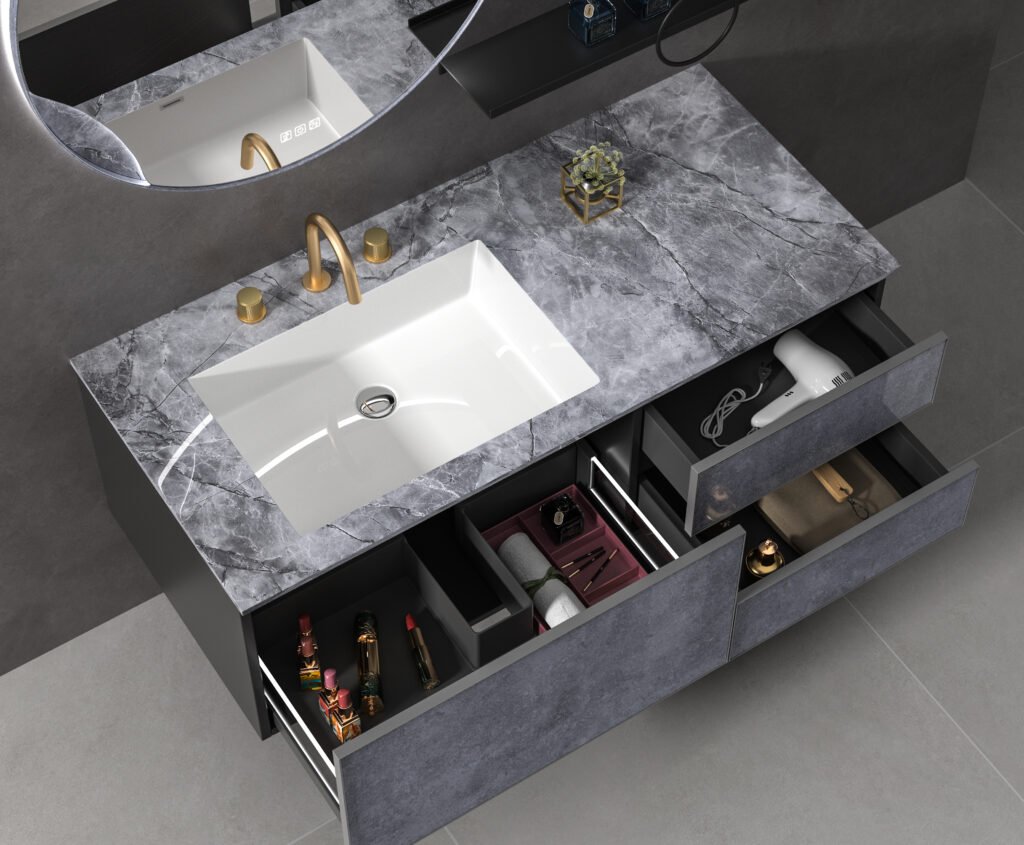
As the bathroom cabinet market enters the “value competition” era, B-end clients face new growth bottlenecks that traditional OEM services cannot solve: Small and medium-sized home brands want to integrate high-end technologies (e.g., AI sensing, IoT linkage) but are deterred by high R&D costs and complex implementation; cross-border sellers and regional distributors treat clients as “one-time transaction objects,” lacking systematic operation to convert them into reusable assets; products are limited to single bathroom storage scenarios, failing to tap into the ecological value of the entire 卫浴 space (e.g., bathroom fixture matching, smart home linkage), resulting in narrow profit margins. With 20 years of bathroom cabinet OEM experience and in-depth layout of technology integration and ecological resources, we’ve built a “value-added + asset-heavy + ecological” service system focused on “high-end technology democratization + customer asset deep operation + scene ecosystem synergy”. Today, we’ll share how our factory helps you achieve “low-threshold access to high-end technology, long-term precipitation of customer assets, and cross-scene profit expansion” to break through the single-product profit bottleneck and build an ecological competitive barrier. I. High-End Tech Democratization: Low-Cost Access to Premium Technology—Tech Implementation Cost Cut by 70% Most high-end technologies (e.g., AI skin analysis, smart home linkage) are monopolized by big brands due to high R&D and implementation thresholds—small and medium-sized B-end clients can only compete with homogeneous basic products. Our “lightweight tech module + low-code integration + tech rental model” democratizes high-end technologies, enabling clients to launch tech-enabled products with MOQ 20 units and 30% lower costs than industry averages. ✅ 1. Lightweight High-End Tech Modules: Plug-and-Play Without R&D We pre-develop 15+ lightweight high-end tech modules with standardized interfaces, allowing clients to “add high-end functions like building blocks”—no professional R&D team or complex integration required: Case Study: A European small home brand wanted to launch “AI-enabled smart bathroom cabinets” but lacked R&D capabilities. They selected our AI sensing + smart mirror modules, with a total tech cost of $63/unit (MOQ 20 units). The product was priced at €399/unit (35% higher than basic models) and sold out in 3 weeks on Shopify—client’s high-end product sales accounted for 40% of total revenue, and repeat purchase rate increased by 30%. ✅ 2. Low-Code Tech Integration: Customize Smart Logic Without Coding For clients needing personalized smart functions (e.g., hotel scene-specific linkage, brand-exclusive app interaction), we provide a “low-code integration platform”—no coding experience required: Case Study: A US boutique hotel chain wanted to integrate cabinets with their in-room smart system (e.g., “cabinet door opening triggers room lighting and curtain opening”). Using our low-code platform, we completed the integration for $500—MOQ 50 units, delivery in 12 days. The hotel’s guest satisfaction score for bathroom smart experience increased by 28%, and they renewed the order with 40% more units. ✅ 3. Tech Rental Model: Reduce Upfront Investment To solve the pain point of “high upfront tech costs for small-batch orders,” we launch a “tech module rental model”—clients pay rental fees instead of purchasing, reducing initial investment by 60%: Case Study: A Southeast Asian cross-border seller tested 30 units of smart cabinets with the AI sensing module (rental fee 2/unit/month).Thetrialbatchachieveda324,200 compared to full purchase. II. Customer Asset Deep Operation: From “Transaction” to “Asset”—Customer LTV Increased by 2x Traditional OEM cooperation stops at “product delivery,” and clients’ customer resources are scattered and untapped—high acquisition costs and low repeat purchase rates limit growth. Our “customer asset operation system” helps clients precipitate end-users into reusable assets through data collection, demand mining, and personalized service, increasing customer lifetime value (LTV) by 2x. ✅ 1. Customer Demand Knowledge Base: Turn Feedback into Product Assets We help clients build a “customer demand knowledge base” to systematically collect and reuse end-user needs, avoiding repeated trial-and-error: Case Study: A Chinese home brand built a customer demand knowledge base with our support. They collected 500+ end-user feedbacks and found that “maternal-child families need UV bottle disinfection + detachable baby skincare storage” was a high-demand unmet need. We developed a corresponding module, and the client launched 50 units of maternal-child cabinets—sold out in 2 weeks, with 40% of buyers coming from existing customer referrals. ✅ 2. Personalized Service Based on Customer Tags: Improve Loyalty & Repeat Purchases We help clients tag end-users with multi-dimensional data to provide personalized services, turning “one-time buyers” into “long-term fans”: Case Study: A US DTC brand used our customer tag system to classify users into “maternal-child families,” “senior users,” and “luxury lovers.” They sent personalized maintenance reminders and upgrade recommendations—repeat purchase rate increased from 18% to 45%, and high-value users contributed 60% of total revenue. ✅ 3. Customer Asset Reuse: Extend Profit Boundaries We help clients reuse customer assets to expand revenue streams beyond bathroom cabinets: Case Study: A European regional distributor launched a membership program and cross-sell strategy with our support. Members could purchase complementary bathroom accessories at discounted prices, and referrals earned free maintenance. In 6 months, membership revenue reached 15,000,andreferralsalesaccountedfor32300 to $650. III. Scene Ecosystem Synergy: From “Single Product” to “Scene Solution”—Profit Margin Up by 40% Bathroom cabinets are part of the entire 卫浴 ecosystem, but most clients only sell single products—missing the opportunity to tap into the high-margin scene solution market. Our “scene ecosystem synergy system” extends products from single storage to “bathroom scene solution + smart home linkage,” helping clients increase profit margins by 40% and enhance market competitiveness. ✅ 1. Bathroom Scene Complementary Product Line: One-Stop Solution We provide a “bathroom scene complementary product line” to help clients offer one-stop solutions, increasing order value per customer: Case Study: A US bathroom renovation company partnered with us to launch a “luxury bathroom scene solution” (smart aluminum cabinet + anti-fog LED mirror + custom storage accessories). The bundle price was 599(vs.510 for separate purchases), and 60% of clients chose the bundle—order value per customer increased by 35%, and profit margin rose from 40% to 58%. ✅ 2. Smart Home Ecosystem Linkage: Expand Scene Boundaries We integrate bathroom cabinets into mainstream smart home ecosystems, helping clients tap into the high-end smart home