
Worried About Pitfalls in Mirror Cabinet OEM Cooperation? 3 Risk Mitigation Plans + Tech Empowerment for Long-Term Win-Win

Many B-end clients have had “nightmare experiences” in mirror cabinet OEM cooperation: the sample quality is flawless, but mass-produced units are full of defects; the delivery date is agreed in the contract, yet production delays by a month due to the factory’s insufficient capacity, causing missed market windows; some even face intellectual property (IP) disputes where “factories steal designs and sell them to competitors at low prices”—these issues not only cause financial losses but also disrupt clients’ business plans. As an OEM factory with 15 years of experience in mirror cabinet production, we have served over 300 clients and witnessed numerous failed cooperations due to “inadequate risk control, weak technical capabilities, and misaligned cooperation positioning.” Today, from three dimensions—risk mitigation, tech empowerment, and long-term win-win—we will share a “pitfall avoidance guide” and “value-added solutions” for mirror cabinet OEM cooperation, helping you not only purchase with confidence but also achieve business growth through collaboration. I. 3 Core Risks Before Cooperation: Prevent in Advance to Avoid “Post-Cooperation Disputes” The core demand of B-end clients is “stability and controllability,” yet many factories only focus on “securing orders” and neglect risk prevention, leading to frequent problems during cooperation. Through “preliminary agreements + process control,” we eliminate these three core risks at the initial stage of cooperation. ✅ Risk 1: Quality Discrepancy—”Sample ≠ Mass-Produced Units”? Establish a “Dual Inspection + Sample Sealing” Mechanism The most frustrating scenario for clients: samples pass strict testing, but mass-produced units suffer from issues like “insufficient panel thickness, failed mirror defogging, and rusty hardware,” while the factory evades responsibility by claiming “batch differences.” Mitigation Plan: All indicators must specify “handling methods for non-compliance” (e.g., rework, replacement, compensation) to avoid ambiguous wording. Case Study: A cross-border e-commerce client previously changed 3 factories due to “sample-mass production quality discrepancies.” When cooperating with us, through the “quantified quality agreement + small-batch sample sealing,” the defect rate of 5,000 mass-produced mirror cabinets was only 0.2%—far below the client’s 1% requirement. ✅ Risk 2: Delivery Delay—”Promise ≠ Fulfillment”? Secure Capacity + Breach Compensation to Ensure Timeliness Delivery delays are a “fatal blow” to B-end clients: hotel projects face penalty fees for missing renovation deadlines, and cross-border e-commerce sellers suffer inventory backlogs when missing promotion windows. However, many factories lose control of delivery dates due to “capacity competition across orders and raw material shortages,” with no clear compensation mechanism. Mitigation Plan: Case Study: A hotel client ordered 2,000 mirror cabinets with a 45-day delivery requirement (to meet the opening deadline). Through “capacity locking + milestone updates,” we completed delivery 2 days in advance. The client later added orders for 3 more branches and became a long-term partner. ✅ Risk 3: IP Theft + Leakage? Sign NDAs + Source Control Design-focused clients (e.g., premium home brands, designer studios) are most concerned about “factories stealing their carefully developed mirror cabinet designs and selling them to competitors at low prices,” which erodes market competitiveness. Mitigation Plan: Case Study: A designer brand developed a custom mirror cabinet with “sintered stone + solid wood splicing” to enter the high-end market. By signing an NDA and implementing design control with us, no leakage occurred in 2 years of cooperation. This product became its core profit driver with a 50% market premium. II. Tech Empowerment: 3 Innovative Technologies to Help Clients Reduce Costs, Accelerate Speed, and Expand Markets Ordinary OEM factories can only “produce according to drawings,” while professional factories create additional value for clients through technological innovation—shortening prototyping time, reducing eco-compliance costs, and enhancing product competitiveness to help clients gain a market edge. ✅ 1. Digital Prototyping Technology: From 7 Days to 3 Days, 40% Reduction in Trial Production Costs Traditional prototyping requires manual cutting and assembly, which is time-consuming (7-10 days) and costly (RMB 300-500 per sample). If the client needs design adjustments, a new prototype is required, wasting time and money repeatedly. Our Solution: Introduce “3D Digital Prototyping System” + “CNC Precision Cutting”: Result: A smart home client needed to test a “smart mirror cabinet with touchscreen.” Through digital prototyping, 3 design adjustments were completed in 1 month with a total sample cost of only RMB 1,200—compared to at least RMB 2,000 and over 2 months with traditional methods. ✅ 2. Eco-Friendly Material R&D: Meet Global Eco-Standards to Unlock High-End Markets With increasingly strict global eco-regulations (e.g., EU ECOCERT, US GREENGUARD), mirror cabinets made of ordinary materials can no longer enter high-end markets. However, independent R&D of eco-friendly materials by clients is costly and time-consuming. Our Solution: Establish an “Eco-Friendly Material Laboratory” to advance R&D of compliant materials: Case Study: A cross-border client planned to enter the European high-end home market but was repeatedly rejected due to non-compliant materials. After cooperating with us, their mirror cabinets (made of bamboo fiber composite panels + water-based UV paint) passed GREENGUARD certification, entered European home improvement chains, achieved a 40% price increase, and doubled sales in 6 months. ✅ 3. Intelligent Production Tracing System: Clients Can “Monitor Production in Real Time” to Double Trust Many clients feel “uncertain” during mass production: They cannot verify raw material compliance, production progress, or inspection status, and can only rely on the factory’s “verbal reports”—leading to information asymmetry. Our Solution: Launch a “full-process intelligent tracing system” with exclusive access for clients: Result: A hotel group client monitored the production of 2,000 mirror cabinets in real time via the system. When they identified “low efficiency in the sanding process,” they coordinated with us to adjust capacity, avoiding delivery delays. Later, they designated us as a “core supplier” with an annual procurement volume of RMB 8 million. III. Long-Term Cooperation Value: Beyond “Supply”—Be a “Business Growth Partner” for Clients Excellent OEM factories are not just “on-time suppliers” but long-term partners that help clients solve problems in “product iteration, cost optimization, and market expansion.” We achieve “win-win growth” with clients through three key initiatives. ✅ 1. Product Iteration Planning: Layout New Products 6 Months in Advance to Seize Market Opportunities Market trends evolve rapidly (e.g., “minimalist frameless mirror cabinets”
Worried About Pitfalls in Mirror Cabinet OEM Cooperation? 3 Risk Mitigation Plans + Tech Empowerment for Long-Term Win-Win
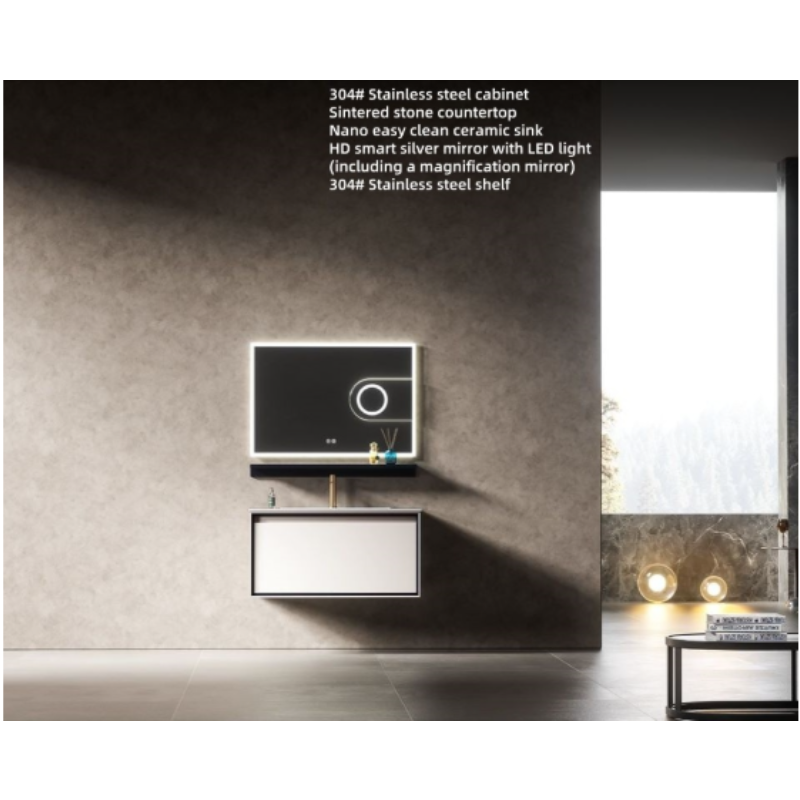
Many B-end clients have had “nightmare experiences” in mirror cabinet OEM cooperation: the sample quality is flawless, but mass-produced units are full of defects; the delivery date is agreed in the contract, yet production delays by a month due to the factory’s insufficient capacity, causing missed market windows; some even face intellectual property (IP) disputes where “factories steal designs and sell them to competitors at low prices”—these issues not only cause financial losses but also disrupt clients’ business plans. As an OEM factory with 15 years of experience in mirror cabinet production, we have served over 300 clients and witnessed numerous failed cooperations due to “inadequate risk control, weak technical capabilities, and misaligned cooperation positioning.” Today, from three dimensions—risk mitigation, tech empowerment, and long-term win-win—we will share a “pitfall avoidance guide” and “value-added solutions” for mirror cabinet OEM cooperation, helping you not only purchase with confidence but also achieve business growth through collaboration. I. 3 Core Risks Before Cooperation: Prevent in Advance to Avoid “Post-Cooperation Disputes” The core demand of B-end clients is “stability and controllability,” yet many factories only focus on “securing orders” and neglect risk prevention, leading to frequent problems during cooperation. Through “preliminary agreements + process control,” we eliminate these three core risks at the initial stage of cooperation. ✅ Risk 1: Quality Discrepancy—”Sample ≠ Mass-Produced Units”? Establish a “Dual Inspection + Sample Sealing” Mechanism The most frustrating scenario for clients: samples pass strict testing, but mass-produced units suffer from issues like “insufficient panel thickness, failed mirror defogging, and rusty hardware,” while the factory evades responsibility by claiming “batch differences.” Mitigation Plan: All indicators must specify “handling methods for non-compliance” (e.g., rework, replacement, compensation) to avoid ambiguous wording. Case Study: A cross-border e-commerce client previously changed 3 factories due to “sample-mass production quality discrepancies.” When cooperating with us, through the “quantified quality agreement + small-batch sample sealing,” the defect rate of 5,000 mass-produced mirror cabinets was only 0.2%—far below the client’s 1% requirement. ✅ Risk 2: Delivery Delay—”Promise ≠ Fulfillment”? Secure Capacity + Breach Compensation to Ensure Timeliness Delivery delays are a “fatal blow” to B-end clients: hotel projects face penalty fees for missing renovation deadlines, and cross-border e-commerce sellers suffer inventory backlogs when missing promotion windows. However, many factories lose control of delivery dates due to “capacity competition across orders and raw material shortages,” with no clear compensation mechanism. Mitigation Plan: Case Study: A hotel client ordered 2,000 mirror cabinets with a 45-day delivery requirement (to meet the opening deadline). Through “capacity locking + milestone updates,” we completed delivery 2 days in advance. The client later added orders for 3 more branches and became a long-term partner. ✅ Risk 3: IP Theft + Leakage? Sign NDAs + Source Control Design-focused clients (e.g., premium home brands, designer studios) are most concerned about “factories stealing their carefully developed mirror cabinet designs and selling them to competitors at low prices,” which erodes market competitiveness. Mitigation Plan: Case Study: A designer brand developed a custom mirror cabinet with “sintered stone + solid wood splicing” to enter the high-end market. By signing an NDA and implementing design control with us, no leakage occurred in 2 years of cooperation. This product became its core profit driver with a 50% market premium. II. Tech Empowerment: 3 Innovative Technologies to Help Clients Reduce Costs, Accelerate Speed, and Expand Markets Ordinary OEM factories can only “produce according to drawings,” while professional factories create additional value for clients through technological innovation—shortening prototyping time, reducing eco-compliance costs, and enhancing product competitiveness to help clients gain a market edge. ✅ 1. Digital Prototyping Technology: From 7 Days to 3 Days, 40% Reduction in Trial Production Costs Traditional prototyping requires manual cutting and assembly, which is time-consuming (7-10 days) and costly (RMB 300-500 per sample). If the client needs design adjustments, a new prototype is required, wasting time and money repeatedly. Our Solution: Introduce “3D Digital Prototyping System” + “CNC Precision Cutting”: Result: A smart home client needed to test a “smart mirror cabinet with touchscreen.” Through digital prototyping, 3 design adjustments were completed in 1 month with a total sample cost of only RMB 1,200—compared to at least RMB 2,000 and over 2 months with traditional methods. ✅ 2. Eco-Friendly Material R&D: Meet Global Eco-Standards to Unlock High-End Markets With increasingly strict global eco-regulations (e.g., EU ECOCERT, US GREENGUARD), mirror cabinets made of ordinary materials can no longer enter high-end markets. However, independent R&D of eco-friendly materials by clients is costly and time-consuming. Our Solution: Establish an “Eco-Friendly Material Laboratory” to advance R&D of compliant materials: Case Study: A cross-border client planned to enter the European high-end home market but was repeatedly rejected due to non-compliant materials. After cooperating with us, their mirror cabinets (made of bamboo fiber composite panels + water-based UV paint) passed GREENGUARD certification, entered European home improvement chains, achieved a 40% price increase, and doubled sales in 6 months. ✅ 3. Intelligent Production Tracing System: Clients Can “Monitor Production in Real Time” to Double Trust Many clients feel “uncertain” during mass production: They cannot verify raw material compliance, production progress, or inspection status, and can only rely on the factory’s “verbal reports”—leading to information asymmetry. Our Solution: Launch a “full-process intelligent tracing system” with exclusive access for clients: Result: A hotel group client monitored the production of 2,000 mirror cabinets in real time via the system. When they identified “low efficiency in the sanding process,” they coordinated with us to adjust capacity, avoiding delivery delays. Later, they designated us as a “core supplier” with an annual procurement volume of RMB 8 million. III. Long-Term Cooperation Value: Beyond “Supply”—Be a “Business Growth Partner” for Clients Excellent OEM factories are not just “on-time suppliers” but long-term partners that help clients solve problems in “product iteration, cost optimization, and market expansion.” We achieve “win-win growth” with clients through three key initiatives. ✅ 1. Product Iteration Planning: Layout New Products 6 Months in Advance to Seize Market Opportunities Market trends evolve rapidly (e.g., “minimalist frameless mirror cabinets”