
How Mirror Cabinet OEM Factories Help You Succeed in Niche Markets: 3 Niche-Specific Solutions + Supply Chain Cost-Reduction Tips

The current mirror cabinet OEM market is trapped in “low-price competition”: Clients only ask, “Can you lower the price by another 5%?” Factories compete on “who can deliver faster,” while ignoring “differences in niche customer needs.” Hotel clients require “fire compliance + 5-year durability,” long-term rental apartment clients need “cost control + rapid replication,” and cross-border premium e-commerce clients demand “localized design + niche functions”—none of which can be met with “one-size-fits-all products.” As a mirror cabinet OEM factory that has served over 100 niche clients, we’ve discovered: What truly retains B-end clients isn’t “low prices,” but “understanding their industry and solving their unique problems.” Today, we’ll focus on three core niche markets—hotel projects, long-term rental apartments, and cross-border premium e-commerce—to share “customized solutions” from an OEM factory perspective. We’ll also reveal 3 “supply chain cost-reduction tips” to help you obtain scenario-specific products while controlling costs, ensuring you gain a foothold in niche markets. I. Niche-Specific Solutions for 3 Core Markets: No “Generic Products”—Only “Problem-Solving Products” Clients in different markets have vastly different “core demands”: Hotels fear frequent after-sales issues, apartments worry about cost overruns, and cross-border sellers struggle with market adaptability. Through “scenario-based research + modular design,” we create tailored solutions for each niche, ensuring products fit seamlessly from day one. ✅ 1. Hotel Project Niche: Focus on “Compliance + Durability + Low After-Sales”—5 Years of Worry-Free Use The pain points of hotel mirror cabinets include “frequent repairs after installation” (damage from guest misuse), “fire code violations and penalties,” and “inconsistent styles harming brand image.” Solutions center on “durability, compliance, and uniformity”: Case Study: For a 20-branch hotel chain, we completed delivery of 5,000 units in 120 days. Batch shipments aligned with each hotel’s renovation schedule, and the after-sales rate was only 0.5% one year post-installation—far below the industry average of 3%. ✅ 2. Long-Term Rental Apartment Niche: Balance “Cost + Aesthetics + Rapid Replication”—Stay on Budget Core demands for long-term rental apartments (e.g., Ziroom, Danke) include “unit cost ≤ 300 RMB,” “aesthetics matching young tenants’ preferences,” and “delivery of 1,000 units within 1 month.” Solutions focus on “cost optimization, standardization, and fast delivery”: Case Study: For a long-term rental apartment brand with 1,000 units, we completed delivery in 18 days at a unit cost of 275 RMB. In tenant satisfaction surveys, “mirror cabinet practicality” scored 4.8/5 (full score). ✅ 3. Cross-Border Premium E-Commerce Niche: Focus on “Localization + Niche Functions”—Avoid Red Ocean Competition Pain points for cross-border premium e-commerce (e.g., Amazon private label sellers, independent brand sites) include “severe product homogeneity,” “misalignment with target market usage habits,” and “certification failures preventing listing.” Solutions center on “localized design, niche functions, and compliance certifications”: Case Study: For an Amazon private label seller targeting North America, we customized cabinets with “UV disinfection + Bluetooth speakers” (UL-certified). Within 3 months of listing, the product ranked top 50 in its niche category with a 35% price premium and only 2.1% return rate (industry average: 5%). II. 3 Supply Chain Cost-Reduction Tips for Mirror Cabinet OEM Factories: Save 15%-20% Without Cutting Corners Many clients assume “cost reduction = cutting corners,” but professional OEM factories can reduce costs by 15%-20% while ensuring quality through “supply chain optimization”—this is the true core competitiveness. ✅ 1. Bulk Raw Material Procurement: “Lock Prices & Volumes” with Upstream Factories—Save 10%-15% ✅ 2. Modular Design: Reduce Mold Costs—Save Even on Small Batches ✅ 3. Lean Production: Reduce Waste & Improve Efficiency—Save 5% III. How to Judge if an OEM Factory “Understands Your Niche”? 3 Key Questions When selecting a mirror cabinet OEM factory, don’t just ask “Can you do it?” or “How much does it cost?” Ask these 3 questions to assess industry expertise: Knowledgeable factories will provide specifics (e.g., “solved fire certification issues for a hotel chain” or “controlled unit costs for an apartment brand”)—not vague claims like “we’ve worked with many clients.” For example, when hotel clients ask this, knowledgeable factories will mention “100,000-cycle test hinges” or “batch delivery plans”—not generic statements like “our cabinets are durable.” Knowledgeable factories will propose “flexible adjustment plans” (e.g., “adjust production capacity within 1 week for increased orders” or “deliver module replacement plans within 3 days for function changes”)—not responses like “we’ll need to re-quote and re-schedule.” Conclusion: A Good Mirror Cabinet OEM Factory Is Your “Niche Market Partner” In today’s homogeneous mirror cabinet market, what helps you succeed isn’t “lower prices,” but “products tailored to your needs”: Hotels need “worry-free compliance,” apartments need “cost control,” and cross-border sellers need “localized differentiation—only industry-savvy OEM factories can deliver this. Our factory doesn’t just “produce mirror cabinets”—we “research niche needs to create products that work and drive profitability for clients.” If your team needs mirror cabinets for hotel projects, long-term rental apartments, or cross-border e-commerce, feel free to share your industry pain points—we offer “free niche solution consulting” to help you refine needs, optimize products, and even co-develop niche bestsellers.
Mirror Cabinet OEM Factory: From Customization to Delivery, A One-Stop Solution for Brands & Buyers
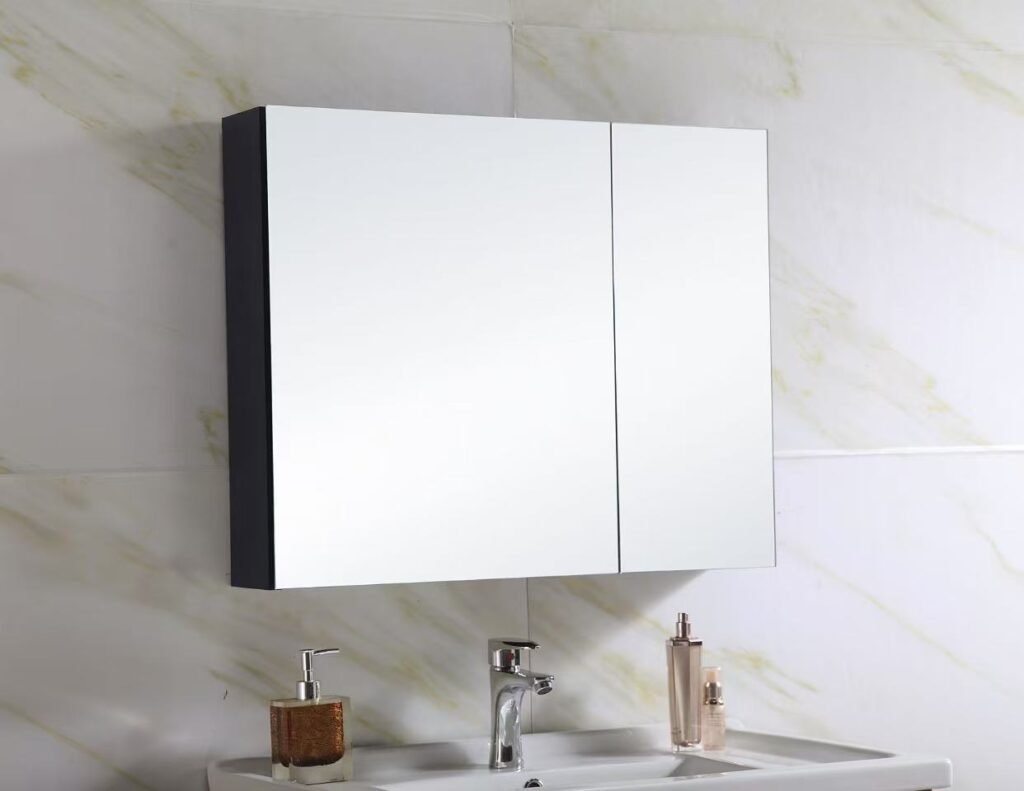
In an increasingly competitive mirror cabinet market, brands and cross-border buyers often face frustrating challenges: struggling to find factories that can quickly respond to customization needs, dealing with high after-sales rates due to unstable product quality, and missing market launch deadlines because of delayed deliveries. A professional mirror cabinet OEM factory is the key partner to solve these pain points. With 12 years of experience in mirror cabinet production, we have served over 200 domestic and overseas brands (covering home furnishing chains, cross-border e-commerce, and project channels). We deeply understand B-end clients’ needs for “customization flexibility, quality controllability, and on-time delivery.” Today, from an OEM factory’s perspective, we will break down the entire process of mirror cabinets—from “requirement communication” to “bulk delivery”—to help you identify a reliable cooperation partner and efficiently launch your mirror cabinet products. I. Core Customization Capabilities of Mirror Cabinet OEM Factories: Meeting Diverse B-End Needs Unlike “standardized products” for retail, B-end clients (especially brands and cross-border buyers) often have personalized demands: adapting to different national voltage standards, integrating brand-specific design elements, or adding unique functions (e.g., multilingual voice control). This requires OEM factories to have “full-dimensional customization capabilities.” ✅ 1. Material & Process Customization: Adapting to Quality Requirements Across Markets Client demands for mirror cabinet materials vary significantly (e.g., European clients prefer solid wood, Southeast Asian clients favor waterproof PVC, and North American clients prioritize environmental certifications). Our factory offers multi-material customization solutions, with each material complying with the corresponding market’s compliance standards: ✅ 2. Function Integration Customization: Aligning with Usage Needs in Different Scenarios B-end clients often need to integrate mirror cabinets with their product ecosystems (e.g., cross-border e-commerce clients require Alexa voice control integration, while project clients need compatibility with hotel smart systems). We provide “modular function integration” services, eliminating the need for clients to invest in additional R&D: ✅ 3. Appearance & Size Customization: Aligning with Brand Identity & Market Needs Brands often require mirror cabinets to align with their visual identity systems (e.g., logos, color schemes, sizes). We provide end-to-end support from “design sampling” to “bulk production”: II. Standardized Production Process of Mirror Cabinet OEM Factories: Ensuring Quality & On-Time Delivery B-end clients’ biggest concerns are “customization = unstable quality” and “small batches = long lead times.” Through “standardized processes + digital management,” we control quality fluctuations of customized products within ±2% and maintain a stable lead time of 15-20 days for regular orders (5 days faster than the industry average). ✅ 1. Requirement Communication Phase: Proposal & Quotation Within 3 Days ✅ 2. Mass Production Phase: Full-Process Digital Control & Quality Traceability ✅ 3. Delivery Phase: Multi-Logistics Solutions to Reduce Client Costs III. Quality Control System of Mirror Cabinet OEM Factories: A Core Guarantee for B-End Clients For brands and project clients, “product quality” directly impacts brand reputation and after-sales costs. Through “full-process quality inspection + third-party certification,” we control the mirror cabinet after-sales rate to below 1.5% (industry average is 3%-5%). ✅ 1. Incoming Quality Control (IQC): Controlling Quality at the Source All raw materials (panels, mirrors, hardware, smart modules) undergo three rounds of inspection by the quality control department before entering the factory: ✅ 2. In-Process Quality Control (IPQC): “Quality Red Lines” for Each Process Five key quality inspection checkpoints are set up in the workshop, each with clear “pass standards.” Defective products are never allowed to move to the next process: ✅ 3. Outgoing Quality Control (OQC): Full-Performance Testing Simulating Real-World Use After mass production, the quality control team samples 5% of finished products for “real-world use simulation” testing to ensure optimal user experience: IV. 4 Key Indicators for Choosing a Mirror Cabinet OEM Factory: A Guide for B-End Clients to Avoid Pitfalls Many clients are tempted by “low prices” and “fast lead times” when choosing an OEM factory, only to face cooperation failures due to quality issues and poor communication. Based on our service experience, we recommend evaluating factories from the following four dimensions: ✅ 1. Customization Response Speed: Evaluate the “Requirement-to-Sample” Cycle A reliable OEM factory can deliver a proposal within 3 days and complete sampling within 7 days (10 days for special materials). If a factory takes more than 10 days to provide a proposal, its R&D team has weak responsiveness, and more communication delays are likely during mass production. ✅ 2. Quality Certifications: Check Compliance with Target Market Standards Different markets have varying certification requirements for mirror cabinets (e.g., CE for Europe, FCC for North America, CQC for China). Factories must provide test reports from third-party authoritative institutions (e.g., SGS, Intertek) to prevent clients from having products seized by customs due to non-compliance. ✅ 3. Production Scale: Verify Capacity for “Small-Batch Trial + Large-Batch Mass Production” Start-up brands often need 50-100 units for market testing, while mature brands may require a single mass production run of 5,000+ units. A reliable OEM factory must have “flexible production capacity” (willing to take small batches and capable of meeting large-batch lead times) and at least 3 production lines (to handle orders from multiple clients simultaneously). ✅ 4. After-Sales Support: Check for Clear After-Sales Policies Factories must provide clear terms for “after-sales response time (e.g., within 48 hours),” “accessory replacement ratio (e.g., 3%),” and “return/refund policies.” This prevents factories from evading responsibility for quality issues. (We recommend specifying these terms in contracts to reduce cooperation risks.) V. Cooperation Case: How to Quickly Launch Cross-Border Mirror Cabinet Products via an OEM Factory A cross-border e-commerce client (focusing on the North American market) faced the following challenges: needing to customize 110V smart mirror cabinets with Alexa voice control, obtain FCC certification, and deliver 500 units within 30 days (for Black Friday promotion). Our cooperation process was as follows: Conclusion: A Professional Mirror Cabinet OEM Factory Is a “Product Partner” for B-End Clients For brands, cross-border buyers, and project clients, choosing a reliable mirror cabinet OEM factory not only solves issues related to “customization, quality, and delivery” but also reduces product costs and enhances market competitiveness through the factory’s supply