
Don’t Waste Non-Standard Balconies! 3 Custom Laundry Cabinet Plans for Corner, Extra-Narrow, & Bay Window Balconies
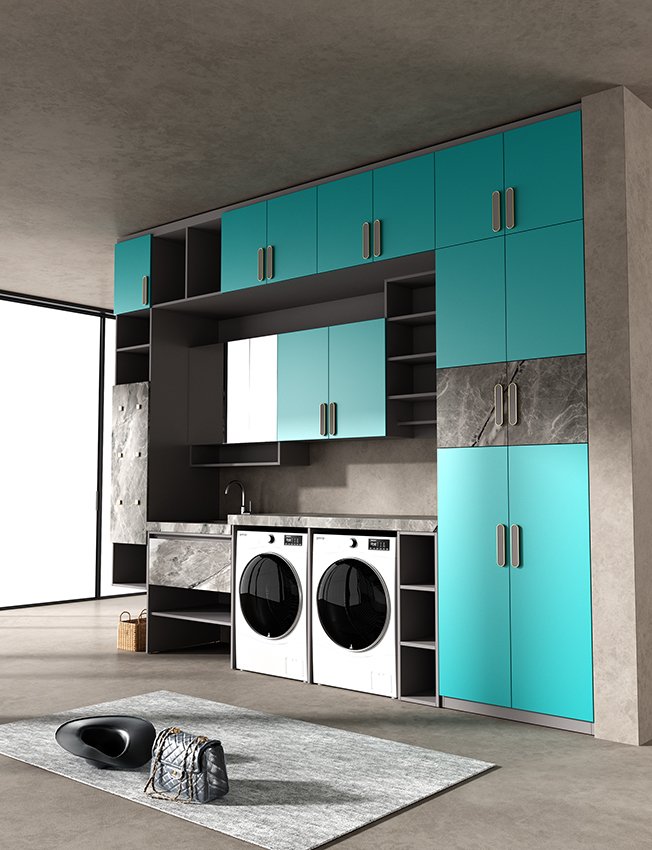
Have you ever faced this problem? Your balcony is an awkward L-shaped corner that collects dust; or it’s only 80cm wide, barely fitting a washing machine; or it has a large bay window, making you hesitant to install a laundry cabinet for fear of blocking the window—these “non-standard” balconies often leave people thinking, “I can’t properly fit a laundry cabinet here.” In fact, for non-standard balconies, you can make the most of the space by finding the right “leverage points.” Today, we’ll focus on corner (L-shaped), extra-narrow, and bay window balconies—three common tricky layouts—sharing custom laundry cabinet plans that cover everything from measurement to installation. Transform your “hard-to-use balcony” into an “efficient laundry area”! I. Corner Balconies (L-Shaped): Maximize the Corner—1㎡ of Space = Laundry + Drying + Storage The pain point of corner balconies (especially L-shaped ones, common in master bedrooms or living room extensions) is “wasted corner space.” The washing machine sits on one side, while the other side collects dust and looks messy. The core idea is to “wrap the corner with an L-shaped cabinet, turning it into a ‘functional hub.’” ✅ 3-Step Customization for Corner Balconies ❌ Pitfall Alert for Corner Balconies Case Study: Neighbor’s L-Shaped Balcony Makeover Her 1.2m×1.5m L-shaped balcony previously had a washing machine on the shorter side, while the longer side collected clutter. After the makeover: II. Extra-Narrow Balconies (≤1m Wide): Go Vertical—Even 80cm Wide Can Fit a Washing Machine The core issue with extra-narrow balconies (common in old apartments or studios, 80-100cm wide) is “limited horizontal space”—once a washing machine is placed, there’s barely room to stand. The solution is to “abandon horizontal expansion and maximize vertical space” by utilizing the “floor + walls + ceiling.” ✅ 4 Key Customization Tips for Extra-Narrow Balconies ❌ Pitfall Alert for Extra-Narrow Balconies Case Study: 80cm-Wide Balcony Makeover in a Studio The renter’s 80cm-wide balcony previously held a standard washing machine (58cm deep), leaving only a 22cm-wide passage—she had to walk sideways. After the makeover: III. Balconies with Bay Windows: Utilize the Bay Window—Maximize Countertop + Under-Cabinet Space The pain point of balconies with bay windows (common in new apartments, bay window height 40-60cm, width 1.2-1.5m) is “wasted space from the bay window.” You want to install a laundry cabinet but fear blocking the window, or the cabinet feels disconnected from the bay window, looking messy. The core is to “link the bay window and laundry cabinet to create complementary functional zones.” ✅ 3 Customization Ideas for Bay Window Balconies ❌ Pitfall Alert for Bay Window Balconies Case Study: Bay Window Balcony Makeover in a New Apartment Her 1.5m-wide bay window balcony previously used the bay window only as a “sitting area,” with a washing machine nearby looking messy. After the makeover: Conclusion: The Core of Non-Standard Balconies—“Don’t Force Standard Solutions—Adapt to Your Space” Whether it’s a corner, extra-narrow, or bay window balcony, the key to choosing a laundry cabinet isn’t “finding a ready-made model”—it’s “finding leverage points based on your balcony’s layout”: In fact, non-standard balconies are perfect for creating “one-of-a-kind laundry areas.” With a little creativity and customization, even the smallest or most irregular balcony can be both functional and stylish. If your balcony has a unique layout (e.g., curved, with pillars), leave a comment with its specific dimensions and features—I’ll help you create a custom plan!
Don’t Ignore “Seasonal Needs” for Your Balcony Laundry Cabinet! 4 Seasonal Adaptation Plans—No Odors in Summer, Fast Drying in Winter, No Mold in Plum Rain Season
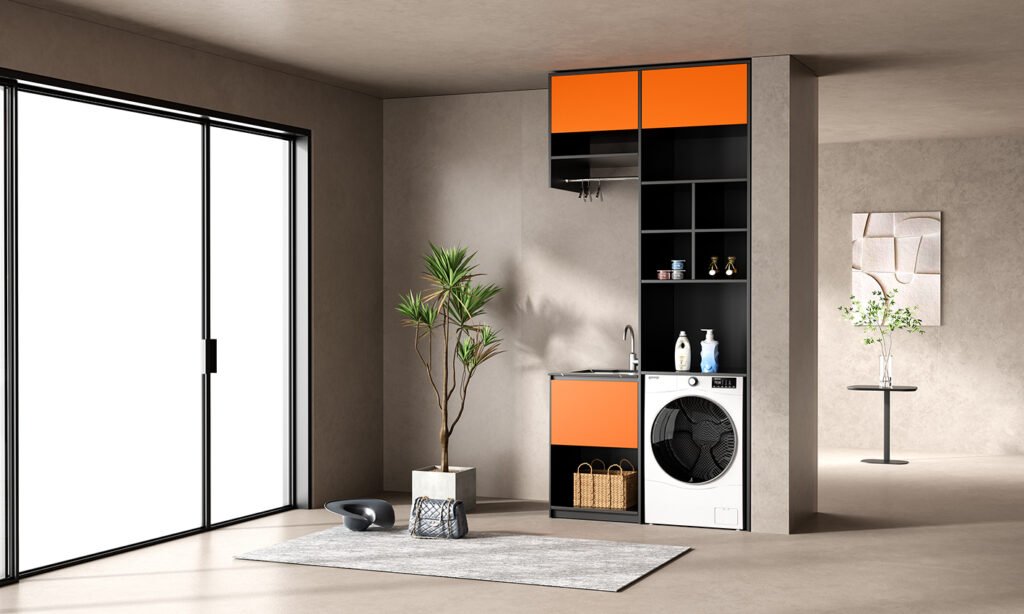
Have you noticed that your balcony laundry cabinet brings different troubles in different seasons? In summer, freshly washed clothes hung next to the cabinet get musty and smelly; in winter, clothes won’t dry even after a week, piling up on top of the cabinet and taking up space; in plum rain season, you open the cabinet door only to find mold spots on detergent bottles; in spring and autumn, strong winds blow dust into every crevice of the washing machine… In fact, a laundry cabinet isn’t a “set-it-and-forget-it” item. Adjusting its design or usage with the seasons is the key to solving these seasonal pain points. Today, I’ll share “four seasonal adaptation plans for balcony laundry cabinets”—from material choices to detailed modifications—to make doing laundry easier every season. I. Summer: Focus on Preventing “Musty Odors & Moisture”—Keep the Laundry Area Ventilated & Fresh Balconies get hot in summer (especially south-facing ones, which can reach over 35℃ in the afternoon). Wet clothes and damp rags inside the laundry cabinet easily develop musty odors, and the cabinet itself may age faster due to moisture and high temperatures. The core is to prioritize “ventilation and moisture control.” ✅ 3 Summer Laundry Cabinet Modifications Case Study: My Bestie’s Summer Laundry Area Makeover She used to have a fully enclosed plastic cabinet that always smelled moldy in summer. After modifications: Now, her laundry area stays fresh all summer—even wet clothes left overnight don’t smell bad. II. Winter: Focus on Solving “Slow Drying & Pipe Freezing”—Let the Cabinet Help “Dry Clothes” Balconies get cold in winter (temperatures can drop below 0℃ in northern regions). Clothes take a week to dry, and pipes may freeze and crack or the cabinet may get damp and icy, affecting use. The core is to prioritize “auxiliary drying and anti-freezing.” ✅ 4 Winter Laundry Cabinet Upgrades Pitfall Alert: Avoid These! III. Plum Rain Season: Focus on Preventing “Mold & Moisture Regain”—Keep the Cabinet Dry During southern China’s plum rain season (March-May), balcony humidity often exceeds 90%. Laundry cabinets easily grow mold, detergent clumps, and even the washing machine interior may breed bacteria. The core is to prioritize “full waterproofing and active dehumidification.” ✅ 5-Step Plum Rain Season Laundry Cabinet Protection IV. Spring & Autumn: Focus on Preventing “Dust & Clutter”—Keep the Cabinet Tidy Spring and autumn are dry with strong winds—balconies easily collect dust, which settles in laundry cabinet crevices and on the washing machine surface. These seasons are also “seasonal transition periods” when you need to store off-season clothes and bedding, making the cabinet prone to clutter. The core is to prioritize “dust prevention and flexible storage.” ✅ 4 Spring & Autumn Laundry Cabinet Organization Tips Conclusion: The Core of Seasonal Adaptation—“Adjust to Climate, Don’t Follow Trends Blindly” In fact, laundry cabinet needs vary by season: “ventilation” in summer, “insulation and drying” in winter, “waterproofing and dehumidification” in plum rain season, and “dust prevention” in spring and autumn. You don’t need a “one-time luxury setup”—small modifications based on your local climate and usage habits will solve most problems. For example, if you live in the south, focus on waterproofing and mold prevention for plum rain season; if you’re in the north, prioritize insulation and drying in winter; if you’re in an area with strong winds in spring and autumn, dust prevention is key. If you’re not sure what to prioritize for your area, tell me your city and balcony conditions (e.g., enclosed or not, facing direction)—I’ll help you create a custom seasonal adaptation plan!