Trading Company vs. Source Factory: A B2B Sourcing Guide for Custom Bathroom Vanities
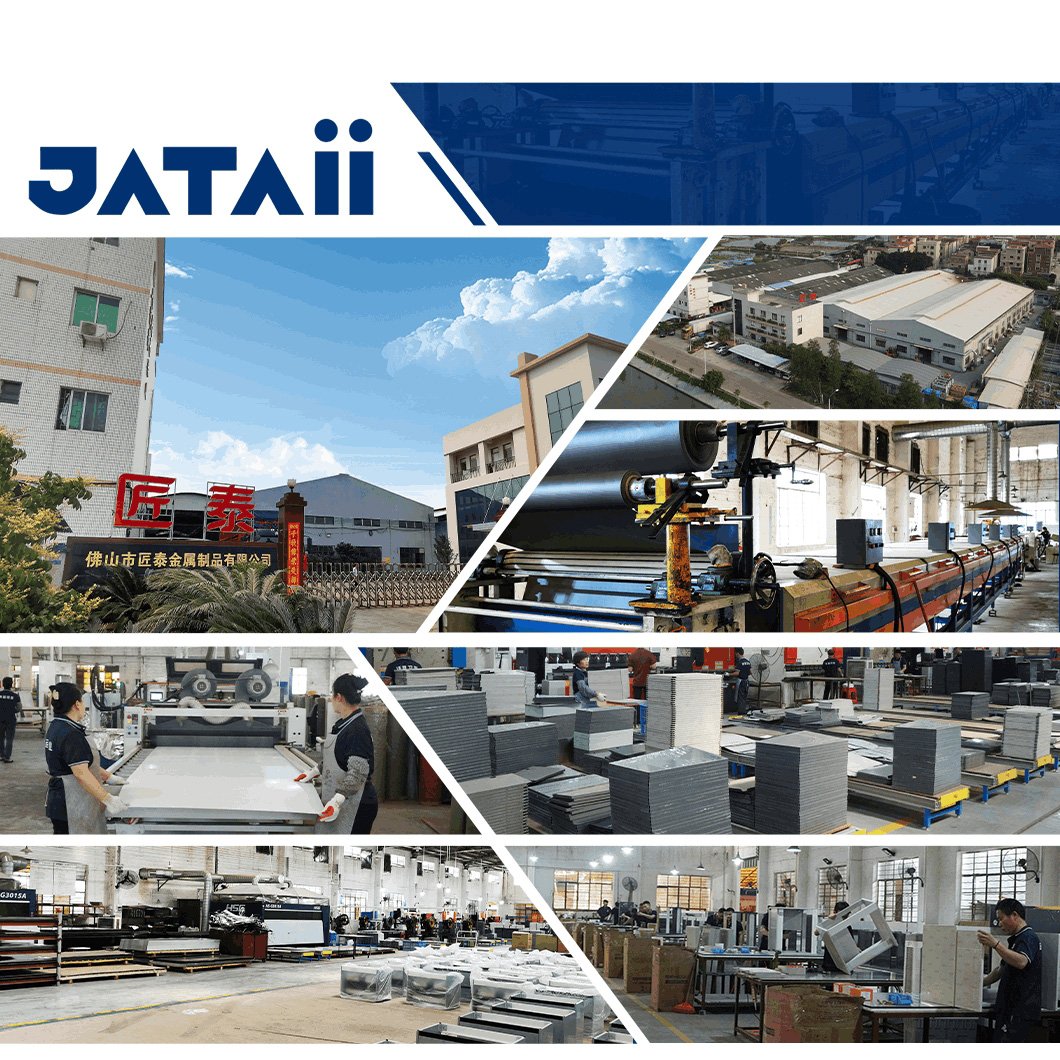
For international procurement managers, commercial real estate developers, and hospitality hospitality buyers, sourcing commercial bathroom vanities from overseas is a high-stakes decision. A single delay, miscommunicated technical drawing, or batch quality defect can stall a multi-million dollar hotel or residential project.
When evaluating suppliers on platforms like Made-in-China, Global Sources, or search engines, buyers inevitably face a critical fork in the road: Should you partner with an export trading company or a direct source factory?
While trading companies often promise diverse catalogs and fluid English communication, they introduce hidden layers of risk, cost, and communication friction—especially for complex, high-spec products like stainless steel bathroom cabinets and aluminum honeycomb vanities.
In this comprehensive B2B procurement guide, we breakdown the structural advantages of partnering directly with a vertically integrated source factory to secure your supply chain for 2026 and beyond.
1. Eliminate the Middleman Markup: Total Cost of Ownership (TCO)
The most obvious drawback of a trading company is the hidden commission built into your unit price. For a large-scale commercial project requiring hundreds of vanities, a 10% to 20% middleman margin can equate to tens of thousands of dollars in inflated procurement costs.
The Source Factory Advantage:
A direct source factory operates on true factory-floor economics. By sourcing directly, you gain:
- Direct Factory-Direct Pricing: Raw material procurement (such as 304 stainless steel sheets and aerospace-grade aluminum coils) is managed in-house, passing the volume savings directly to the buyer.
- Stable Price Forecasting: Direct factories have long-term contracts with material mills, protecting your project from sudden market fluctuations in metal or glass prices.
2. Dynamic Technical Deepening & True OEM/ODM Customization
Commercial projects rarely use standard, off-the-shelf vanities. Architects and interior designers demand precise modifications—custom plumbing cutouts, non-standard sizing for space optimization, specific PVD color finishes (like brushed brass or matte black), and integrated smart LED mirrors with custom sensor behaviors.
Why Trading Companies Fail Here:
A trading company acts as a game of "telephone." When you send an updated CAD drawing, the salesperson passes it to their third-party manufacturer. If a technical discrepancy arises regarding structural load-bearing limits of a floating aluminum honeycomb panel, the message gets diluted, resulting in manufacturing errors.
The Source Factory Solution:
An authentic OEM/ODM factory houses an in-house engineering team. At JATAII, our technical department deepens architectural shop drawings directly with your project managers. We run physical stress-tests on metal structures and verify exact tolerances for plumbing clearance before the tooling begins, eliminating the risk of on-site installation failures.
3. Uncompromised Quality Control (QC) & Material Traceability
In a high-humidity hotel bathroom environment, material integrity is everything. If a trading company sources from an unverified workshop using low-grade 201 stainless steel instead of marine-grade 304, or utilizes formaldehyde-heavy glues in structural panels, the vanities will rust, warp, or fail compliance audits within months.
Rigorous Factory Quality Protocols:
A dedicated source factory controls the entire manufacturing ecosystem under ISO 9001 standards:
- Raw Material Verification: Inbound metals undergo spectrographic testing to guarantee chemical composition (e.g., exact Chromium and Nickel content in 304 SS).
- Advanced Testing Machinery: Leading factories utilize on-site salt spray testing chambers to simulate years of coastal humidity, ensuring PVD and powder-coated finishes are completely rust-proof.
- Certifications Held at the Source: International certifications like CE, UL, cUPC, and WaterMark are issued directly to the manufacturing plant, giving your project ironclad compliance protection during building inspections.
4. Packing Optimization & Direct Logistics Coordination
International ocean freight is a major component of a project's landed cost. Maximizing container utilization is an art form that trading companies rarely master because they don’t handle the physical loading.
Intelligent Factory Loading:
A source factory design team engineers the packaging simultaneously with the product. By optimizing the flat-pack or pre-assembled structures of aluminum honeycomb vanities, factories can precisely calculation how many units fit into a 40HQ container. Furthermore, direct factory logistics teams ensure seamless container scheduling directly from the factory loading dock, cutting down internal transit delays within the export country.
B2B Supply Chain Comparison Matrix
| Sourcing Parameter | Third-Party Trading Company | Direct Source Factory (e.g., JATAII) |
|---|---|---|
| Pricing Structure | Marked-up with hidden broker commissions | Transparent, factory-direct tier pricing |
| Technical Support | Salespeople acting as messengers | Direct access to CAD/R&D engineering teams |
| Material Integrity | Highly variable; secondary sourcing risk | 100% traceable raw materials (304 SS/Alu) |
| Customization Flexibility | Limited to standard catalog modifications | Complete bespoke, non-standard OEM/ODM capabilities |
| Compliance & Audits | Rely on borrowed or third-party certificates | Direct owner of UL, CE, cUPC compliance records |
Frequently Asked Questions (SEO FAQ)
Q: Can a source factory handle the low Minimum Order Quantities (MOQ) required for boutique hotel projects? A: Yes. Advanced factories utilizing modern CNC fiber-laser cutting machinery do not require expensive fixed molds for metal cabinetry. This flexible manufacturing allows factories like JATAII to offer highly accommodating MOQs for custom commercial projects while maintaining factory-direct pricing.
Q: How can I verify if a supplier is a real source factory or a trading company? A: Request a live video factory tour via WhatsApp or WeChat, check if the name on the ISO 9001/UL certificates matches their business license exactly, or look for core manufacturing machinery (like CNC bending machines and laser cutters) in their audit documentation.
Q: Why is a source factory better for sourcing smart LED mirrors? A: Smart LED mirrors involve electronic components, drivers, and anti-fog modules that require strict electrical safety testing (such as UL or CE standards). A source factory conducts high-voltage aging tests on 100% of finished mirror units in-house, whereas trading companies often buy from unregulated assembly workshops.
Secure Your Project's Supply Chain with JATAII
When you are specifying bathroom cabinetry for high-rise condos, 5-star hotels, or resort developments, you aren't just buying furniture—you are investing in a reliable supply chain.
As a specialized, vertically integrated source factory, JATAII manufactures premium 100% waterproof stainless steel and aluminum honeycomb bathroom vanities and high-fidelity smart LED mirrors for global B2B clients. We control everything from raw metal sheets to finished PVD color application, providing engineering depth, rock-solid quality control, and optimized international logistics.
Stop risking your project timelines with intermediaries. Contact the JATAII Commercial Project Engineering Team today to schedule a virtual live factory tour, request a physical material sample kit, and receive factory-direct quotes for your current bidding cycle.
Ready to upgrade your next commercial project?
Contact JATAII today for our 2026 wholesale catalog and a free quote.
Get a Factory Quote